
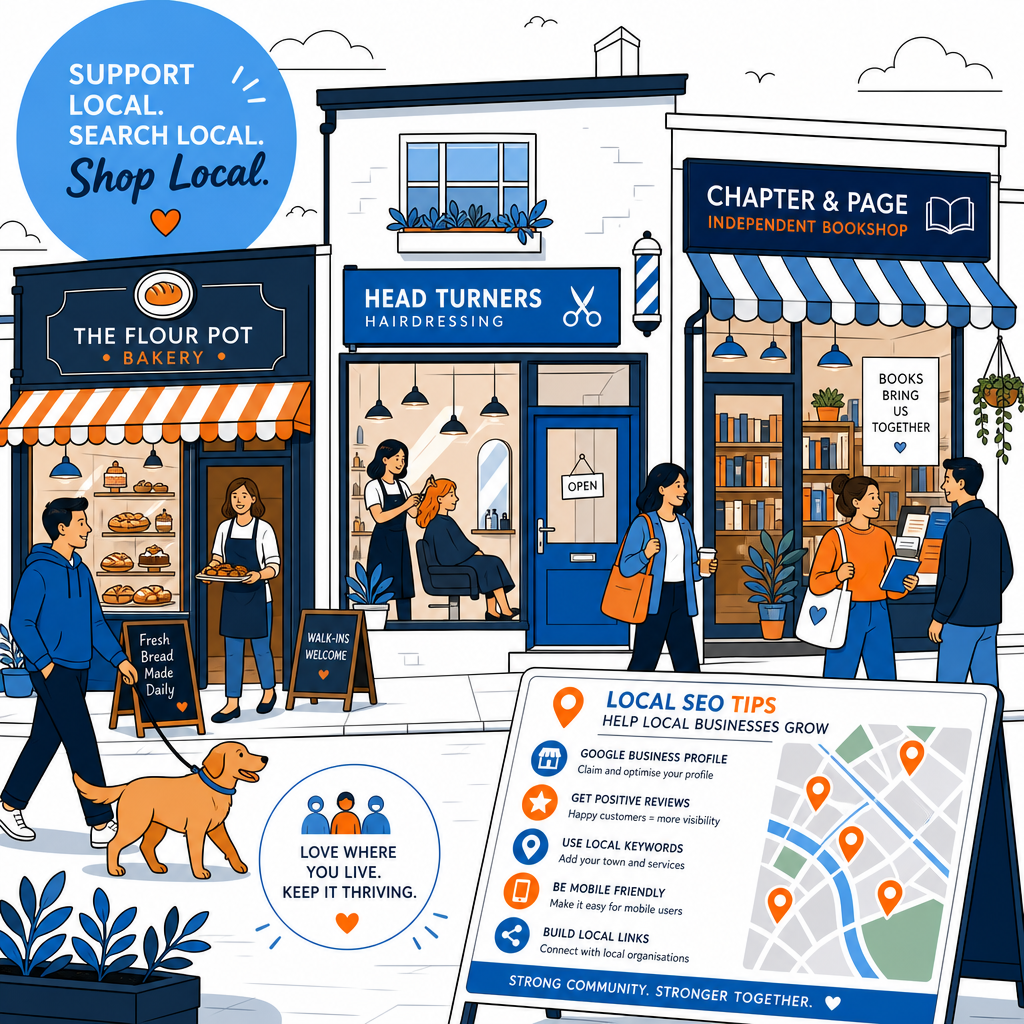
5 Myths About the Sexiest SEO in the World sounds like a bold promise for a topic involving shop windows, map listings and people searching for a business while standing halfway down the High Street. Local SEO has picked up plenty of dramatic claims over the years. Some business owners expect instant results. Others assume it belongs to large companies with technical teams and generous budgets. For a small UK business, local search usually comes down to something more practical: helping the right people find you, understand what you offer and decide to visit.
A bakery in York, a hairdresser in Bristol or an independent bookshop in Norwich can all benefit from the same basic work. The details vary, of course. The underlying ideas are easier to manage than the jargon makes them sound. Here are five myths worth putting to one side.
5 Myths About the Sexiest SEO in the World, starting with instant results
The first myth says local SEO works like a switch. You update a profile on Monday, then watch a flood of customers arrive by Friday. Search engines tend to take their time. They gather signals from your website, business listings, reviews, customer behaviour and other sources before deciding how prominently to show your business.
A small business may see an early improvement in map views, calls or direction requests. Sales often follow at a slower pace. Seasonal demand also affects the picture. A florist may see more searches around Mother’s Day, while a seaside café lives with a very different rhythm during winter.
- Track map views, website visits, calls and direction requests each month.
- Record which services or products bring people to the site.
- Give changes enough time to show a pattern before judging them.
- Ask customers how they found you at the till or during booking.
Think in months rather than days. That timescale feels less exciting, perhaps, though it gives you a clearer view of what is working.
Myth two: a Google Business Profile takes care of everything
Your Google Business Profile sits at the centre of local search, so it deserves attention. It carries your opening hours, address, phone number, photos, services, reviews and updates. It gives Google useful information about the business and gives customers a quick way to make contact.
A profile works alongside the rest of your online presence. Your website should support the information shown on Google. Directory listings need accurate details. Social pages, local publications and relevant organisations can add useful context. Search engines look for a consistent picture.
A useful local search check
Search your business name while logged out, then check the details customers see. Look at the address, phone number, opening hours, photos, booking link and recent reviews. One wrong detail can create a surprisingly awkward customer journey.
The profile also needs regular care. Add new images when the shop changes. Update holiday opening hours before the festive rush. Reply to reviews in a calm, personal way. Small actions help the listing stay current and useful.
Myth three: local SEO requires technical wizardry
Some parts of SEO involve technical detail, though most High Street businesses can make meaningful progress with basic housekeeping. A clear website structure helps visitors move around. Pages should load well on a mobile phone. Contact information should be easy to spot. Each main service deserves a page that explains what it is, where it is available and how customers can book or buy.
The language on those pages matters. A person may search for “women’s haircut near me”, “independent coffee shop in Leeds” or “shoe repairs in Bath”. A page filled with vague marketing phrases gives that person little help. Write as if you are answering a customer’s question over the counter.
- Use the town, neighbourhood or local area where it fits naturally.
- Explain your services in plain English.
- Add clear directions, parking details or public transport information.
- Include a visible phone number and an easy contact option.
- Check the site on a mobile phone before publishing changes.
You can also improve page titles, image descriptions and internal links without touching code. Website platforms such as WordPress make many of these tasks fairly approachable. A web developer can handle deeper issues when they appear.
Myth four: reviews are only about star ratings
Star ratings catch the eye, though review content carries useful detail. Customers describe the things that matter to them: a quick alteration service, careful advice about paint colours, a welcoming dog-friendly café or a same-day repair.
Those words can help future customers understand the experience. They also give a business clues about what people value. A review mentioning helpful staff may point towards a strength worth featuring on the website. A repeated concern about parking or collection times deserves attention.
A simple review habit
Invite feedback after a genuine customer interaction. Make the request easy to follow, then reply with a specific detail from the review. A short, human response usually feels better than a copied template.
A business should never buy reviews or pressure customers into writing a particular kind of comment. Genuine feedback has more value, and platforms have rules around review activity. Give customers a comfortable opportunity to share their experience.
Myth five: local SEO is separate from everyday marketing
Local SEO works best when it connects with what the business already does. A community event can become a short website update. A new product range can bring fresh photographs and useful page content. A partnership with a nearby supplier may lead to a local mention or a link from that supplier’s website.
This is where small businesses often have an advantage. Owners know their area, their customers and the questions people ask in real conversations. A national chain may have a larger budget, while an independent business can describe its local knowledge with much more detail.
Ideas for local content
| Business activity | Useful search content |
|---|---|
| Seasonal stock | A page explaining what has arrived and who it suits |
| Local event | An update with dates, access information and photographs |
| Customer question | A helpful answer that can stay on the website |
A few useful updates each month can build a stronger presence over time. There is no need to manufacture a stream of content that nobody wants to read. One clear answer often earns more attention than several rushed posts.
What should a small High Street business do first?
Start with accuracy. Check your Google Business Profile, website and main directory listings. Then look at the mobile experience. A customer who finds your shop through a map result may want to call, check today’s opening hours or get directions within a few seconds.
After that, review your main services. Can each one be understood from a dedicated page? Does the page mention the area you serve in a natural way? Are there photographs, prices or booking details where customers would expect them?
Choose one measurement routine and keep it simple. Monthly checks of calls, direction requests, website enquiries and search visibility can reveal useful changes. Sales data adds the part that online platforms cannot show on their own.
Local SEO becomes much less mysterious when you treat it as an ongoing customer service task. Keep information fresh, answer real questions and make the next step easy.
The practical reality behind the myths
The phrase 5 Myths About the Sexiest SEO in the World may sound playful, though the work behind local SEO is grounded in ordinary business habits. Accurate information helps. Clear pages help. Good service tends to produce better reviews and recommendations. Search visibility grows from those details, with a bit of patience.
For a small High Street business, the best starting point is often close to home. Look at what a customer sees when searching your name, then explore the phrases they might use before they know your business exists. Fix the details that cause friction. Keep going at a pace you can maintain. That is the useful lesson behind 5 Myths About the Sexiest SEO in the World.