
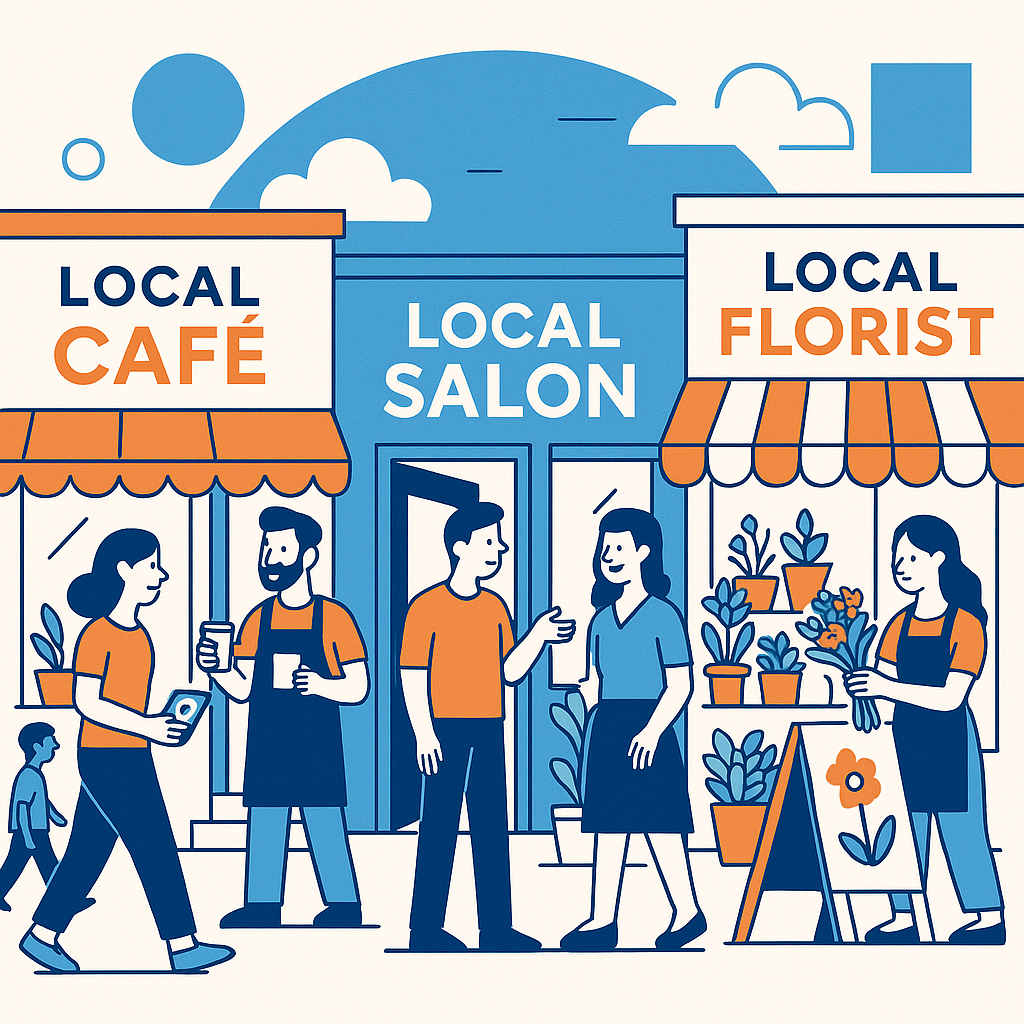
If you run a café, salon, florist, repair shop, estate agency, independent retailer, or any other High Street business, your website has a very specific job: help nearby people choose you. That sounds obvious, but it is surprisingly easy to build a website that looks tidy and still does very little for calls, visits, bookings, or enquiries. The idea behind the 6 Must-Have Elements for a High-Converting Local Business Website is that local customers need reassurance quickly. They want to know where you are, what you do, whether you are open, whether you seem trustworthy, and what they should do next.
This article agrees with, and builds on, Whitespark’s core argument: local business websites convert better when they are clear, trust-led, and built around real customer intent. Local SEO is not just a technical exercise involving keywords and map pins. It is also about giving someone enough confidence to walk through your door rather than scroll to the next option.
Quick thought: for a small High Street business, the best website is not always the flashiest one. Often, it is the one that answers practical questions fastest: where are you, can I trust you, and how do I book or visit?
1. Put Your Local Identity Front and Centre
A local business website should not make people hunt for location clues. If you serve customers in Leeds, Brighton, Cardiff, Glasgow, Bristol, or a cluster of nearby villages, say so clearly. Your town, neighbourhood, and service area should appear naturally across your homepage, key service pages, title tags, meta descriptions, and contact details.
This is where many small business sites feel a little too generic. A homepage might say “Quality haircuts for men and women” or “Professional accounting services” without saying where the business actually operates. That may look clean, but it misses the way people search. They search for “barber near me”, “accountant in York”, “emergency plumber in Stockport”, or “wedding florist Cheltenham”. Your website needs to connect those local searches to your real-world presence.
- Add your full business name, address, and phone number to your contact page and footer.
- Mention nearby landmarks where useful, such as “two minutes from the station” or “opposite the market square”.
- Create separate pages for major services if customers search for them individually.
- Use natural local wording, not awkward keyword stuffing.
- Make sure your website details match your Google Business Profile and other directories.
There is a balance, of course. You do not need to mention your town in every sentence. That quickly becomes strange. But you do need enough local context for both search engines and customers to understand that you are a genuine nearby option.
2. Build Pages Around Real Customer Decisions
People visiting a local website are often closer to making a decision than you might think. They may already know what they need, and they are comparing a handful of nearby businesses. Your pages should support that decision rather than simply describe your company in broad terms.
For example, a dental practice should not rely on one page called “Treatments” if people are searching for teeth whitening, emergency appointments, hygienist visits, or Invisalign consultations. A bike shop might need separate pages for repairs, servicing, e-bike sales, and cycle accessories. A local restaurant may need clear pages for menus, private dining, takeaway, allergens, and bookings. It sounds basic, but basic is often what works.
| Customer question | Website page or content to create | Why it helps local SEO |
|---|---|---|
| Do you offer the exact service I need? | Dedicated service page | Matches specific search intent and improves relevance. |
| Are you close enough? | Contact page with map and local details | Reinforces location signals and builds confidence. |
| Can I trust you? | Reviews, testimonials, case studies | Supports conversions and adds unique local proof. |
| What should I do next? | Clear calls to action | Turns traffic into calls, bookings, and visits. |
3. Use the 6 Must-Have Elements for a High-Converting Local Business Website
The 6 Must-Have Elements for a High-Converting Local Business Website are not just a checklist for designers. They are a practical way to think about trust and action. A High Street business website needs to reassure visitors fast, especially on mobile, where attention is limited and patience is even more limited.
Whitespark’s article highlights the importance of clear location information, strong calls to action, reviews, trust signals, helpful content, and mobile-friendly design. I would add that these elements work best when they feel specific to your business rather than copied from a template. A customer can usually sense the difference.
Clear contact details
Show your phone number, address, opening hours, and booking options without making visitors dig around.
Local proof
Use reviews, customer photos, local case studies, awards, and recognisable community links.
Simple next steps
Tell people whether to call, book online, request a quote, visit the shop, or send a message.
One small point that often gets overlooked: your call to action should match how people actually buy from you. A solicitor may want enquiry forms. A takeaway needs online ordering. A garage may get more value from phone calls. A boutique might want footfall first and online purchases second. Do not force every business into the same pattern.
4. Make Google Business Profile and Your Website Work Together
For local SEO, your website and Google Business Profile should support each other. Many customers will find you first through Google Maps or the local pack, then click through to your website for more detail. If the information does not match, or if your site feels thin compared with your profile, that trust can fade quickly.
Keep your name, address, phone number, opening hours, services, and website links consistent. Add photos to your profile, but also use strong images on your website. If you post updates on your Google profile, consider whether the same information belongs on your site too, especially seasonal offers, holiday opening hours, or important service changes.
- Check that your Google Business Profile links to the most relevant page, not always just the homepage.
- Use UTM tracking if you want clearer data in Google Analytics.
- Add your main services to both your profile and your website.
- Encourage reviews from genuine customers, then feature selected reviews on your site.
- Respond to reviews in a calm, professional way, including the less flattering ones.
This last point matters more than people admit. A business with a few imperfect but well-handled reviews can feel more believable than one with nothing but polished praise. Real local businesses have real customers, and sometimes real customers are awkward. How you respond says a lot.
5. Improve Mobile Speed, Clarity, and Usability
Most local searches happen on phones. Someone may be standing on a pavement, sitting in a parked car, rushing between meetings, or looking for a last-minute appointment. If your website loads slowly, hides your phone number, or uses tiny text, you may lose them before they even understand what you offer.
Mobile optimisation is not only about passing a technical test. It is about removing friction. Can visitors tap your phone number? Is the menu easy to use? Are forms short enough? Does the map open properly? Are images compressed so pages load quickly on mobile data? These small things can have a noticeable effect. I have seen sites improve enquiries just by moving the phone number into a sticky header, which feels almost too simple, but there it is.
Mobile check for local businesses
- Can a visitor call you within two taps?
- Can they find your address without scrolling endlessly?
- Does your homepage load quickly on 4G or 5G?
- Are forms short, clear, and easy to complete?
- Is your main call to action visible above the fold?
6. Add Local Content That Feels Useful, Not Forced
Local content can help your website rank for more searches, but it has to be genuinely useful. Thin blog posts about every nearby town rarely work well anymore, and they often feel a bit desperate. Better local content answers real questions, reflects your area, and shows that your business is active in the community.
A hardware shop could publish seasonal DIY guides for older local homes. A restaurant might create a page for pre-theatre dining if it is near a venue. A wedding supplier could write about popular local venues. An independent gym might publish beginner-friendly guides for people in the area who are nervous about joining. None of this needs to be overcomplicated.
- Write FAQs based on questions customers actually ask in-store or over the phone.
- Create guides linked to local events, seasons, or common neighbourhood needs.
- Feature local partnerships, sponsorships, or charity involvement where relevant.
- Add original photos of your premises, team, products, and surrounding area.
- Update older pages rather than constantly publishing new content for the sake of it.
The best local content usually comes from things you already know. That is the advantage small businesses have over national chains. You know which car park people use, which days are busiest, which services confuse customers, and which products sell out every winter. Put some of that knowledge on your website.
Conclusion: Turn Local Visibility Into Real Customers
Local SEO for small High Street businesses is not about chasing every ranking factor or filling pages with repeated town names. It is about making your website more useful, more trustworthy, and easier to act on. The 6 Must-Have Elements for a High-Converting Local Business Website give you a solid foundation: clear contact details, local relevance, trust signals, helpful content, strong calls to action, and a smooth mobile experience.
If you start anywhere, start with the customer’s first few seconds on your site. Can they tell what you do, where you are, why they should trust you, and how to take the next step? If the answer is yes, your website is already doing more than many local competitors. Then you can refine the rest gradually, which is probably the most realistic approach for a busy small business owner.