
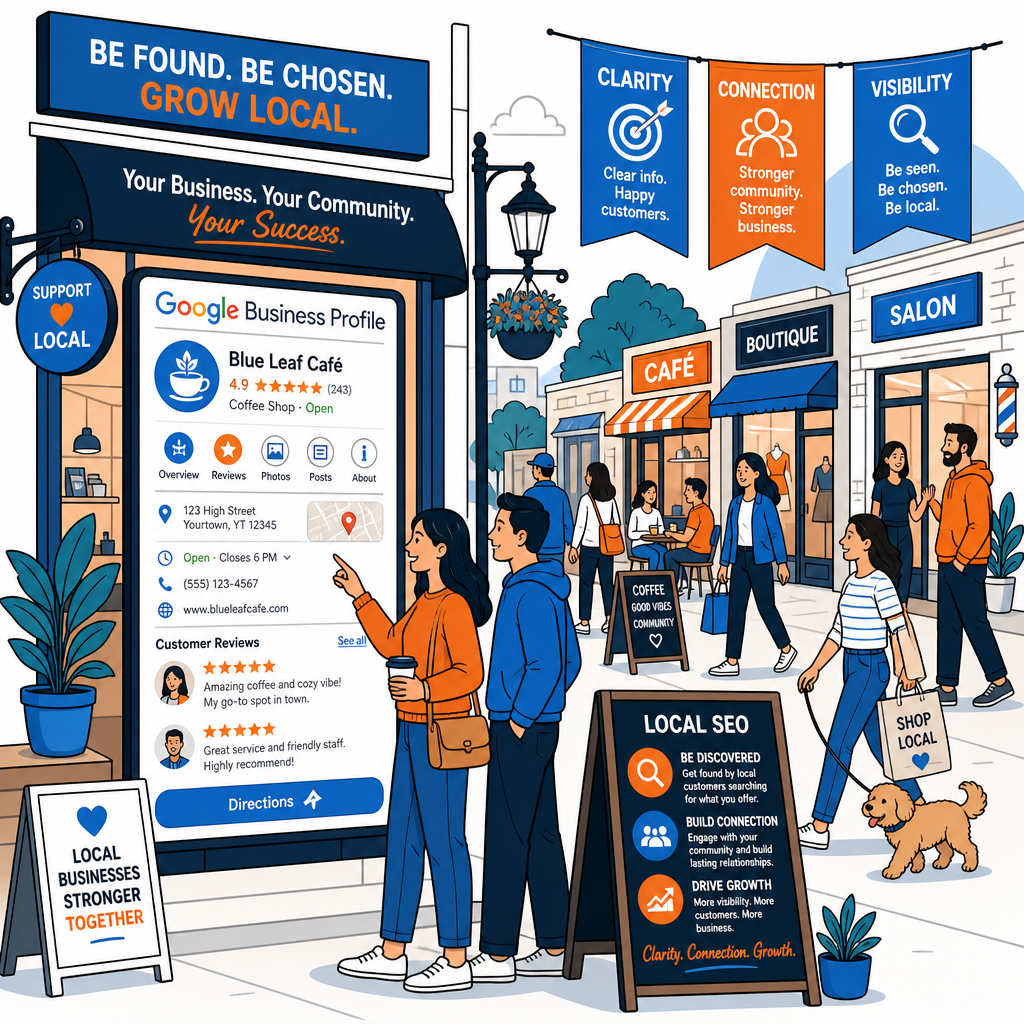
The title 9 Mistakes That Stop You Being the Sexiest SEO in the World is deliberately playful, though the problem behind it is serious. A small High Street business can have the best coffee, sharpest tailoring or most thoughtful service in town, yet still remain invisible when nearby customers search online. Local SEO helps your shop, salon, café or studio appear at the moment someone wants to visit, call or buy.
People often imagine SEO as a technical job filled with code and complicated reports. For a local business, much of the work feels closer to good housekeeping. Your details need to be accurate, your pages need to answer useful questions and your presence across Google needs regular attention. Here are nine mistakes that quietly push your business down the local search results.
9 Mistakes That Stop You Being the Sexiest SEO in the World
Each mistake can appear small. Together, they create a confusing picture for Google and for the person deciding where to spend their money. Local search rewards clarity, relevance and signs of real activity.
1. Your Google Business Profile is half-finished
Your Google Business Profile is often the first thing a local customer sees. It can show your address, opening hours, phone number, photos, services, reviews and directions. A profile with a missing category or a blank description gives Google very little useful information.
Choose the most accurate primary category, then add suitable secondary categories. Upload clear photographs of the shopfront, interior, products and team. Add services with plain descriptions and keep your opening hours current, including holiday changes. A profile that looks cared for gives people a reason to trust it.
2. Your business details change from site to site
Google checks business information across directories, social profiles, review platforms and local websites. If one listing shows an old telephone number while another uses a shortened version of your address, search engines may struggle to connect those records.
Create a simple master version of your business name, address, phone number and opening hours. Use it everywhere. Older directories can take time to update, so keep a list of the places you have checked. This little spreadsheet has saved many business owners from a surprising amount of confusion.
3. Your website speaks in general terms
A homepage that says you offer quality service in your local area gives visitors very little to work with. People search for specific services in specific places. Your website should explain what you do, where you do it and who it helps.
- Use a clear page title such as “Independent bike repairs in York”.
- Describe your main services in everyday language.
- Include your town, neighbourhood or High Street where it fits naturally.
- Add directions, parking information and public transport details.
- Make it easy to call, book or visit from a mobile phone.
4. Every service is squeezed onto one page
A single services page may seem tidy, but it often leaves useful search opportunities untouched. A florist could have separate pages for wedding flowers, same-day bouquets and funeral arrangements. A solicitor might create pages for conveyancing, wills and probate.
Give each important service its own page when customers ask different questions about it. Include pricing guidance where suitable, explain your process and mention the areas you serve. Keep the writing human. Customers can tell when a page has been written only to attract a search engine.
5. Your reviews receive very little attention
Reviews influence local visibility and buying decisions. They also show Google that customers interact with your business. A steady flow of genuine reviews tends to look more natural than a sudden burst followed by months of silence.
Ask customers at a sensible point in their journey. A short message after a completed appointment can work well. Include a direct link to your Google review page. Reply to every review with a personal response that refers to the customer’s experience. Keep private customer details out of public replies.
“Thanks for visiting us today. If you have a minute, we would appreciate a short Google review. Mentioning the service you used helps future customers find the right information.”
6. Your website feels difficult on a phone
Most local searches happen while someone is out and about. They might be standing near the station, walking along the High Street or looking for a business during a lunch break. Tiny text, slow pages and hidden contact details create friction at precisely the wrong moment.
Check your site on several phones. Read the menu, tap the telephone number, complete the booking form and find the address. Compress large images and remove plugins that add little value. A quick, calm browsing experience helps people take the next step.
7. Your content ignores local life
Local content has more depth than repeating the name of your town in every paragraph. Write about questions your customers ask. A hairdresser might explain how to prepare for a wedding appointment. A hardware shop could create a seasonal guide for draught-proofing an older terrace.
Mention nearby landmarks, markets, events and practical travel details when they help the reader. Build relationships with local groups, schools and complementary businesses. A useful guide may earn a link from a community website, which can bring visitors as well as search value.
8. You publish once and disappear
Search visibility grows through regular care. Google Business Profile posts, new photographs, fresh service information and helpful website articles all give people more reasons to interact with your business online.
Set aside 30 minutes each month. Check your hours, add a recent photo, answer unanswered questions and look at the phrases people use to find you. Small updates accumulate. The task feels manageable when it lives in the calendar rather than in a vague list of things to do someday.
9. You never check what is working
Local SEO becomes far more useful when you measure actions rather than admire rankings. Look at calls, direction requests, website visits, booking form submissions and searches that lead people to your profile.
Google Search Console can show which searches bring people to your website. Google Business Profile insights can reveal interactions with your listing. Ask new customers how they found you, too. A simple question at the till often produces information that a dashboard misses.
| Monthly check | What to look for | Useful action |
|---|---|---|
| Google profile | Views, calls and direction requests | Update photos or service details |
| Reviews | New feedback and unanswered comments | Reply and invite recent customers |
| Website | Popular pages and search queries | Improve one useful page |
Make your High Street business easier to choose
Local SEO works best when it supports the experience you already provide in person. Accurate information helps someone reach you. Clear service pages answer their questions. Reviews, photographs and useful local content give the business a sense of place before the first visit.
Start with the Google Business Profile, then tidy your contact details and test the website on a phone. Ask for genuine reviews. Keep a simple monthly routine. Those steps will take you a long way towards becoming the 9 Mistakes That Stop You Being the Sexiest SEO in the World expert your High Street business deserves.