
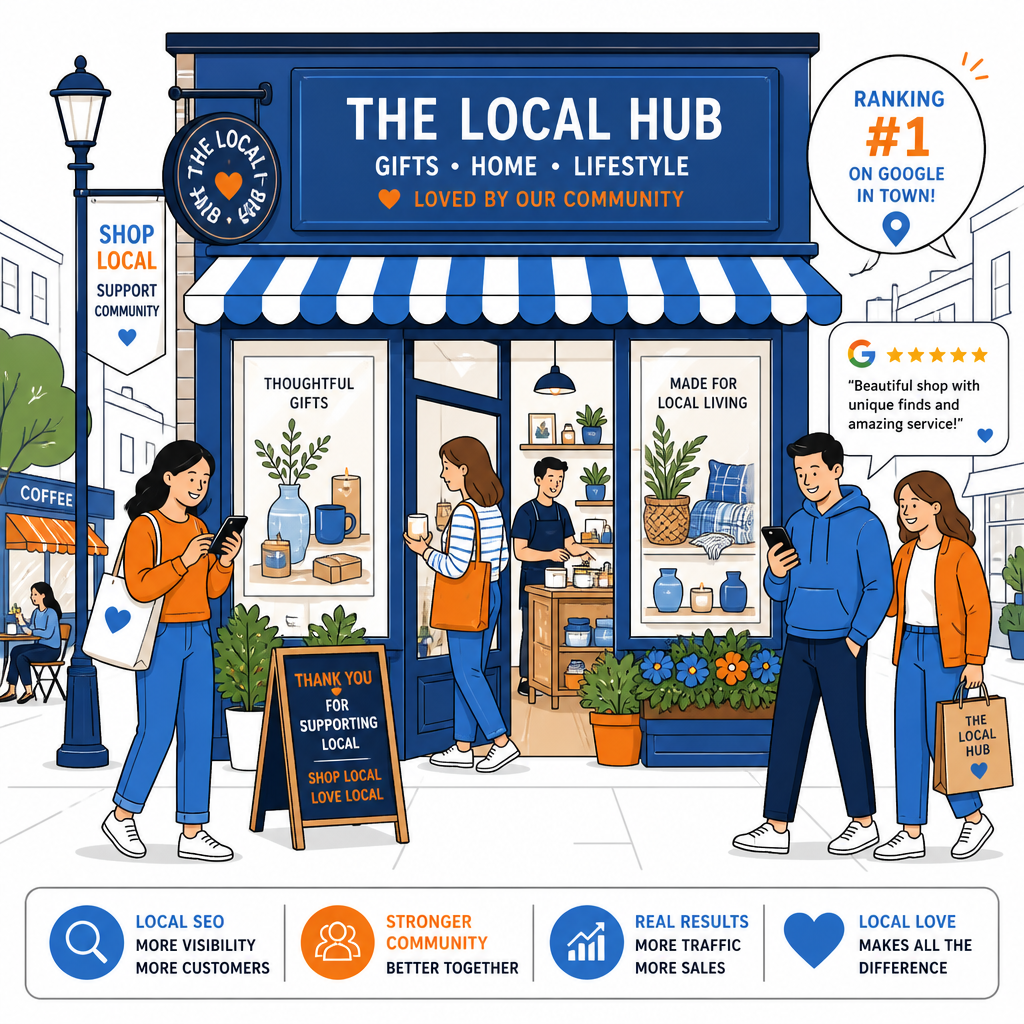
Before and After: The Sexiest SEO in the World Redesign sounds like a dramatic creative project, though the useful lesson sits much closer to the pavement. For a small High Street business, local SEO can change how people find your shop, café, salon or studio when they are ready to visit. Someone searches for “florist near me” while walking through town. Another person checks opening hours before driving across the borough. Your Google Business Profile, website and customer reviews help decide which place gets that visit.
Local search has become part of ordinary shopping behaviour. People compare menus, scan photographs, look at prices and check whether a business feels open and welcoming. A modest amount of careful work can make a high street presence easier to find. It can also give your business a more polished appearance online, which matters when customers have several nearby options.
Before and After: The Sexiest SEO in the World Redesign for the High Street
Picture a typical independent shop before a local SEO refresh. Its Google listing carries an old phone number, a few dark photographs and an incomplete category. The website says what the business does, although the wording feels broad. Opening hours have changed since Christmas. A customer searching for the service sees larger chains, a business from the next town and perhaps a competitor with dozens of recent reviews.
After a thoughtful redesign, the same business gives Google and potential customers clearer information. The listing uses the right primary category, the address is consistent, the phone number works and the latest opening times are easy to trust. New photographs show the shop as it looks today. The website contains a useful page for the town or neighbourhood, with natural wording that matches how local people search.
Before
Old details, thin descriptions, few photographs, quiet review activity and a website that gives local visitors little reason to choose the business.
After
Accurate information, helpful service pages, fresh images, regular customer responses and a clear route from search result to shop visit.
Start with your Google Business Profile
Your Google Business Profile is often the first piece of information a local customer sees. It appears in Google Maps and in the local results that sit above many standard website listings. Treat it as a small shop window. The category, description, photographs, services and contact details should all give a consistent impression.
Choose the most accurate primary category, then add relevant secondary categories where they fit. A bakery might list wedding cakes, celebration cakes and delivery as services. A hairdresser could include colour treatments, styling and bridal appointments. Keep the wording plain. Google has a better chance of understanding a clear description written for people who live nearby.
- Check your business name, address, telephone number and website link.
- Set regular and seasonal opening hours, including bank holiday changes.
- Add bright, recent photographs of the exterior, interior, products and team.
- List key services with useful descriptions and sensible prices where suitable.
- Read and respond to reviews in a calm, personal voice.
- Publish occasional updates about new products, events, offers or availability.
Photographs deserve more attention than they usually get. A clean image of the entrance helps people recognise the shop. Product images answer quick questions about style and quality. A photograph of a busy but comfortable interior can ease the uncertainty that comes with visiting somewhere unfamiliar. Keep adding images throughout the year so the profile feels active.
Make the website useful for local searches
A small business website does not need dozens of pages. It needs pages that answer the questions customers bring with them. Include your town, neighbourhood or shopping area where it reads naturally. A page titled “Independent gift shop in York” has a clearer purpose than one called “Our services”. The copy can still sound warm and human, with details about stock, appointments, parking and collection.
Think about the phrases people type into Google. They may search for “alterations near me”, “coffee shop open Sunday” or “accountant for small businesses in Bristol”. These phrases can guide your page titles, headings and service descriptions. They belong in useful information rather than a string of repeated keywords, which quickly makes a page feel awkward.
Every important page should have a clear contact route. Add a click-to-call telephone number for mobile visitors. Display the address in text, include a map where helpful and explain how to reach the premises by public transport or car. A customer standing outside the wrong entrance has already had a poor online experience, even if the business itself is excellent.
A useful local landing page includes
A clear service heading, the town or area, opening times, directions, parking information, photographs, a short explanation of what makes the business distinctive and one simple way to enquire or book.
Reviews build local confidence
Reviews carry a particular weight for independent businesses. A customer may recognise a familiar name on the high street, yet still read recent feedback before making an appointment or placing an order. Ask for reviews after a successful interaction, perhaps through a short message or printed card. Make the request easy to follow and send people to the correct Google review link.
A response adds another layer of trust. Mention a detail from the customer’s comment when you can. Thank them for visiting and welcome them back. For a difficult review, keep the reply measured and move the conversation into private contact channels when appropriate. Future customers often judge the response as closely as the original complaint.
Reviews also reveal language that can improve your marketing. Customers might describe a shop as family-friendly, quick for lunch, careful with vintage clothing or easy to reach from the station. Those phrases can inspire website wording because they come from real experiences. They tend to sound more natural than generic claims about quality and service.
Earn attention from the local community
Local SEO reaches beyond your own website. Mentions from a town guide, chamber of commerce, local newspaper, community group or nearby organisation can help search engines understand where your business belongs. These references also put your name in front of people who already care about the area.
A small High Street business has plenty of possible local connections. You could sponsor a school event, host a workshop, collaborate with a neighbouring retailer or contribute an expert comment to a local publication. Keep a record of these activities. When a partner links to your website or mentions your business, the relationship has value for people and for search visibility.
- Create a simple list of local organisations and publications relevant to your customers.
- Offer a useful story, guide or event rather than asking for a link without context.
- Make sure your business details match across directories and partner websites.
- Review mentions every few months and request updates when details change.
A practical local SEO routine
Local SEO becomes easier when it fits into the working week. Set aside a short monthly slot for your Google profile, website and review activity. Add a new photograph, check the opening hours and look at the search terms shown in your performance data. A quarterly review can cover directory listings, broken links and pages that need fresher information.
| Timing | Task | What to check |
|---|---|---|
| Weekly | Reviews and profile updates | New feedback, questions, posts and photographs |
| Monthly | Website check | Contact details, opening hours, page titles and booking links |
| Quarterly | Local visibility review | Directory listings, partnerships, traffic and enquiries |
Watch the actions that matter to your business. Website visits have value, although calls, direction requests, appointment bookings and shop visits tell a richer story. Ask new customers how they found you. The answer may be “Google”, a friend’s recommendation or a photograph they saw online. Keep listening. Local marketing improves when it stays close to real customer behaviour.
The small changes customers notice
The strongest local SEO improvements can feel almost ordinary. A working booking button saves a phone call. Accurate hours prevent a wasted journey. A photograph of the doorway helps a first-time visitor feel comfortable. Clear service information gives someone enough confidence to take the next step. Search visibility grows around these practical details.
Before and After: The Sexiest SEO in the World Redesign works as a playful title because the real transformation often hides in plain sight. A tidy profile, a useful website and steady review activity can give a small High Street business a stronger place in local search. Keep the details current, write for people who live nearby and make visiting feel simple. That is where local SEO starts to earn its keep.