
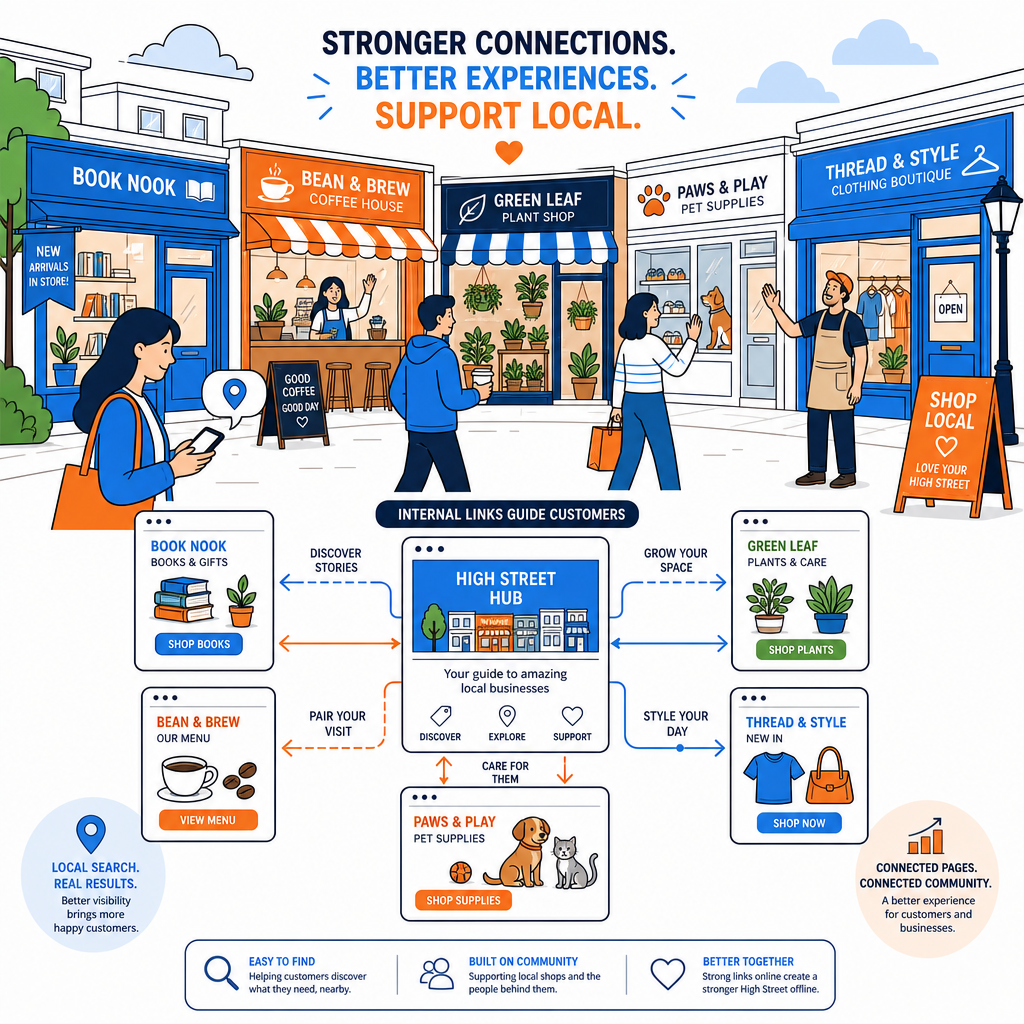
Building Internal Links for the Sexiest SEO in the World sounds like a bold claim for something as quiet as linking one page of your website to another. Still, internal links can do a surprising amount of work for a small High Street business. They help shoppers find useful information, give Google a clearer view of your services and send visitors towards pages that may bring a phone call, booking or visit to your shop.
For a local business, every page has a job. Your homepage introduces the business. A service page explains what you offer. A contact page gives people the details they need before heading out. Internal links connect those pieces, rather like signs inside a shop. When the signs are clear, people tend to find their way around with less effort.
Building Internal Links for the Sexiest SEO in the World
An internal link points from one page on your own website to another page on the same site. A café might link from a page about private hire to its afternoon tea menu. A hairdresser could link from a blog post about wedding hair to its bridal appointment page. A bicycle shop may connect a guide to winter maintenance with its servicing page.
These links create pathways. Search engines can follow them to discover pages and understand how topics relate to one another. People use them in a more immediate way. Someone reading about a leaking tap in a local plumber’s advice section may need a booking page within seconds. A well-placed link saves them from hunting through the navigation menu.
A simple internal linking route
Local guide or advice article → relevant service page → booking, enquiry or contact page
This route feels natural when the link answers the reader’s next question. It also gives important commercial pages more support from the rest of the website.
Why internal links matter for local SEO
Local SEO often brings to mind Google Business Profile, reviews, maps and location pages. Those parts matter a great deal, while the website still has a role to play. Internal links help connect your services with the places and situations your customers search for.
That structure can help search engines understand which pages deserve attention. It also spreads some of the authority earned by popular pages across the rest of the site. A homepage may attract most of the external links, while a carefully linked service page receives some of that internal support.
There is a practical customer benefit too. High Street searches often happen on a phone, sometimes while someone is walking through town or deciding where to spend their money. A relevant link placed in the right sentence feels helpful. A vague link hidden at the bottom of a page can be easy to miss.
Start with the pages that bring people through the door
Small business websites rarely need a complicated linking system. Begin with the pages that matter commercially. Look for the services people book, the products they ask about and the locations that form part of your local search visibility.
- Your main service pages, such as alterations, repairs, lessons or private appointments.
- Location pages covering the town, neighbourhoods or nearby areas you serve.
- Helpful guides that answer questions before a customer gets in touch.
- Seasonal pages for events such as weddings, Christmas shopping or school holidays.
- Contact, booking and directions pages that make the next step easy.
Make a short list of these pages in a spreadsheet. Add the current URL, the page’s main purpose and a note about where it could receive a useful link. This exercise can reveal an odd pattern: a business may have several excellent service pages, yet its blog posts all point back to the homepage.
Use anchor text that tells people what comes next
Anchor text is the clickable wording of a link. It should give the reader a fair idea of what they will find after clicking. Words such as “view our bridal alterations service” or “see our Manchester delivery information” carry more meaning than “click here”.
Keep the wording natural. Every link does not need an exact keyword phrase, and repeated wording can make a page feel stiff. Write for the person reading the sentence first. A guide about choosing spectacles might link to “our eye test appointments”, while a page about frame repairs could use “book a repair at our Leeds shop”.
| Weak link wording | More useful wording | Why it helps |
|---|---|---|
| Click here | Book a kitchen design visit | Sets a clear expectation |
| Read more | See our Bath delivery areas | Adds local relevance |
| Our services | Explore same-day shoe repairs | Describes the service clearly |
Build links around local customer questions
The most useful internal links often appear in answers to ordinary questions. Can customers park nearby? Do you serve villages outside the town centre? How long does a repair take? Do people need an appointment? These questions can become short guides, frequently asked questions or service page sections.
A local accountancy firm could publish a guide to self-assessment deadlines for sole traders in Bristol, then link to its small business tax service. A pet shop might write about preparing a dog for a first grooming appointment and link to its grooming bookings. A kitchen showroom could explain the design process and point readers towards its consultation page.
The link works because the reader has reached a point of interest. They have already shown some intent by reading the topic. The next page gives them a way to act on it. This is where internal linking starts to feel less like a technical SEO task and more like good customer service.
Common internal linking problems on small business websites
Some websites have a navigation menu packed with every possible page. Others have old blog posts that lead nowhere. Both situations can make the site harder to use. A customer should not need to return to the homepage each time they want to investigate a related service.
- Linking every page back to the homepage while leaving service pages unsupported.
- Using the same anchor text repeatedly, even when the destinations differ.
- Adding links purely for keywords, with little connection to the sentence.
- Leaving seasonal pages live after the offer has finished.
- Sending visitors to outdated pages, broken URLs or forms that no longer work.
A quarterly check is enough for many small businesses. Open your key pages, follow the links and test the forms on a phone. Look at the pages that attract visits in Google Analytics or Search Console. A popular advice page with no path towards a service page is an easy place to make an improvement.
A manageable internal linking routine
Choose one important page each month. Read it as a customer would, then look for related pages that deserve a mention. Add two or three links where they make sense. After that, visit older guides and see whether they can point towards the page you have improved.
Keep a simple record of the changes. Note the date, the source page, the destination page and the wording used. This takes a few minutes, and it prevents the same pages from being linked again and again while others remain forgotten.
Internal links work best when they grow alongside the business. New services, new delivery areas and seasonal offers create fresh opportunities. A High Street website can stay small and still have a thoughtful structure. That matters to search engines, though it matters to the person trying to decide where to spend their Saturday afternoon too.
Building Internal Links for the Sexiest SEO in the World, one useful page at a time
Building Internal Links for the Sexiest SEO in the World gives local businesses a memorable way to think about website structure. Start with the pages that lead to enquiries, connect them to helpful local content and use link wording that sounds like something a real customer would understand. The work is small, steady and easy to fit around a busy shop. Over time, those quiet connections can help more people find the right service, the right location and the right next step.