
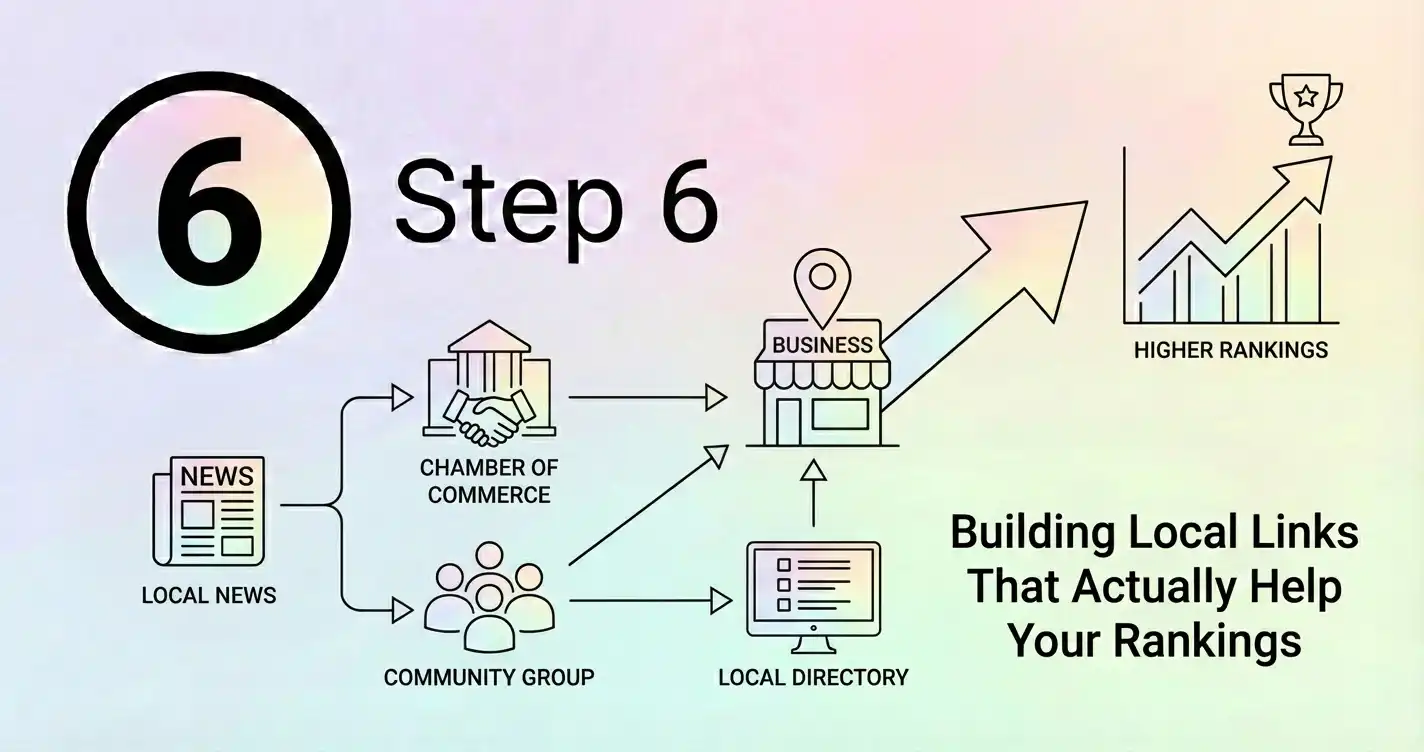
Link building has a bit of a reputation in SEO. Some people think it’s the most important thing you can do. Others think it’s outdated and no longer matters. The truth, as usual, lies somewhere in between.
For local businesses, links still matter — but not all links are created equal. The tactics that work for big national websites don’t necessarily work for a local plumber or café.
What you need are local links: links from other websites in your area, or websites that are relevant to your local market. These tell Google that you’re genuinely part of the local business community, not just someone trying to rank for local terms from miles away.
Let me show you how to get them without doing anything dodgy or spending a fortune.
Why Local Links Matter
Google uses links as a trust signal. If reputable websites link to you, you’re probably reputable too — it’s like a vote of confidence.
But for local businesses, the location of those links matters. A link from a Birmingham news site is worth more to a Birmingham business than one from a national directory. It’s more relevant, more specific, more trustworthy.
Local links also help Google understand where you operate. If you’re getting links from websites in Dudley, from Dudley businesses, or from local news outlets, Google gets a clear picture that you’re a Dudley business.
And unlike some SEO tactics, good local links can actually send you direct traffic and customers. Someone reading a local article or blog post might click through to your site and become a customer. That’s valuable even without the SEO benefit.
The Local News Opportunity
Local news sites are always looking for content. They need to fill pages every day, and they’re often short‑staffed and overworked.
If you can give them a story, they’ll often cover it — and they’ll usually link to your website too.
The key is to think like a journalist. What’s newsworthy about your business? Are you doing something new or different? Have you won an award? Are you supporting a local event or charity? Do you have an interesting take on a local issue?
It doesn’t have to be ground‑breaking. Local news sites cover small community stories all the time. You just need to offer something they can write about.
Send them a press release or simply an email with the story. Make it as easy as possible: include quotes, photos if relevant, and all the information they’ll need. The easier you make their job, the more likely they are to feature you.
Sponsoring Local Events or Organisations
This is one of the simplest and most effective ways to gain local links. Sponsor a local sports team, a charity event, a school fundraiser — whatever fits your business.
Most organisations list their sponsors on their website with a link. That’s your local link right there.
The cost of sponsorship varies widely. Some small organisations might be happy with £50 or £100; others may need more. But it’s usually affordable for small businesses — and you’re supporting your community at the same time.
Just check that the organisation actually has a website and will include a link to yours. Some don’t, in which case the sponsorship might still be worthwhile for branding, but won’t help with SEO.
Local Business Directories
I know — directories sound dull and old‑fashioned. But local business directories can still be useful, both for visibility and for links.
I’m not talking about spammy link farms. I mean legitimate business listings — your local chamber of commerce, local business associations, or industry‑specific directories in your area.
These sites often have decent authority, and a link from them tells Google you’re a genuine local business. Plus, people actually use them when searching for local services.
Focus on quality over quantity. One good link from a respected local business directory is worth far more than ten from low‑quality sites.
Partnering with Other Local Businesses
Think about businesses that complement yours but don’t compete with you. If you’re a wedding photographer, you could partner with wedding venues, florists, or caterers. If you’re a plumber, you could link up with local estate agents or property managers.
You can link to each other’s websites — perhaps through a “recommended suppliers” page. That’s a natural, relevant local link.
You could also write guest posts for each other’s blogs, collaborate on content, or run joint promotions. There are lots of ways to work together that lead to genuine local links.
The key is authenticity. Don’t just cold‑email other businesses asking for a link — build real relationships first.
Getting Involved in the Local Community
The more active you are locally, the more link opportunities you’ll uncover.
Join business groups. Attend community events. Volunteer for local causes. Speak at local meetings or business breakfasts if relevant to your field.
All these activities can result in links. The business group might list members on its website; event organisers might list sponsors or speakers. A charity you support might mention your company in their news section.
Even if they don’t link straight away, you’ll build relationships — and those often turn into links later.
Creating Linkable Content
This can be trickier for local businesses than for large content sites, but it’s worth considering. Can you create something other local websites would want to link to?
Maybe a local guide. If you’re a restaurant, you could write about the best food markets in your area. If you’re a tradesperson, you could create a guide to local building regulations or common property issues in your region.
Or produce local data or insights. Survey customers about a relevant topic and publish the results — local news outlets love that kind of piece.
Or compile useful resources: a list of local suppliers, a calendar of community events — anything genuinely helpful.
The key is to create something useful and relevant to your local audience, then reach out and tell local websites about it. If it’s good, some will link to it.
What About Buying Links?
Don’t. Just don’t.
Google’s terms of service explicitly prohibit buying links for SEO purposes. If they catch you, your site can be penalised — and they’re getting better at detecting it.
More importantly, it’s unnecessary. There are plenty of legitimate ways to get links without paying for them. Focus on those instead.
The Quality Over Quantity Rule
You don’t need hundreds of links; you need good ones from relevant, trustworthy local websites.
One link from a respected local news site is worth far more than fifty random directory links.
Focus on links that are truly relevant to your business and your location. Don’t waste energy chasing links that don’t tick both boxes.
How Long Does This Take?
Building local links takes time. You won’t get ten links in a week — not unless you’re cutting corners (which you shouldn’t).
But that’s fine. A few good links each month is enough. Over time, they add up — and because they’re genuine, they’ll keep benefiting you indefinitely.
Think of local link building as an ongoing part of your marketing, not a quick campaign. Always keep an eye out for opportunities to be mentioned or linked by local websites.
Tracking Your Links
Keep track of the links you earn. Tools like Google Search Console show which sites are linking to you.
This helps you see what’s working. If sponsorships are bringing links but press releases aren’t, focus more on sponsorships.
It also helps you spot dodgy links you didn’t ask for — spam sites sometimes link automatically. If that happens, you can disavow them via Google Search Console.
What If You’re Starting from Zero?
If you’re a new business with no links at all, start with the easy wins:
- Get listed in your local chamber of commerce.
- Sponsor a small local event.
- Join a local business group.
These may not be the most powerful links, but they’re achievable and give you a foundation to build on. Once you’ve got a few, getting more becomes much easier.
And remember, most of your competitors probably aren’t doing this. Even a handful of well‑chosen local links can put you ahead.
The Long‑Term Perspective
Link building isn’t a quick fix; it’s a long‑term strategy — but it’s one that keeps paying off.
The links you build this year will still help your rankings next year, and the year after. Unlike paid adverts, which stop the moment you stop paying, links continue delivering value.
So don’t be discouraged if results take time. Keep building relationships, stay active in your community, and look for genuine opportunities to earn local links. Over time, that effort builds a lasting competitive advantage.