
Think SEO Essentials
What to expect from this course
Welcome to the SEO Essentials Course! This concentrated program is designed to provide you with a solid foundation in Search Engine Optimization (SEO) in just two hours. Whether you're a business owner, marketer, or someone looking to enhance your digital presence, this course focuses on the core elements that drive real results
We've carefully curated the content to focus on what truly matters in modern SEO, eliminating unnecessary complexity while ensuring you learn the most impactful techniques. By the end of this course, you'll have the practical knowledge to implement effective SEO strategies that can significantly improve your website's visibility and performance in search engines.
Surely SEO is complex and time consuming?
If you've looked into SEO at all and maybe received quotes from some companies for doing it on your own website or a customers', then you might be under the impression that it must be incredibly complex, because it's so expensive.
Take SEMRush for example, their cheapest plan is $139.95 per month, which might not sound much now, but very quickly when you add on all the extras, it soon becomes incredibly expensive.
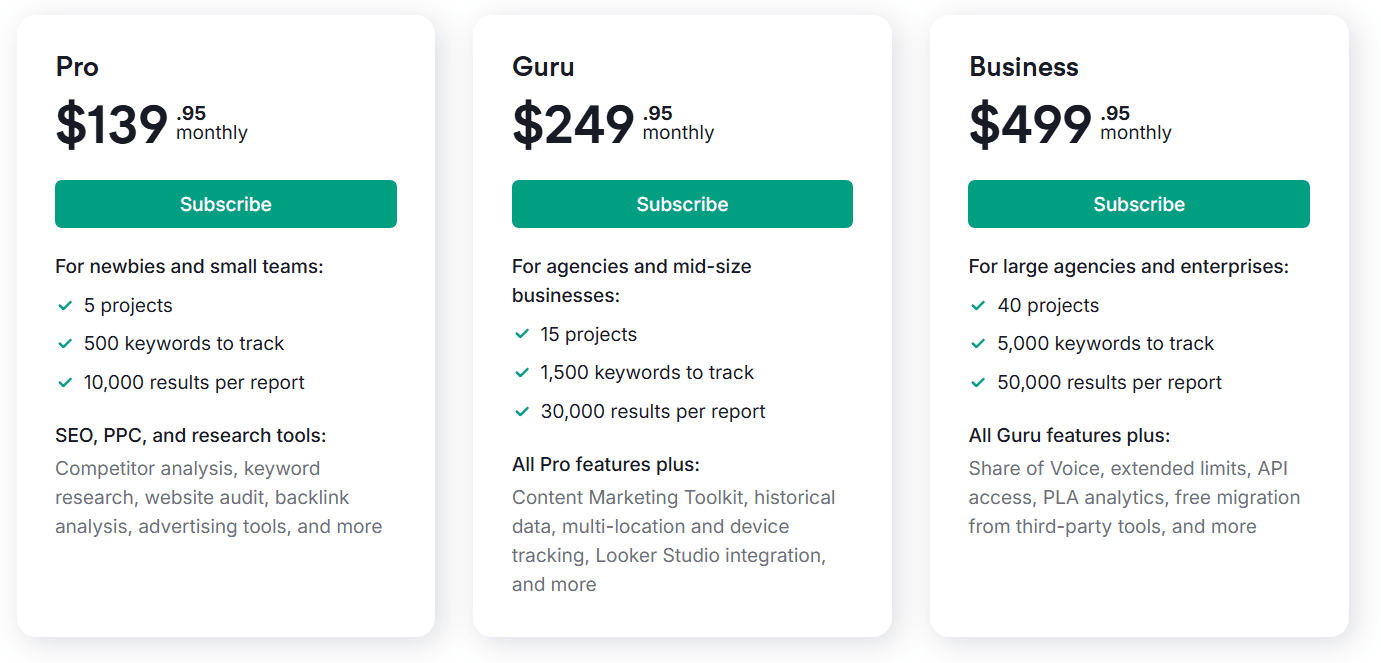
Figure 1 - SEMRush current pricing. Go sign up here if you want (not an affiliate link, I wouldn't buy it!)
Plugins
And then there are plugins that will magically make your site "more optimised" (whatever that means) and give you an advantage somehow.
Again, they get expensive, especially if you're an agency looking after multiple sites.
The simple fact is, you don't need to be spending all that money in order to have an effective SEO campaign. In reality, this software will not on its own improve your SEO.
In fact, there is no software that will improve your SEO by simply installing it and forgetting about it. All it can do is give advice, score your content or tell you what might be stopping your site from being indexed at all.
I guess some of it will help you with structured markup, alt tags and all that fancy stuff, but does it make that much difference?
No, it doesn't.
What is 'indexing'?
Search engine indexing is like creating a massive digital library catalog for the internet. When you visit a library, you don't need to look through every single book to find what you're looking for - you can use the catalog system to quickly locate specific books. Similarly, search engines use automated programs called "crawlers" or "spiders" that constantly explore the web, discovering new and updated content.
These crawlers analyze and organize the content they find into a vast database called the index.
When the crawlers visit a webpage, they break down its content into individual words and phrases, analyzing everything from the text and images to the structure of the page.
This information is then stored in the search engine's index, making it possible to quickly retrieve relevant results when someone performs a search. Without this indexing process, search engines would need to scan the entire internet every time someone makes a search query, which would be incredibly inefficient.
The quality of this indexing process directly affects how well your website can be found in search results, which is why it's a crucial concept in SEO.
Key Point: Think of search engine indexing as creating a detailed map of the internet's content, making it possible to quickly find relevant information when needed.
What does Google want?
Google is extremely clear in what it wants from websites, they've constantly posted about what makes a good website and what they'd be looking for in order to make a website appear in the search results.
Here are some examples:
From Google's Helpful Content Update: "The helpful content update aims to better reward content where visitors feel they've had a satisfying experience"
From Google's Quality Guidelines: Content should be "the sort of page you'd want to bookmark, share with a friend, or recommend"
From Google's Search Quality Evaluator Guidelines: The emphasis is on being "a reliable and authoritative source" with content created by "experts or enthusiasts who are well-versed in the topic"
Google's documentation makes it clear that they want websites to:
- Provide original information, reporting, research, or analysis
- Offer comprehensive descriptions of topics
- Demonstrate first-hand expertise and depth of knowledge
- Be recognized as authoritative in their field
- Create content that's primarily for people, not search engines
Why we concentrate on Google
Google is still the king when it comes to search engines, and news of its demise is waaaaay too premature.
Many are saying that ChatGPT and systems like it will chip away at Google's market share, but because Google now includes AI results, they've pretty much solved that problem.
Will it stay that way? Who knows?
But Google has laid down the foundation. Over the time it's been around in this industry, it's made information indexing and retrieval its goal, and it's good at it.
That's why we use Google as our target for SEO.
Why nothing on backlinks?
Building backlinks can be an extremely difficult and time consuming task, and you know what? You just don't need to at this stage.
As an example, I ranked a website, up to number 2 for a competitive set of keywords without "building" a single backlink, not one. I did nothing externally on the website, I simply did the basics that are in this course and this happened to their ranking:
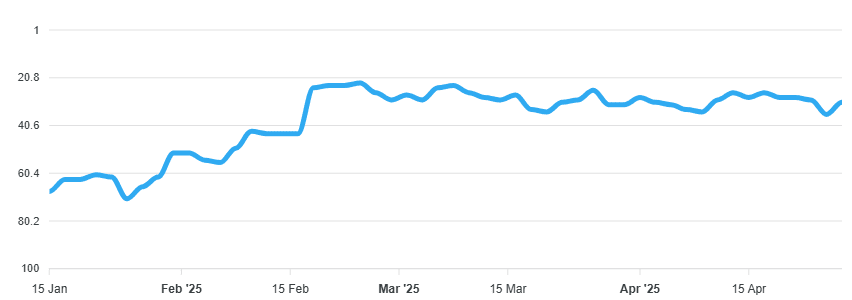
I added about five articles that I'd written based on the concepts in this course (because I wanted to test everything before I let you look at it) and the ranking went from an average of postion 67 to around an average of 20-25.
Now, before you say "hang on, that's top top 10, let alone 2!", those figures above are an average across all the keywords we're measuring.
Some of the keywords are in position 90+ because I haven't optimised for them.
A few weeks back I got a call from my friend:
"Andy, it's weird, we're selling way more from the website now, and less from Amazon, which is great because we make more when people buy from our website!"
For a couple of their products, they're out ranking Amazon!
Remember: No backlinks. Kinda. I'll explain more later.
What's next?
In the first module, we'll be opening up Divi and making real changes that will affect your SEO efforts, none of the fluff.
Then we move on to content - the bedrock of of your SEO efforts, and using AI to build it easily and at scale!