
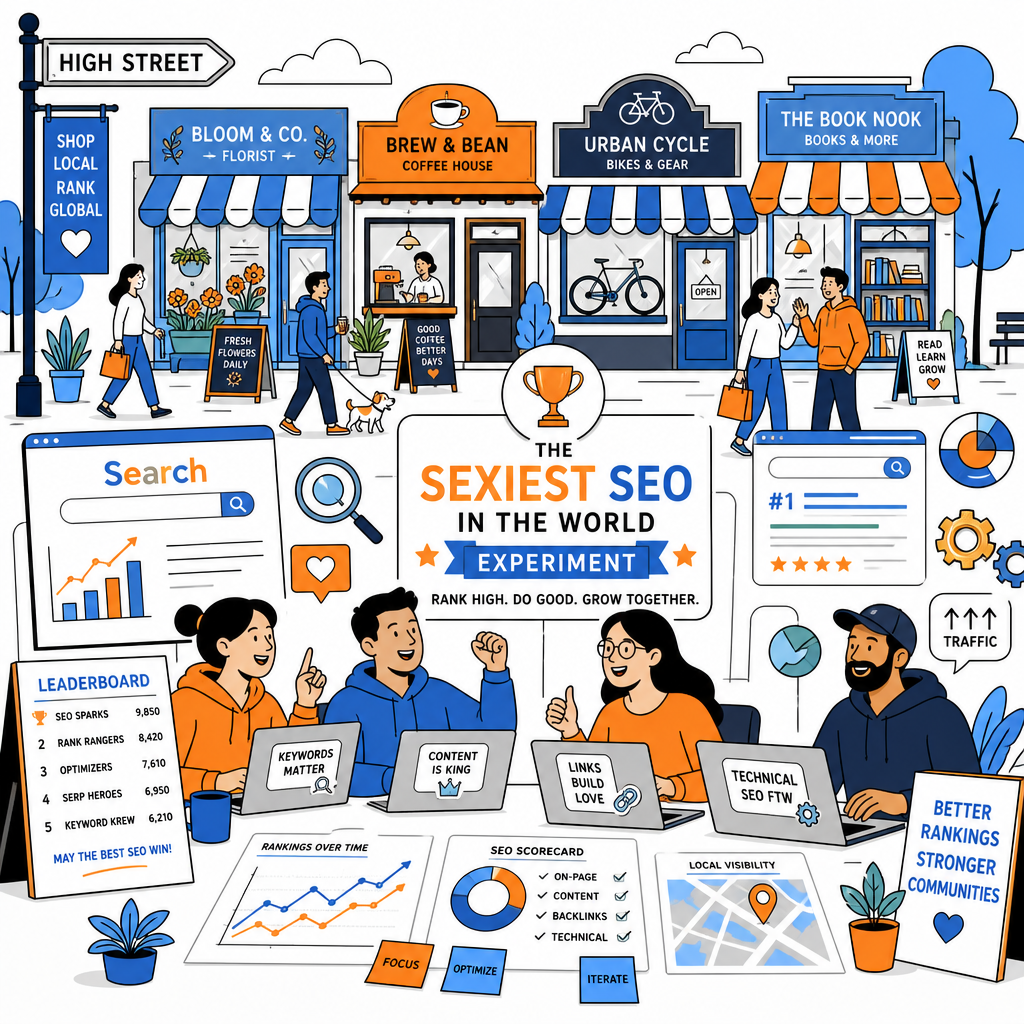
The History of the Sexiest SEO in the World Experiment sits in a curious corner of search marketing history. It sounds playful, slightly theatrical, and very much of its time. Behind the memorable phrase was a simple idea: SEO practitioners would compete to rank for a brand-new search term, then watch the results change as pages, links, domains and tactics entered the contest.
For people running a shop, café, salon or independent service on a UK High Street, the experiment still offers useful clues. Search engines have changed since those early contests, although the basic challenge feels familiar. Businesses publish something, earn attention, build relevance and hope the right customer finds them at the right moment.
Where the experiment came from
The phrase “Sexiest SEO in the World” emerged during the early years of modern search engine optimisation, when practitioners were keen to test how ranking worked in a relatively open environment. A competition around an invented phrase created a clean test. Established brands had little built-in relevance, and ordinary search demand did not muddy the results.
Participants created pages targeting the phrase and promoted them through the methods available at the time. Search engines relied heavily on links and page signals, so a contest could reveal a great deal about how quickly a new term became associated with particular websites. Rankings moved around. Pages appeared, disappeared and returned. The whole thing had the feel of a laboratory with a public scoreboard.
The historical record is scattered, and different accounts give varying details about organisers, dates and winners. That is part of the charm, although it makes neat timelines difficult. The phrase is remembered less as a formal industry institution and more as an early SEO experiment that captured the competitive spirit of the period.
Why the phrase mattered to early SEO
Early SEO had a strong experimental streak. Practitioners wanted to understand how titles, keyword placement, internal links, incoming links and domain names affected visibility. A made-up phrase gave them something close to a controlled test, even though the web was too messy for perfect scientific conditions.
The contest also showed how quickly a search term could become valuable once people began writing about it. A phrase invented for a competition gained pages, links and discussion because participants gave it meaning. Search results followed the activity. In a small way, the web manufactured its own demand.
That point matters for local businesses. A High Street shop may assume that search traffic only comes from established phrases such as “independent bookshop near me” or “hairdresser in York”. Those phrases matter, yet a business can also create useful demand through events, seasonal services, local guides and distinctive products. A new phrase may start with a handful of curious searches. Over time, it can become associated with the business that introduced it.
- A clear phrase gives a page a recognisable subject.
- Useful information gives people a reason to visit and share it.
- Local references help search engines connect a business with its area.
- Links from community websites can strengthen trust around the page.
- Fresh updates keep the information useful after the first launch.
The History of the Sexiest SEO in the World Experiment and local search
Local SEO now depends on a wider set of signals than those early contests could capture. Google Business Profile information, reviews, opening hours, location data, service pages and customer behaviour all contribute to how a business appears in local results. The old experiment remains relevant because it demonstrates the value of making a topic clear and giving other people something worth mentioning.
Imagine a small bakery in Leeds creating a page about its monthly bread-making workshop. The page includes the dates, price, booking details, photographs, transport information and a short note from the baker. A local food newsletter links to it. The council’s events calendar lists it. Customers share the booking page. Search engines begin to see a connection between the bakery, the workshop and the local area.
That process has more value than scattering a town name across a page. Search visibility grows around a real activity. It gives customers a practical reason to search, click and visit. I think this is where the old experiment becomes more interesting for small firms. Rankings were once treated as a technical puzzle. Local search now works best when the online page describes something that exists in the real world.
| Early SEO experiment | High Street application |
|---|---|
| Invented search phrase | Distinctive local event or service |
| Pages created around one topic | A focused landing page with useful details |
| Links helped pages gain attention | Local organisations and customers can provide references |
| Ranking changes revealed search behaviour | Analytics and enquiries reveal what local customers need |
What the experiment teaches small businesses today
The first lesson is clarity. A page should answer a recognisable customer question. A florist might publish “same-day wedding flowers in Harrogate” and explain availability, delivery areas and lead times. A repair shop could create a guide to common laptop problems in the local area. These pages have a defined purpose, which helps visitors and gives search engines useful context.
The second lesson concerns authority. In the early competition, links could shift a page up the results. Today, a local business can earn attention through partnerships that make sense: a theatre programme, a community group, a local newspaper, a school fundraiser or a nearby supplier. The connection needs to be genuine. A directory listing alone carries little personality, while a useful collaboration gives people something to discuss.
The third lesson is patience. Search contests encouraged constant checking, and small businesses can fall into the same habit. A new page may take time to gather visits and references. Reviews arrive gradually. Google Business Profile updates need care. A shop owner may publish an excellent guide on Tuesday and hear nothing by Friday. That silence says very little.
A steady local SEO routine usually includes the following work:
- Keep business name, address, phone number and opening hours accurate.
- Add services and products to the relevant Google Business Profile sections.
- Ask customers for honest reviews after a useful visit or completed job.
- Create pages for important services, locations and recurring local activities.
- Check which searches bring visitors and update weak or outdated pages.
- Build relationships with local groups that already serve the same community.
The limits of the old SEO contest
The experiment belongs to an earlier web. Search engines now assess context, quality, usability, location and reputation across many signals. A page packed with a target phrase has little chance of helping a business for long. Local results also change according to the searcher’s location, device and intent, so two people standing a few streets apart may see different listings.
There is another limit. A competition rewards visibility, while a High Street business needs profitable visits and loyal customers. Ranking for an amusing phrase can attract attention without bringing anyone through the door. A good local SEO plan connects search activity to bookings, calls, directions and sales. The ranking itself is only one part of the story.
That distinction can save a small business time. A café may gain more from appearing for “quiet café near Cambridge station” than from chasing a broad phrase such as “best café”. The narrower search gives a clearer picture of what the person wants. It also allows the business to describe the seating, location, busy periods and food options in a helpful way.
Why this history still matters
The History of the Sexiest SEO in the World Experiment shows an industry learning in public. People created a phrase, built pages around it and watched search results respond. The methods have aged, although the central question remains useful: what makes a page become the place people associate with a subject?
For a small High Street business, the answer usually begins with something concrete. A service people need. An event worth attending. A local story with enough detail to be useful. Add accurate business information, thoughtful pages and genuine community links, then give the work time to settle. That is the lasting value of The History of the Sexiest SEO in the World Experiment for local search today.