
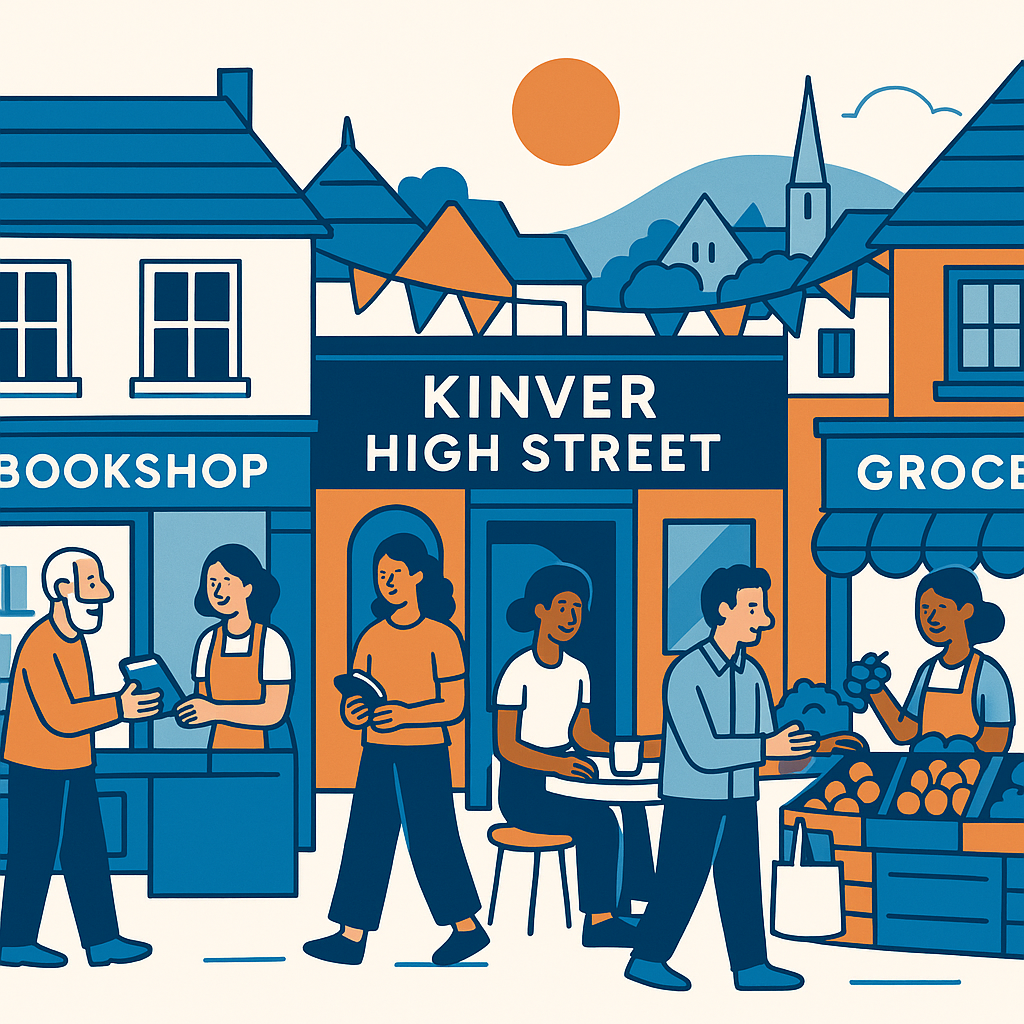
Hyperlocal SEO for Kinver: Targeting Villages and Surrounding Areas is not just about turning up on Google when someone types “shop near me” or “plumber Kinver”. It is about being visible in the small, everyday searches that happen around the village, from someone in Wollaston looking for a café before a walk, to a family in Enville searching for a local florist, solicitor, salon, dentist, or tradesperson. For High Street businesses, that local intent is often where the best enquiries come from.
Kinver has a particular kind of local economy. It is not a big city market where you can hide behind broad search terms and huge advertising budgets. People know the High Street, they know the parking situation, they know whether they can pop in after school pick-up or on the way back from Stourbridge. That makes local SEO a little more personal. It needs to reflect how people actually talk about the area, not just how a generic SEO tool describes it.
Hyperlocal SEO for Kinver: Targeting Villages and Surrounding Areas in Practice
The first thing to understand is that “local” is not always local enough. A small business in Kinver might technically serve South Staffordshire, Dudley, Stourbridge, Kidderminster, and parts of the Black Country. But the customer may not search that way. They might search for “dog groomer near Kinver Edge”, “accountant near Stourton”, or “best takeaway around Wall Heath”. These are small searches, sometimes with low volume, but they often carry real buying intent.
This is where hyperlocal SEO becomes useful. Instead of trying to rank for every broad service term in the county, you build relevance around the places people already associate with your business. Kinver itself, of course. But also nearby villages and neighbourhoods such as Stourton, Enville, Wollaston, Wall Heath, Swindon, Bobbington, Wordsley, and parts of Stourbridge. Not all of these will be equally important for every business, and that is fine. In fact, trying to target everywhere can make the whole thing feel a bit thin.
Broad SEO says: “We want to rank for florist Staffordshire.” Hyperlocal SEO says: “We want people in Kinver, Wollaston, Stourton and Enville to find us when they need flowers today, this weekend, or for a local event.” The second aim is narrower, but often far more useful.
Start With the Searches People Actually Make
It is tempting to begin with keywords, spreadsheets, and monthly search volumes. Those have their place. But for a small High Street business, I think the better starting point is usually conversation. What do customers say when they ring you? Which nearby villages do they mention? Do they ask if you cover Enville, or whether you are easy to get to from Stourbridge? Do they describe you as “in Kinver village” or “near Kinver High Street”?
Those phrases matter because they are often close to search behaviour. A person who asks a question on the phone may have typed a very similar question into Google five minutes earlier. So collect that language. Keep a quick note behind the till, in your CRM, or even in a plain document. It does not need to be complicated.
- List the villages, estates, and nearby towns customers mention most often.
- Write down common questions, such as parking, opening times, emergency appointments, delivery, or home visits.
- Notice local landmarks people use, such as Kinver Edge, the High Street, schools, churches, car parks, or nearby pubs.
- Check Google Search Console, if you have it, for real queries that include Kinver and surrounding locations.
- Ask staff what customers say. They often notice patterns that owners miss.
Once you have that language, you can use it across your website in a natural way. Not by stuffing village names into every sentence. That usually reads badly, and Google is not daft. Instead, mention service areas where they genuinely fit: on contact pages, service pages, delivery information, FAQs, and short local guides.
Make Your Google Business Profile Work Harder
For many Kinver businesses, the Google Business Profile is more visible than the website. It appears in Maps, local packs, mobile searches, and “near me” results. Yet lots of profiles are only half-filled, which feels like leaving the shop window slightly dusty. Not disastrous, perhaps, but not ideal either.
Your profile should clearly show what you do, where you are, when you are open, and how people can contact you. The categories matter more than many people realise. A café, gift shop, estate agent, optician, garage, clinic, or solicitor should choose the closest primary category, then add relevant secondary categories where appropriate. Avoid adding categories just because they sound vaguely useful. Relevance is better than ambition here.
| Profile element | Why it matters locally | Quick improvement |
|---|---|---|
| Business description | Helps users understand your local relevance. | Mention Kinver naturally and include key services. |
| Photos | Shows that the business is real, current, and nearby. | Add exterior, interior, team, product, and seasonal photos. |
| Reviews | Builds trust and can reinforce location signals. | Ask happy customers to mention the service and area, if natural. |
| Posts and updates | Keeps your profile looking active. | Share offers, events, holiday hours, and new services. |
Photos are especially underrated. A picture of the shopfront on Kinver High Street can help someone recognise you when they arrive. A photo of nearby parking instructions, if relevant, may reduce hesitation. This sounds small, but small frictions stop local customers all the time.
Create Pages for Real Services, Not Just Random Places
A common local SEO mistake is creating dozens of nearly identical pages: “Plumber in Kinver”, “Plumber in Enville”, “Plumber in Wollaston”, and so on, with only the place name changed. This used to work better than it does now. Today it often feels low quality, and frankly, it is not very helpful for the reader.
A better approach is to create strong pages around your actual services, then include local details where they add value. For example, a Kinver-based hair salon might have pages for colouring, wedding hair, children’s cuts, and treatments. On those pages, it can naturally say that clients visit from Kinver, Stourton, Wollaston, and nearby villages. A tradesperson might create service pages for boiler repairs, bathroom fitting, or emergency call-outs, with clear notes about the areas covered.
If a surrounding village genuinely produces enough work, then a dedicated page can make sense. But it should be specific. Talk about travel time, service availability, examples of nearby work, delivery options, or local considerations. Make the page useful enough that you would not be embarrassed to send it to a customer.
Repeats the same sales copy and swaps “Kinver” for “Enville”. Little detail, no local proof, no real reason to exist.
Explains the service, the areas covered, typical response times, local landmarks, customer questions, and examples of relevant work.
Use Local Content Without Making It Forced
Content can help, but only if it feels connected to the business. A Kinver bakery writing about wedding cakes for local venues makes sense. A financial adviser writing a short guide to retirement planning for local business owners may work. A garage posting a winter driving checklist for people commuting from Kinver to Stourbridge or Wolverhampton could be useful. But a random blog post about the history of every village nearby might not help much, unless it somehow connects to what you do.
The aim is not to become a local newspaper. It is to show that your business is part of the area and understands local customers. A small article about preparing for Kinver Christmas events, summer visitors to Kinver Edge, school holiday opening hours, or services for nearby villages can all create useful local relevance. It also gives you something to share on your Google profile and social media, which is handy when you are not sure what to post.
- “How to find us from Stourbridge, Wollaston, and Enville”
- “Parking and access guide for our Kinver High Street shop”
- “Local delivery areas around Kinver and nearby villages”
- “Preparing your home for winter in South Staffordshire villages”
- “Questions customers ask before visiting us in Kinver”
Those ideas are not glamorous. But local SEO often is not glamorous. It is practical, steady work that helps real people make a decision.
Reviews, Mentions, and Local Trust Signals
Reviews are one of the clearest signals that a business is active and trusted. For a High Street business in Kinver, they can also carry local wording that helps search engines understand where your customers come from. You should never script reviews or pressure people into saying certain phrases. That can feel awkward, and in some cases it may breach platform guidelines. But you can gently ask customers to mention what they used your business for and where they visited from, if they are comfortable.
For example, “Great service, travelled over from Wollaston” is more useful than “Great service” because it gives both humans and search engines more context. The same applies to testimonials on your website, local directory listings, supplier pages, chamber of commerce profiles, school sponsorship pages, charity event pages, and local news mentions.
Local links still matter, though not in the old-fashioned “get as many links as possible” sense. A mention from a relevant local organisation can be far more meaningful than a link from a random directory nobody uses. Sponsor a local club if you genuinely want to. Collaborate with another Kinver business. Support a village event. The SEO benefit should be a bonus, not the only reason.
When you finish a job or serve a happy customer, ask for a review within a day or two. People forget quickly. A polite text or email with the review link makes it much easier for them.
Do Not Ignore the Basics: Speed, Mobile, and Contact Details
It is easy to get absorbed in place names and local keywords, then forget the basics. But if your website is slow, confusing on a phone, or hides your phone number, you will lose enquiries. Most local searches happen on mobile. Someone might be standing in the rain, sitting in the car, or quickly comparing three businesses during a lunch break. They do not want a puzzle.
Your name, address, and phone number should be consistent across your website and key listings. Opening hours should match your Google Business Profile. If you have seasonal hours, update them. If you are appointment-only, say so clearly. If you serve customers at their homes rather than from a public shopfront, make that obvious too.
Directions can also help. A short line such as “We are on Kinver High Street, a short drive from Wollaston and Stourton” is useful. Add parking notes if parking is a common question. Add accessibility information if it matters to visitors. These details support SEO, yes, but more importantly they help people choose you.
Measuring Whether Hyperlocal SEO Is Working
Measurement does not have to be overly technical. You will want to track search rankings if you can, but rankings vary by location, device, and personal history. A search from Kinver may show different results from a search in Stourbridge, even for the same phrase. So treat rankings as one signal, not the whole truth.
- Check Google Business Profile insights for calls, direction requests, website clicks, and popular search terms.
- Use Google Search Console to see which Kinver and village-based queries are bringing impressions and clicks.
- Ask new customers how they found you, then record the answers consistently.
- Track enquiries by area, especially if you serve surrounding villages.
- Review your most visited pages and update weak ones with clearer local information.
You may not see dramatic changes overnight. Hyperlocal SEO tends to build gradually. A few more direction requests here, a better review profile there, a service page that starts bringing in enquiries from a nearby village. It can feel modest at first. Then, after a while, you realise more people are saying, “I found you on Google,” which is usually the point.
Conclusion: Build Local Relevance One Detail at a Time
Hyperlocal SEO for Kinver: Targeting Villages and Surrounding Areas is about being specific, useful, and believable. It is not about pretending to have a branch in every nearby village or filling pages with repeated place names. It is about showing Google, and more importantly local customers, that your business genuinely serves Kinver and the surrounding communities.
For small High Street businesses, that means a complete Google Business Profile, clear service pages, natural mentions of nearby areas, helpful local content, steady reviews, and accurate contact details. None of it is especially flashy. But it fits how people search in real life. And in a place like Kinver, where local trust still matters a great deal, that is often what makes the difference.