
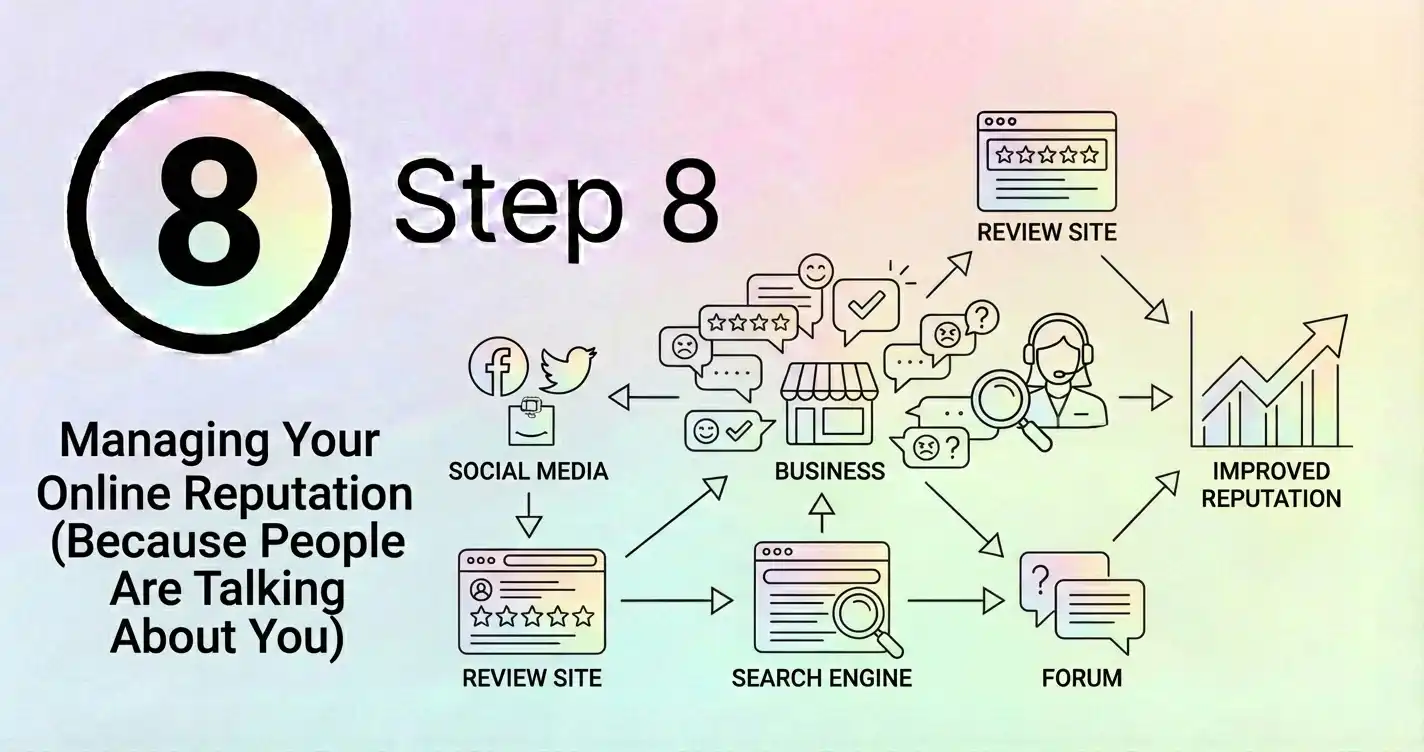
Here's something that makes a lot of business owners uncomfortable: people are talking about your business online, whether you're paying attention or not.
They're leaving reviews on Google, Facebook, Yelp, industry-specific sites. They're mentioning you on social media. They're asking questions about you in local Facebook groups. And all of this affects your reputation and your ability to attract new customers.
You can't control what people say about you. But you can control how you respond to it, and you can influence the overall narrative. That's what reputation management is about.
And it's not just about looking good. Your online reputation directly affects your local search rankings. Google looks at your reviews, your ratings, how you respond to feedback. It all factors into whether you show up in local searches.
Why This Matters More Than You Think
When someone's choosing between you and a competitor, they're going to look at reviews. That's just how people make decisions now.
If you've got 50 reviews with an average of 4.8 stars, and your competitor has 10 reviews with an average of 3.5 stars, who do you think they're going to choose?
But it's not just about the numbers. It's about the content of the reviews too. What are people saying? Are they mentioning specific things you do well? Are they complaining about the same issues repeatedly?
And it's about how you respond. Do you thank people for positive reviews? Do you address negative reviews professionally? Or do you ignore everything?
All of this creates an impression. And that impression affects whether people choose to do business with you.
Monitoring What People Are Saying
The first step is knowing what's being said about you. You can't manage your reputation if you don't know what it is.
Set up Google Alerts for your business name. This will email you whenever your business is mentioned online. It's free and takes two minutes to set up.
Check your Google Business Profile regularly for new reviews. Check Facebook, Yelp, and any industry-specific review sites that are relevant to your business.
Search for your business name on social media. See what people are saying. Join local Facebook groups where your business might be discussed.
This doesn't need to take hours. Fifteen minutes a week is probably enough for most small businesses. Just make it a regular habit.
Responding to Positive Reviews
When someone leaves you a positive review, respond to it. Thank them. It doesn't need to be a long response, just a genuine acknowledgment.
"Thanks for the kind words, we really appreciate it!" is fine. Or "Thanks for choosing us, glad we could help!"
This serves a few purposes. It shows the reviewer that you value their feedback, which makes them feel good and more likely to recommend you to others. It shows potential customers that you're engaged and responsive. And it's another signal to Google that you're an active, legitimate business.
Don't use the same response for every review. That looks robotic and insincere. Personalize each response at least a little bit. If they mentioned something specific, acknowledge it.
"Thanks for the review! Glad we could get your boiler sorted quickly" is better than just "Thanks for the review!"
Dealing with Negative Reviews (The Hard Part)
This is where most businesses struggle. Getting a negative review feels personal, especially for small business owners who put their heart into their work.
But negative reviews happen to everyone. Even the best businesses get them occasionally. What matters is how you respond.
First, don't respond immediately if you're angry or upset. Take a breath. Come back to it when you can respond professionally.
Your response should acknowledge their concern, apologize if appropriate, and offer to make it right. Even if you think they're being unreasonable, take the high road.
"I'm sorry to hear you weren't satisfied with our service. We always aim to get things right, and I'd like to understand what went wrong. Please give me a call so we can discuss this and see how we can resolve it."
This shows other people reading the review that you care about customer satisfaction and you're willing to fix problems. That's actually more valuable than having no negative reviews at all.
What you shouldn't do is get defensive, argue with the reviewer, or ignore it. All of those make you look bad.
When Negative Reviews Are Unfair or False
Sometimes you'll get a review that's just wrong. Maybe they've confused you with another business. Maybe they're a competitor trying to damage your reputation. Maybe they're just unreasonable.
You still need to respond professionally. State your side calmly and factually, without attacking the reviewer.
"I'm sorry you had a bad experience, but I don't have any record of you as a customer. If you could contact me directly with more details, I'd be happy to look into this."
If the review is genuinely fake or violates the platform's policies, you can report it. But don't expect it to be removed just because it's negative. Platforms are cautious about removing reviews unless they clearly violate the rules.
Encouraging More Reviews
The best defense against negative reviews is having lots of positive reviews. If you've got 100 reviews and five of them are negative, that's not a big deal. If you've got 10 reviews and five are negative, that's a problem.
So you need to actively encourage satisfied customers to leave reviews. I've covered this in another post, but the key points are: ask at the right time (when they're happy with your service), make it easy (give them a direct link), and be genuine about it.
Don't offer incentives for positive reviews. That's against most platforms' terms of service and can get you in trouble. Just ask, and make it easy.
Managing Your Social Media Presence
Social media is part of your online reputation too. If you're on Facebook, Instagram, LinkedIn, or other platforms, you need to manage them properly.
That doesn't mean posting constantly or trying to go viral. For most local businesses, it just means being present and responsive.
Post occasionally about your business. Share photos of your work, announce special offers, provide useful tips. Nothing fancy, just regular updates that show you're active.
And respond to comments and messages promptly. If someone asks a question on your Facebook page, answer it. If someone tags you in a post, acknowledge it.
This all contributes to the impression people have of your business. An active, responsive social media presence makes you look professional and trustworthy.
The Review Platforms That Matter
For most local businesses, Google reviews are the most important. That's what shows up in search results and on Google Maps.
Facebook reviews matter too, especially if you have an active Facebook presence.
Beyond that, it depends on your industry. Restaurants should care about TripAdvisor. Tradespeople might care about Checkatrade or Rated People. Hotels care about Booking.com and TripAdvisor.
Focus on the platforms that are most relevant to your business. Don't spread yourself too thin trying to manage reviews on ten different sites.
Dealing with Review Blackmail
Unfortunately, some people try to blackmail businesses by threatening negative reviews unless they get a refund or special treatment.
Don't give in to this. It sets a bad precedent and encourages more of the same behavior.
Respond professionally, offer to resolve any legitimate issues, but don't be bullied. Most review platforms have policies against this kind of behavior, and you can report it.
The Long-Term Reputation Building
Building a good online reputation isn't a quick fix. It's something you build over time through consistently good service and active management of your online presence.
Every positive review, every professional response to feedback, every helpful social media post contributes to your reputation. It adds up over time.
And once you've built a good reputation, it becomes self-reinforcing. People see your good reviews and choose you, then they leave good reviews themselves, which attracts more customers.
But it requires ongoing effort. You can't build a good reputation and then ignore it. You need to keep monitoring, keep responding, keep encouraging reviews.
What If Your Reputation Is Already Damaged?
If you've got a lot of negative reviews or a low rating, you can turn it around, but it takes time and effort.
First, address the underlying issues. If people are consistently complaining about the same things, fix those things. You can't build a good reputation if you're providing bad service.
Then, start actively encouraging satisfied customers to leave reviews. You need to dilute the negative reviews with positive ones.
Respond professionally to all the negative reviews, even old ones. Show that you've taken the feedback on board and made improvements.
It won't happen overnight, but over time you can rebuild your reputation. I've seen businesses go from 2.5 stars to 4.5 stars over the course of a year through consistent effort.
The Tools That Can Help
There are tools that can help you manage your online reputation. Some will monitor reviews across multiple platforms and alert you to new ones. Some will help you generate review requests. Some will help you respond to reviews more efficiently.
For most small businesses, you probably don't need expensive tools. Google Alerts is free. Checking your review platforms manually once a week doesn't take long.
But if you're managing multiple locations or getting lots of reviews, tools can save you time and help you stay on top of everything.
The Bottom Line
Your online reputation is too important to ignore. It affects your search rankings, your ability to attract customers, and ultimately your bottom line.
The good news is that managing it doesn't require huge amounts of time or money. Just regular attention, professional responses, and a commitment to providing good service.
Monitor what people are saying. Respond to reviews, both positive and negative. Encourage satisfied customers to share their experiences. Be active on relevant platforms.
Do these things consistently, and your online reputation will take care of itself. Ignore them, and you're leaving your reputation to chance. And that's not a risk worth taking.