
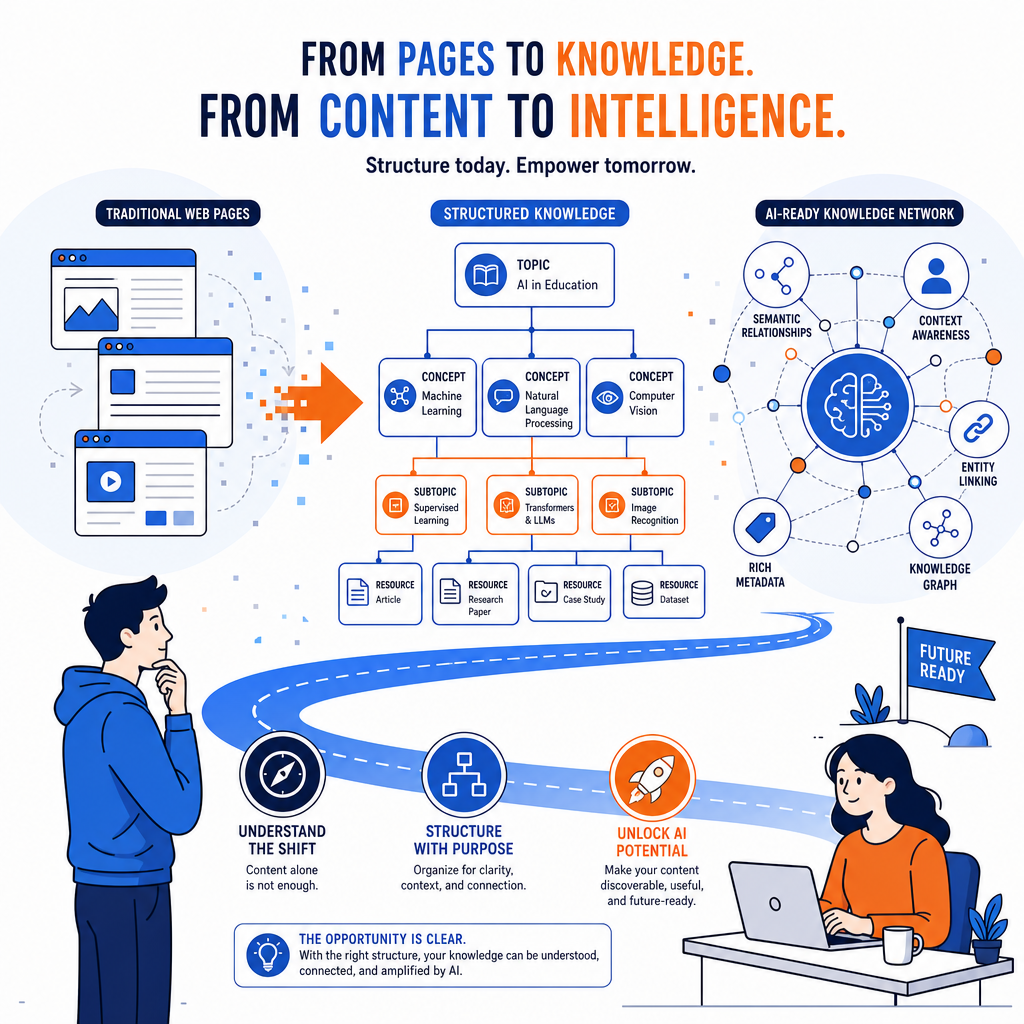
The way people search is changing. By 2026, AI-powered search engines will answer queries before users click a single link. Your website needs to adapt now. This comprehensive on-page SEO checklist for 2026 shows you exactly what search engines expect from your content. Traditional keyword stuffing won't work. Google's AI algorithms demand clarity, depth, and genuine value.
Search engines are getting smarter. They understand context, intent, and user satisfaction better than ever. Your content must match this evolution. The ranking factors that worked in 2022 are becoming obsolete. New signals matter more: semantic relevance, content structure, and user experience metrics.
🎯 Quick AI Readiness Check
Is your content structured for AI search? Check if you have: clear headings, direct answers to common questions, and schema markup. Missing any? You're losing visibility in AI-powered results.
Content Structure: Building for AI Understanding
AI search engines scan your content differently than traditional crawlers. They look for clear information hierarchies and logical content flow. Your headings must tell a complete story. Each section should answer a specific question users might ask.
Start with your H1 tag. It should match your target keyword and clearly state what users will learn. Your H2 tags break down the main topic into digestible sections. H3 tags provide specific details within each section. This structure helps AI understand your content's purpose and scope.
Paragraph length matters more in 2026. Keep most paragraphs between 50-150 words. AI systems prefer content that's easy to parse and extract. Short paragraphs also improve readability on mobile devices, which affects your rankings.
- Use one main idea per paragraph
- Start with the most important information
- Include transition words sparingly
- End with actionable takeaways when possible
Technical SEO Foundations That AI Search Engines Demand
Page speed affects AI search rankings more than traditional search. AI engines need to process your content quickly to provide instant answers. Your pages must load in under 2.5 seconds on mobile devices. Anything slower reduces your chances of appearing in AI results.
Core Web Vitals remain important, but new metrics matter too. Time to Interactive (TTI) affects how quickly AI can access your content. First Input Delay (FID) impacts user experience signals that AI algorithms track. Cumulative Layout Shift (CLS) affects content stability during AI processing.
⚠️ Critical Issues
- Page speed over 3 seconds
- Missing meta descriptions
- Broken internal links
⚡ Performance Boost
- Compress images
- Minify CSS and JavaScript
- Enable browser caching
Mobile-first indexing isn't new, but AI search makes it more critical. Your mobile version must contain all the content from your desktop site. AI crawlers primarily use mobile versions to understand your content. Missing content on mobile means missing rankings in AI search results.
HTTPS remains mandatory. AI search engines prioritise secure sites for user trust. Mixed content warnings hurt your rankings. Check every image, script, and external resource uses HTTPS. One insecure element can damage your entire page's AI search performance.
Schema Markup: Speaking AI's Language
Schema markup helps AI understand your content's meaning and context. By 2026, structured data becomes a ranking factor, not just a feature enhancement. AI engines use schema to categorise and extract information from your pages.
Start with basic schema types: Article, Organization, and WebPage. These provide foundational information about your content. Add specific schema for your industry: LocalBusiness for local companies, Product for e-commerce, or FAQ for question-based content.
- Implement Article schema for blog posts and news content
- Add Organization schema to your homepage and about page
- Use FAQ schema for frequently asked questions
- Include Review schema for customer testimonials
- Apply Product schema for e-commerce listings
Test your schema markup regularly. Google's Rich Results Test tool shows how AI interprets your structured data. Errors in schema markup confuse AI crawlers and reduce your content's visibility in search results.
💡 Pro Tip: Schema Testing
Use Google's Rich Results Test after implementing schema markup. Valid structured data increases your chances of appearing in AI-powered search features like featured snippets and knowledge panels.
Content Optimisation for AI Search Algorithms
AI search engines prioritise content that directly answers user questions. Your content must be conversational and informative. Write as if you're explaining concepts to a colleague, not cramming keywords into sentences.
Include related keywords naturally throughout your content. AI algorithms understand semantic relationships between words. Instead of repeating your main keyword, use synonyms and related terms. This approach helps AI engines understand your content's depth and relevance.
Featured snippets become more important in AI search. Structure your content to answer specific questions clearly. Use numbered lists for processes, bullet points for features, and short paragraphs for definitions. AI engines often pull these formats for instant answers.
Internal linking strategy changes with AI search. Link to related content that provides additional context or depth. AI algorithms follow these links to understand your site's topical authority. Use descriptive anchor text that tells both users and AI what they'll find on the linked page.
Meta descriptions serve as content previews for AI engines. Write compelling descriptions that summarise your page's main value. Include your target keyword naturally, but focus on encouraging clicks from search results. AI algorithms consider click-through rates when ranking content.
User Experience Signals That Matter
Dwell time affects AI search rankings more than traditional algorithms. Users must stay on your page long enough to consume your content. Create engaging introductions that immediately address the user's query. Use subheadings to help readers scan and find relevant information quickly.
Bounce rate indicates content quality to AI search engines. If users immediately leave your page, AI algorithms assume your content doesn't match their intent. Improve bounce rates by matching your content exactly to your title and meta description promises.
Local SEO Integration for Enhanced AI Visibility
Local businesses must optimise differently for AI search. AI engines prioritise location-specific information for local queries. Include your city and region naturally in your content. Mention local landmarks, events, or community connections when relevant.
Google My Business integration affects AI local search results. Ensure your GMB information matches your website's contact details exactly. AI algorithms cross-reference this data to verify your business legitimacy and local relevance.
Customer reviews provide social proof that AI algorithms value. Encourage satisfied customers to leave detailed reviews mentioning specific services or products. These reviews help AI understand what your business offers and how well you serve customers.
AI search represents the future of online discovery. Your on-page SEO checklist for 2026 must prioritise clarity, technical performance, and user satisfaction over traditional keyword tactics. The websites that adapt early will dominate search results in the AI era.
Start implementing these changes today. Focus on content structure first, then technical improvements, and finally schema markup. AI search engines reward websites that provide genuine value to users. Your investment in proper on-page optimisation will pay dividends as AI search becomes the standard.
The future belongs to content creators who understand that AI search engines are really just very sophisticated readers looking for the best answers to user questions.