
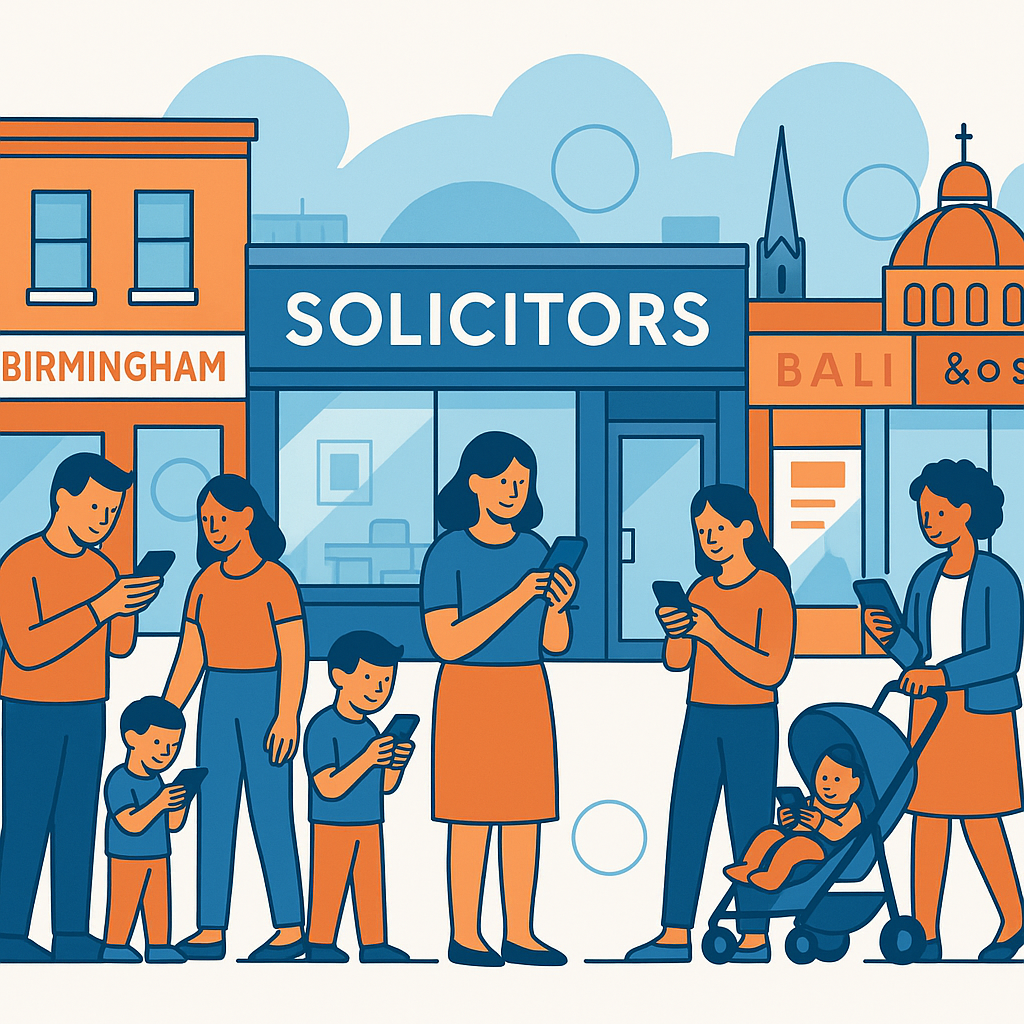
If you run a firm on or near a Birmingham High Street, professional services SEO Birmingham is not just a marketing phrase. It is often the difference between being found by someone who needs advice today, and being quietly ignored while a competitor appears in the local map results. For solicitors, accountants, financial advisers, surveyors and other service-led businesses, that matters more than it might first seem.
People still value local expertise. They want to know there is a real office, a real person, and ideally someone who understands the area. But the way they find that person has changed. A potential client may walk past your office three times a week, then still search Google for “solicitor near me” when they finally need help. Slightly frustrating, perhaps, but true.
This is where local SEO becomes very practical. It helps your firm show up when someone nearby searches for a service you offer, whether that is conveyancing in Moseley, family law advice in Edgbaston, commercial contracts in Birmingham city centre, or probate support in Sutton Coldfield.
Why professional services SEO Birmingham matters for local firms
Professional services are not bought in quite the same way as a pair of shoes or a takeaway coffee. There is usually more trust involved. People compare firms, read reviews, check credentials and look for signals that feel reassuring. That may include your website, your Google Business Profile, your office address, your photos, your case studies and, yes, the quality of your written content.
For Birmingham solicitors, local intent is especially important. Someone searching for a “divorce solicitor Birmingham” or “employment law advice near Jewellery Quarter” is not casually browsing in the way they might browse holiday destinations. They have a problem. Often a fairly urgent one. If your firm is visible at that moment, you have a much better chance of receiving the enquiry.
There is also a practical reason to invest in local SEO. Paid advertising can work, but legal clicks are often expensive. Organic visibility, built steadily, can become a more sustainable source of leads. It is not free, exactly, because it takes work, but it can keep paying back long after a single advert has stopped running.
Local SEO in plain terms
Local SEO is the process of making your business easier to find in location-based searches. For a Birmingham solicitor, that means improving your visibility in Google Maps, local organic results, and searches that include neighbourhoods, services and urgent legal needs.
What local search actually looks like on the High Street
Imagine someone standing outside a café in Harborne, searching on their phone for a solicitor to help with a lease dispute. They may not type a polished search query. They might search “commercial lease solicitor near me” or “property solicitor Harborne Birmingham”. Google then tries to decide which firms are relevant, nearby and trustworthy.
Your website is only one part of that decision. Your Google Business Profile, reviews, links from local organisations, consistency of your contact details, and the content you publish all help Google build confidence. No single factor does everything. It is more like a collection of small signals that, together, make your firm look like the obvious local answer.
This is where some professional firms slip up. They have a decent website, but it reads as if it could be based anywhere. There is no mention of Birmingham beyond the footer address. Service pages are thin. Team pages are dated. The Google profile has three photos from 2018 and opening hours that may or may not be right. None of this is catastrophic, but it slowly weakens trust.
- A complete and accurate Google Business Profile
- Service pages that mention specific Birmingham areas where relevant
- Clear contact details that match across directories and legal listings
- Reviews from genuine local clients, where professional rules allow
- Helpful content that answers real client questions
- Fast mobile pages, because most local searches happen on phones
That last point is easy to underestimate. A slow website can make a firm feel old-fashioned before the visitor has read a single word. It sounds harsh, but people judge quickly online, especially when they are anxious or short on time.
Building a stronger Google Business Profile
For many High Street businesses, the Google Business Profile is now the new shop window. It shows your name, opening times, phone number, reviews, photos, directions and sometimes your latest updates. For a solicitor, it can be the first place a client forms an impression of your professionalism.
Start with the basics. Your firm name should be consistent with your real trading name. Your address should be accurate. Your phone number should be local if possible, or at least dependable. Categories should be chosen carefully. A family law solicitor and a personal injury solicitor may both be legal professionals, but their ideal searches are very different.
Photos help too. They do not need to look like a glossy corporate brochure. In fact, slightly natural images of the office exterior, reception area, meeting rooms and team can be more reassuring. People like to know what to expect before they arrive. I think this is especially true for legal services, where clients may already feel nervous.
| Profile element | Why it matters | Quick improvement |
|---|---|---|
| Business categories | They help Google understand your core services. | Choose the closest legal category and add relevant secondary ones. |
| Reviews | They influence both trust and local visibility. | Ask satisfied clients for honest feedback, while following SRA guidance. |
| Photos | They make the firm feel real and approachable. | Add recent exterior, interior and team images. |
| Posts and updates | They show the profile is active. | Share short updates about services, articles or opening hours. |
Creating service pages that match real searches
A common mistake is having one broad “Legal Services” page and expecting it to rank for everything. It probably will not. Google, and potential clients, prefer specificity. If you offer conveyancing, wills, probate, employment law, family law, litigation and commercial property advice, each of those services deserves its own properly written page.
A strong local service page should do more than repeat keywords. It should explain what you do, who you help, what the process looks like, and why your Birmingham presence is useful. Mention nearby areas naturally if you genuinely serve them. Do not stuff in every district from Aston to Yardley just because a keyword tool suggested it. That tends to read badly, and visitors notice.
For example, a conveyancing page could talk about buying flats in the city centre, family homes in Kings Heath, or investment properties around Digbeth. A family law page might mention in-person consultations, remote appointments, and the importance of confidential advice. These local details give the page more depth. They also make it feel written by someone who actually knows the area.
Good local SEO is not about shouting Birmingham as many times as possible. It is about proving you are useful, relevant and genuinely part of the local market.
Reviews, reputation and professional caution
Reviews are tricky for solicitors. They are powerful, but they have to be handled carefully. You cannot pressure clients, reveal confidential details or create anything that feels misleading. Still, many firms are too passive. They finish good work, receive warm thanks by email, and never ask whether the client would be comfortable leaving a public review.
A simple, polite request can make a difference. Something like: “If you were happy with the service, we would be grateful if you would consider leaving a review. Please only share information you are comfortable making public.” It is not pushy. It respects the client. And over time, it builds visible trust.
Responding to reviews matters as well. Keep replies brief, professional and discreet. A warm thank you is usually enough. If a negative review appears, avoid the temptation to argue in detail. It may feel unfair, and sometimes it is, but a calm response often says more about your firm than a defensive one.
Local links and community signals
Links remain an important part of SEO, but local links are often overlooked. For High Street firms, useful links can come from chambers of commerce, local business groups, charity sponsorships, event pages, universities, legal directories, local news sites and partnerships with complementary businesses.
This does not mean buying random links from questionable websites. That is usually a bad idea and, frankly, a bit short-sighted. Better links tend to come from real activity. Sponsor a local advice session. Publish a guide with a Birmingham charity. Speak at a business event. Support a community initiative. If those activities earn a mention and a link, that is far more credible.
Local directories
Make sure legal and business listings show the same name, address and phone number.
Community activity
Real-world involvement can create online mentions that strengthen local relevance.
Professional bodies
Accreditations and memberships can support both search visibility and client confidence.
Content that answers Birmingham clients' questions
Blog content can help, though not every firm needs to publish weekly articles forever. Quality matters more than frequency. A useful article that answers a specific question can bring in visitors for months or years. A rushed update about “legal services in Birmingham” probably will not.
Think about the questions clients ask before they instruct you. How long does conveyancing take in England and Wales? What happens if a will is challenged? Can an employer change a contract? What should someone bring to a first meeting with a solicitor? These questions are not glamorous, but they are exactly the kind of searches real people make.
Add a local angle where it is genuinely helpful. For example, an article about buying a leasehold flat in Birmingham city centre could be more relevant than a generic leasehold guide. An employment law piece for small businesses in the West Midlands may attract the right kind of commercial enquiries. Some topics will be national by nature, and that is fine too. Not everything needs a postcode attached.
- List the questions clients ask most often during first calls.
- Group them by service area, such as family law, property or employment.
- Choose topics where you can provide clear, responsible guidance.
- Add local examples only where they make the content more useful.
- Link each article back to the relevant service page.
Measuring what is working
SEO can feel vague if you only look at rankings. Rankings matter, of course, but they are not the whole story. A firm should also track calls, contact form submissions, direction requests, profile views and which pages lead to enquiries. Sometimes a page with modest traffic brings in excellent leads because it matches a specific need.
Set up Google Search Console and Google Analytics. Track your Google Business Profile insights. Ask new clients how they found you, even if the answer is sometimes “I think it was Google, maybe”. That slightly imprecise feedback still helps. Over time, patterns appear.
It is worth being patient. Local SEO usually improves gradually. You might see quick wins from fixing a neglected Google profile or correcting inconsistent citations, but stronger organic rankings often take months. That can be annoying, especially if you want results now, but the slow work tends to be the work that lasts.
Conclusion: making professional services SEO Birmingham work locally
For solicitors and other High Street firms, professional services SEO Birmingham should be practical, local and trust-led. It is not just about ranking for a phrase. It is about appearing when nearby clients need help, then giving them enough confidence to call, email or book an appointment.
The strongest approach usually combines a well-maintained Google Business Profile, clear service pages, thoughtful local content, steady reviews and genuine community signals. None of these things is especially flashy. But together, they help a Birmingham firm look established, relevant and approachable.
And perhaps that is the real point. Local SEO is not about making a small firm look bigger than it is. It is about making sure the people already looking for your expertise can actually find you.