
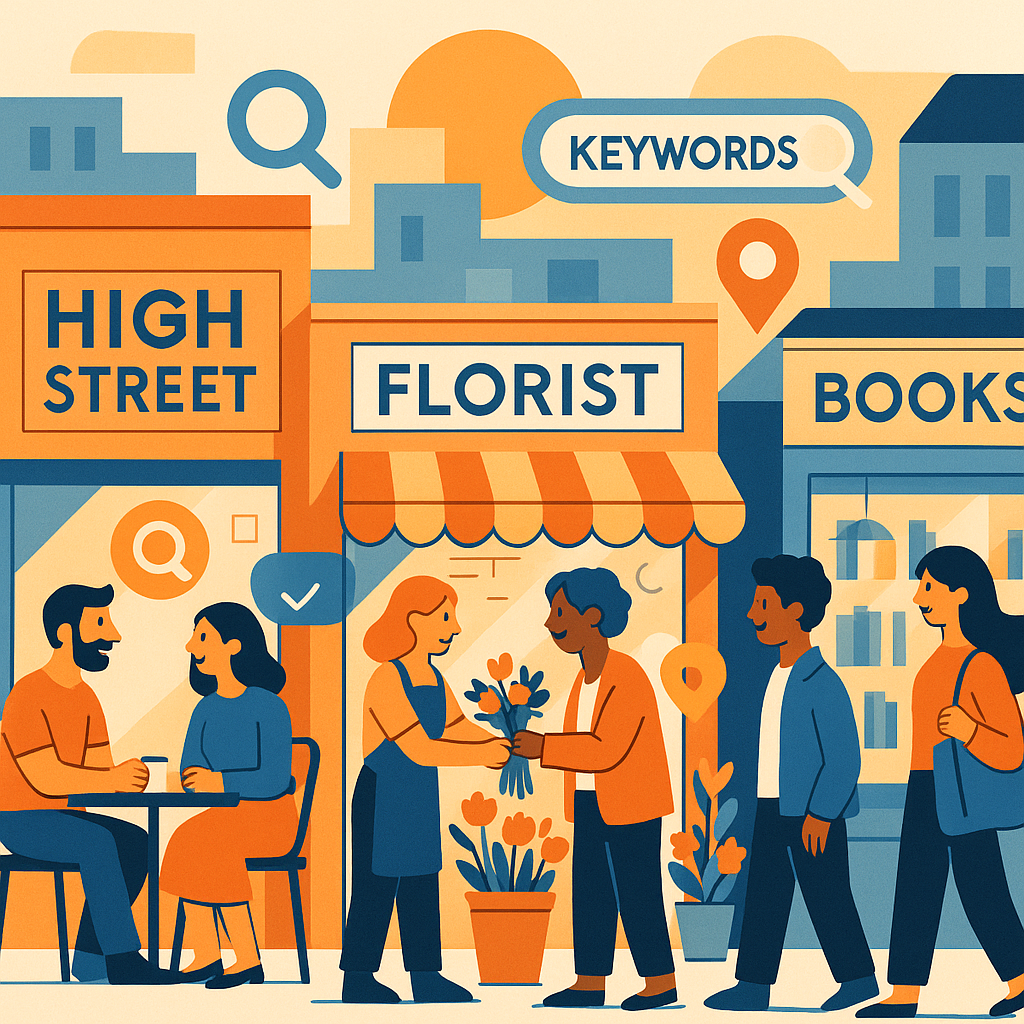
If you run a small High Street business, the phrase 7 Local Search Ranking Factors That May Challenge Your Current Thinking probably sounds like another SEO checklist. But it is more useful than that, I think. It hints at a bigger shift: local search is becoming less about ticking obvious boxes and more about proving, in lots of small ways, that your business genuinely deserves to be shown to someone nearby.
That is especially important heading into 2026. A café in York, a florist in Cardiff, a hair salon in Brighton, or an independent hardware shop in Glasgow cannot rely on the same old advice forever. Yes, your Google Business Profile still matters. Reviews matter. Your website matters. But the weight and interpretation of these signals are changing, and sometimes in ways that feel slightly unfair until you look at them from the customer’s side.
Whitespark has made a useful argument around this topic: some local ranking factors are not always as straightforward as business owners and marketers assume. This article takes that idea and looks at it through a UK High Street lens, where footfall, trust, proximity, opening hours, and small community signals can have a real impact.
Quick thought
Local SEO in 2026 is not only about being the closest business. It is about being the most believable local answer at the exact moment someone searches.
Why High Street local SEO is changing
For years, local SEO advice often sounded quite mechanical. Add your name, address and phone number everywhere. Get reviews. Put keywords on your pages. Build citations. And to be fair, much of that still helps. I would not tell a small business to ignore the basics, because the basics are usually where problems begin.
But search engines are getting better at judging context. They are trying to understand whether someone wants a quick purchase, a trusted specialist, a place that is open right now, or a business that local people actually use. That means the winning result is not always the one with the most links, the highest number of reviews, or the exact-match keyword stuffed into every corner of its profile.
- Customers are searching with more specific, conversational queries.
- Google is interpreting real-world behaviour more carefully.
- AI-led search features are changing how local options are summarised.
- Trust signals are being judged across more than one platform.
- Mobile search has made timing, proximity and convenience more important.
7 Local Search Ranking Factors That May Challenge Your Current Thinking
The following 7 Local Search Ranking Factors That May Challenge Your Current Thinking are not magic tricks or loopholes. They are more like areas where small businesses may need to update their assumptions. Some are familiar factors viewed from a new angle. Others are signals that tend to be overlooked because they are harder to measure neatly in a monthly report.
1. Proximity is becoming more situational
Being close to the searcher has always been important in local search, but it is not quite as simple as “nearest wins”. In 2026, proximity is likely to feel more situational. A search for “coffee near me” may heavily favour distance. A search for “best wedding florist near me” may give more room to reputation, service detail and quality signals.
For High Street businesses, this means you should not panic if you are not physically in the centre of town. You can still compete by being a stronger match for the query. Clear service pages, product details, collection options, parking information and local landmarks can all help search engines understand when you are the right nearby choice, not just a nearby choice.
2. Search intent may matter more than your favourite keyword
Many business owners still want to rank for the broadest phrase possible, such as “shoe shop”, “accountant”, or “bakery”. It is understandable. Those terms feel valuable. But the more interesting rankings may come from intent-led searches: “children’s school shoes fitted today”, “accountant for sole trader tax return”, or “sourdough bakery open Sunday”.
These searches show a clearer need. They also suit small businesses, because independent shops often have specific strengths that chains do not communicate well. A cobbler who repairs leather boots, a bookshop that orders titles overnight, or a deli with gluten-free lunch options should say so clearly online. Not once. Not hidden in an image. Properly, in text that people and search engines can read.
| Old way of thinking | 2026 local SEO mindset |
|---|---|
| Rank for the biggest keyword in town. | Match the specific reason someone is searching. |
| Collect as many reviews as possible. | Earn detailed reviews that explain real customer experiences. |
| Set up a profile and leave it alone. | Keep your profile active, accurate and useful. |
3. Your Google Business Profile is not just a listing
Some businesses still treat their Google Business Profile like a digital Yellow Pages entry. Name, address, phone number, done. That is a missed opportunity. Your profile is closer to a mini storefront now. Customers may check your photos, services, Q&A, reviews, opening hours, updates and products before they ever click through to your website.
There is also a freshness issue. A neglected profile can create doubt. If your Christmas hours are wrong, your menu is out of date, or your last photo looks like it was uploaded in 2019, people may hesitate. Search engines may not “think” like humans, exactly, but they are built to detect patterns that suggest usefulness and reliability.
- Add accurate opening hours, including bank holidays.
- Use real photos of your shop, team, products and frontage.
- List services in plain English, not just industry terms.
- Answer common questions before customers have to ask.
- Use posts for seasonal offers, events, new stock or local updates.
4. Review quality may beat review volume
A business with 800 reviews looks impressive, of course. But review quality is becoming harder to ignore. A short “Great service” review is nice, but a detailed review saying “They repaired my watch strap in 20 minutes and helped me choose a new battery” gives much richer context.
For a local business, this matters because reviews can support relevance. If customers naturally mention your services, products, neighbourhood, staff, accessibility or speed, those words help build a picture of what you do well. You should not script reviews. That is risky and, frankly, a bit awkward. But you can politely encourage customers to mention what they bought or what problem you helped them solve.
5. Entity strength is the quiet ranking factor
This one sounds technical, but it is fairly simple. Search engines want to understand your business as a real-world entity. Who are you? Where are you? What do you sell? Are you connected to a place, a category, a person, or a local community? The clearer that picture is across the web, the easier it is for search engines to trust you.
For UK High Street businesses, entity strength can come from consistent mentions on your website, Google Business Profile, local directories, trade associations, event pages, local news sites, supplier pages and social profiles. Not all citations are equal, and chasing hundreds of low-quality directory listings feels less useful than it once did. A mention from your local chamber of commerce or a town centre partnership may be more meaningful than another generic listing site nobody visits.
6. Behavioural signals are difficult to see, but hard to ignore
This is where things get slightly murky. Search engines do not reveal exactly how they use behaviour data, and SEO people can sometimes overstate what they know. Still, it seems reasonable to assume that user behaviour helps shape local results in some form. Do people click your listing? Do they ask for directions? Do they call? Do they return to search immediately because your information was unhelpful?
The practical lesson is not to obsess over invisible signals. Instead, make the visible experience better. Use clear titles. Keep your phone number easy to tap. Show whether customers need an appointment. Explain delivery areas. Add photos that answer real questions, such as what the shop entrance looks like or whether there is seating. These small things reduce friction, and local search is full of friction.
7. The wider web still shapes local trust
It is tempting to think local SEO now happens entirely inside Google. That is not quite true. Your website, local press coverage, Instagram profile, supplier mentions, awards pages, booking platforms and niche directories can all support the overall trust picture.
This does not mean you need to be everywhere. Most small businesses do not have the time, and honestly, maintaining ten half-finished profiles can look worse than maintaining three good ones. Choose the places your customers actually use. For a restaurant, that may include TripAdvisor or OpenTable. For a tradesperson, it may be Checkatrade or a relevant trade body. For a boutique, Instagram may matter more than another directory listing.
What this means for small High Street businesses
The main lesson is that local SEO is becoming more joined-up. You cannot easily separate rankings from reputation, usability, customer service and local visibility. That might sound inconvenient, because it is. But it is also good news for genuine local businesses that know their customers and do good work.
A small shop can often create more believable local signals than a large national chain. You have real staff, real customers, local stories, community involvement and specialist knowledge. The challenge is getting those things online in a structured way, without making everything feel forced.
- Audit your Google Business Profile every month, even if only for ten minutes.
- Check that your name, address and phone number are consistent on important sites.
- Create pages for specific services, products or customer needs.
- Ask happy customers for honest, descriptive reviews.
- Build relationships with local organisations that may naturally mention you online.
- Improve your website’s mobile experience, especially calls, maps and opening hours.
- Track real enquiries, not just rankings.
How to prepare your local SEO for 2026
If you are starting from scratch, do not try to fix everything in one weekend. Local SEO rewards consistency more than dramatic bursts of activity. I would start with the information customers rely on most: where you are, when you are open, what you offer, how to contact you, and why people trust you.
Then move into content. Not endless blog posts for the sake of it, but useful local pages. A bike shop could write about cycle repairs before a charity ride in town. A bakery could publish a page about celebration cakes for nearby venues. A solicitor could explain services for local landlords or small businesses. It does not need to be flashy. It needs to be specific.
Simple 2026 local SEO checklist
- Update your profile photos at least quarterly.
- Add service details that match how customers actually search.
- Respond to reviews with specific, human replies.
- Make directions, parking and accessibility information easy to find.
- Look for local partnerships that can create genuine mentions.
It is also worth measuring what matters. Rankings are useful, but they can be misleading because local results vary by location, device, time and search history. A better question is: are more people calling, booking, asking for directions, visiting your shop, or mentioning that they found you online? That is less tidy than a ranking report, but it is closer to reality.
Conclusion: rethink local ranking before your competitors do
The 7 Local Search Ranking Factors That May Challenge Your Current Thinking are really a reminder to look beyond old habits. Local SEO in 2026 will still include familiar work, such as reviews, profiles, citations and website optimisation. But the advantage will go to businesses that connect those pieces into a trustworthy local presence.
For small High Street businesses, that does not mean becoming a full-time publisher or technical SEO expert. It means being clearer, more current, more specific and more visibly connected to your local area. Perhaps that is the most surprising ranking factor of all: search engines are getting better at recognising the things customers have cared about all along.