
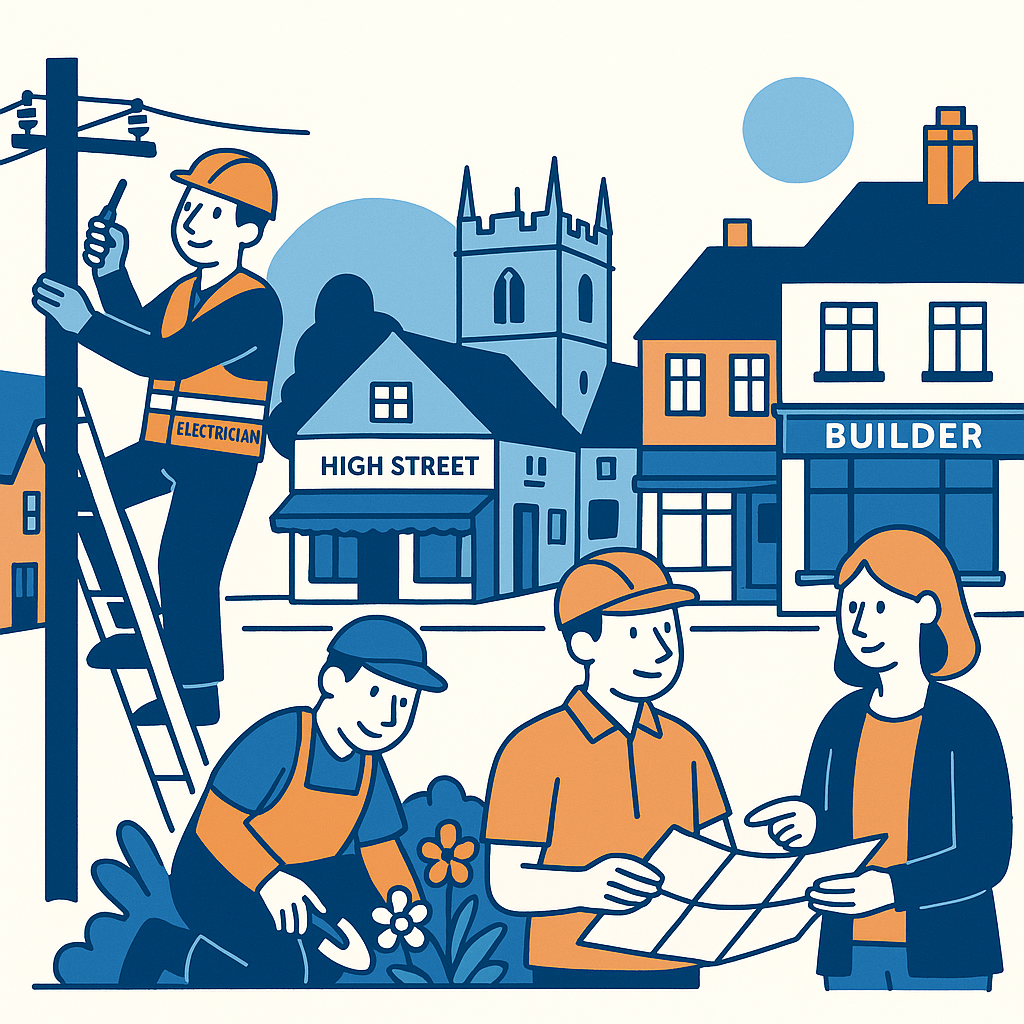
SEO for Kinver Tradespeople: Winning More Local Jobs Through Search is not really about chasing national rankings or trying to beat huge companies with huge budgets. It is much more practical than that. If you are a plumber, electrician, roofer, decorator, builder, locksmith, gardener, tiler, or any other local trade working in and around Kinver, local SEO is about being found at the exact moment someone nearby needs help.
That might be someone on the High Street searching for an emergency electrician, a homeowner near Compton looking for a bathroom fitter, or a family in Stourbridge trying to find a reliable gardener who actually turns up. These are not vague online visitors. They are potential customers with real jobs, real budgets, and usually a fairly short decision-making window.
I think this is where a lot of small businesses slightly misunderstand SEO. They picture something technical, expensive, and a bit mysterious. Some of it can be technical, yes, but for a High Street or local trade business, the foundations are surprisingly down to earth: show Google where you are, explain clearly what you do, prove that customers trust you, and make it easy for people to contact you.
Why Local Search Matters for Kinver Tradespeople
Kinver is not Birmingham, and that is part of the point. Local search works differently in villages, small towns, and semi-rural areas. People often search with place names, nearby towns, or phrases like “near me”. Google then tries to match that search with businesses that appear relevant, trustworthy, and close enough to be useful.
For a tradesperson, that can be a real advantage. You do not need to rank for “plumber UK” or “best electrician in the Midlands”. In fact, those searches probably would not bring the best leads anyway. You want searches like “plumber Kinver”, “roofer near Kinver”, “house painter Stourbridge”, “emergency locksmith Kingswinford”, or “local builder near me”. Smaller phrases, but much better intent.
Local SEO in plain English
Local SEO helps your business appear when nearby customers search online for the service you offer. For Kinver tradespeople, that usually means improving your Google Business Profile, website pages, reviews, local mentions, and service area signals.
There is another small but important point here. People in local areas still value reputation. A recommendation from a neighbour matters. But that recommendation often gets checked online before the phone call happens. Someone hears your name, searches for you, sees poor information or no reviews, and suddenly they hesitate. That tiny moment can lose the job.
SEO for Kinver Tradespeople: Winning More Local Jobs Through Search Starts with Google Business Profile
If you only do one thing after reading this, sort out your Google Business Profile. This is the listing that appears in Google Maps and in the local pack, usually the map results near the top of the page. For many trades, it gets more attention than the website itself, especially on mobile.
The profile needs to be complete, accurate, and active. That sounds obvious, but plenty of local businesses have half-finished profiles, old phone numbers, unclear categories, or photos from several years ago. Google does not always need perfection, but it does need confidence.
- Use your real business name, not a keyword-stuffed version of it.
- Choose the most accurate primary category, such as plumber, electrician, roofer, or builder.
- Add service areas including Kinver and nearby places you genuinely cover.
- Upload clear photos of your work, van, team, tools, and finished projects.
- Keep opening hours and contact details up to date.
- Add services with short descriptions, not just a long generic list.
- Reply to reviews in a natural, polite way.
Photos are worth mentioning twice, perhaps. A local customer wants reassurance. A photo of a neat fuse board, a finished patio, a repaired roofline, or a decorated bedroom does more than fill space. It shows evidence. It makes the business feel real.
| Profile area | What to check | Why it matters |
|---|---|---|
| Categories | Primary and secondary categories match your actual trade. | Helps Google understand which searches you should appear for. |
| Reviews | Recent, genuine reviews from local customers. | Builds trust with both Google and people comparing options. |
| Photos | Real project images, not stock photos. | Shows quality and proves you are active locally. |
| Services | Clear descriptions of what you offer. | Matches specific customer needs and search phrases. |
Your Website Still Has a Job to Do
Some tradespeople wonder if they even need a website now that Google Business Profile exists. Fair question. A strong profile can bring calls on its own. But a website gives you more space to explain, reassure, and rank for specific services. It also makes you look more established, assuming the site is not painfully slow or out of date.
A good local trade website does not need to be enormous. It needs to be clear. People should know within a few seconds what you do, where you work, and how to contact you. If they have to hunt around for a phone number, or zoom in on tiny text, they may simply go back to Google and ring the next person.
- A homepage that clearly mentions your main trade and local area.
- Separate service pages for important jobs, such as boiler repairs, rewiring, roof repairs, extensions, or landscaping.
- A contact page with phone number, email, service area, and a simple form.
- Photos of real work, ideally with short notes about the project.
- Customer reviews or testimonials placed where people will actually see them.
- Fast loading on mobile, because many searches happen from a phone.
Service pages are often neglected, but they can be very useful. A page about “bathroom fitting in Kinver” can speak directly to someone planning that exact job. It can answer common questions, show examples, explain your process, and include a clear call to action. It is not about stuffing the same phrase twenty times. That usually reads badly anyway. It is about being specific.
Reviews Are More Than a Nice Extra
Reviews can feel awkward to ask for. Many tradespeople finish a job, get paid, and move on to the next one. Understandable. But reviews are one of the strongest trust signals in local search, and they often make the difference when a customer is comparing three or four businesses.
You do not need hundreds. In a place like Kinver, a steady trickle of genuine reviews can be enough to stand out. Recent reviews matter because they show the business is active. Detailed reviews matter because they mention the type of work, the location, and the customer experience in a natural way.
Easy review request
Send a short text after the job: “Thanks again for choosing us. If you are happy with the work, a quick Google review would really help our small business.”
What to avoid
Do not offer discounts for positive reviews or copy the same wording for customers. It looks false, and people can usually tell.
It is also worth replying to reviews. Not with a stiff corporate message, but with something simple: “Thanks, Sarah, glad we could help with the kitchen sockets.” These replies add context and show that you care. Oddly enough, even replies to less-than-perfect reviews can help if they are calm and professional.
Use Local Content Without Making It Cringe
Local content is one of those SEO ideas that can become a bit forced. Nobody wants to read a strange blog post titled “Ten Reasons Kinver Loves Drainage Services”. But useful local content can work well when it is tied to real customer questions.
For example, a roofer might write about common roof problems in older properties around Kinver and nearby villages. A landscaper could explain when to plan garden work before spring. An electrician could cover what homeowners should know before adding an EV charger. These topics are helpful first, local second. That balance matters.
- “How much does a small bathroom renovation cost near Kinver?”
- “Do I need a registered electrician for outdoor sockets?”
- “Common causes of damp in older village properties”
- “When is the best time to book patio installation?”
- “What to check before hiring a local roofer”
This type of content gives your site more ways to appear in search. It also gives potential customers a reason to trust you before they call. You are not just saying “we are reliable”. You are demonstrating knowledge in a way that feels useful.
Citations, Directories, and Local Signals
Citations are mentions of your business name, address, and phone number on other websites. They might appear on directories, trade associations, local business sites, chamber listings, or social media profiles. They are not as glamorous as a shiny new website, but they help confirm that your business exists and operates where it says it does.
The important thing is consistency. If one listing says “High Street”, another says “The High St”, and another has an old mobile number, it creates unnecessary confusion. Google can usually work things out, but why make it harder?
For Kinver tradespeople, useful local signals might include reputable UK directories, trade body profiles, local sponsorship pages, supplier links, and mentions from nearby community websites. Quality beats quantity. A few relevant mentions are better than being listed on dozens of strange directories nobody uses.
Tracking What Actually Brings Work
SEO can become frustrating if you only look at rankings. Rankings move around. They vary by location, device, and search history. What matters more is whether the phone rings, forms come in, and good enquiries turn into paid jobs.
At a basic level, track how people find you. Ask new customers where they heard about you. Check Google Business Profile insights. Use website analytics if you have them. You do not need to become obsessed with charts, but a little information helps you decide what is worth doing.
Small practical habit: once a month, note how many calls came from Google, how many reviews you gained, and which services people asked about. It takes ten minutes, and it can reveal patterns you would otherwise miss.
If you notice that most enquiries are for emergency repairs but you want more planned renovation work, your website and profile may need to emphasise those services more clearly. SEO is not just about more traffic. It is about better-fit enquiries. That distinction is easy to overlook.
Common Local SEO Mistakes to Avoid
The same mistakes come up again and again with small local businesses. None of them are disastrous on their own, but together they can hold a business back.
- Using a website that does not work properly on mobile.
- Having no clear service area or only vague wording like “covering the Midlands”.
- Forgetting to ask satisfied customers for reviews.
- Using stock photos instead of real work photos.
- Creating one thin page and expecting it to rank for every service.
- Ignoring old directory listings with wrong contact details.
- Writing for Google so heavily that the content sounds unnatural to customers.
The last one is worth pausing on. Yes, keywords matter. But if the page reads like it was written only for a search engine, people will sense it. A customer wants confidence, clarity, and maybe a small feeling that you are the sort of person they can trust in their home. That is hard to get from robotic text.
Conclusion: Build Local Visibility One Sensible Step at a Time
SEO for Kinver Tradespeople: Winning More Local Jobs Through Search is not a one-off trick. It is a steady process of improving the signals that help local customers find and trust you. A complete Google Business Profile, a clear website, regular reviews, useful service pages, and consistent local mentions can all work together.
You do not have to do everything in a week. Start with the basics. Check your profile, update your contact details, add recent photos, ask two happy customers for reviews, and make sure your website clearly says what you do in Kinver and the surrounding area. Then build from there.
For small High Street businesses and local trades, that steady approach often wins. It feels less dramatic than a big advertising push, admittedly, but it can create something more valuable: a reliable stream of nearby customers who already need what you offer.