
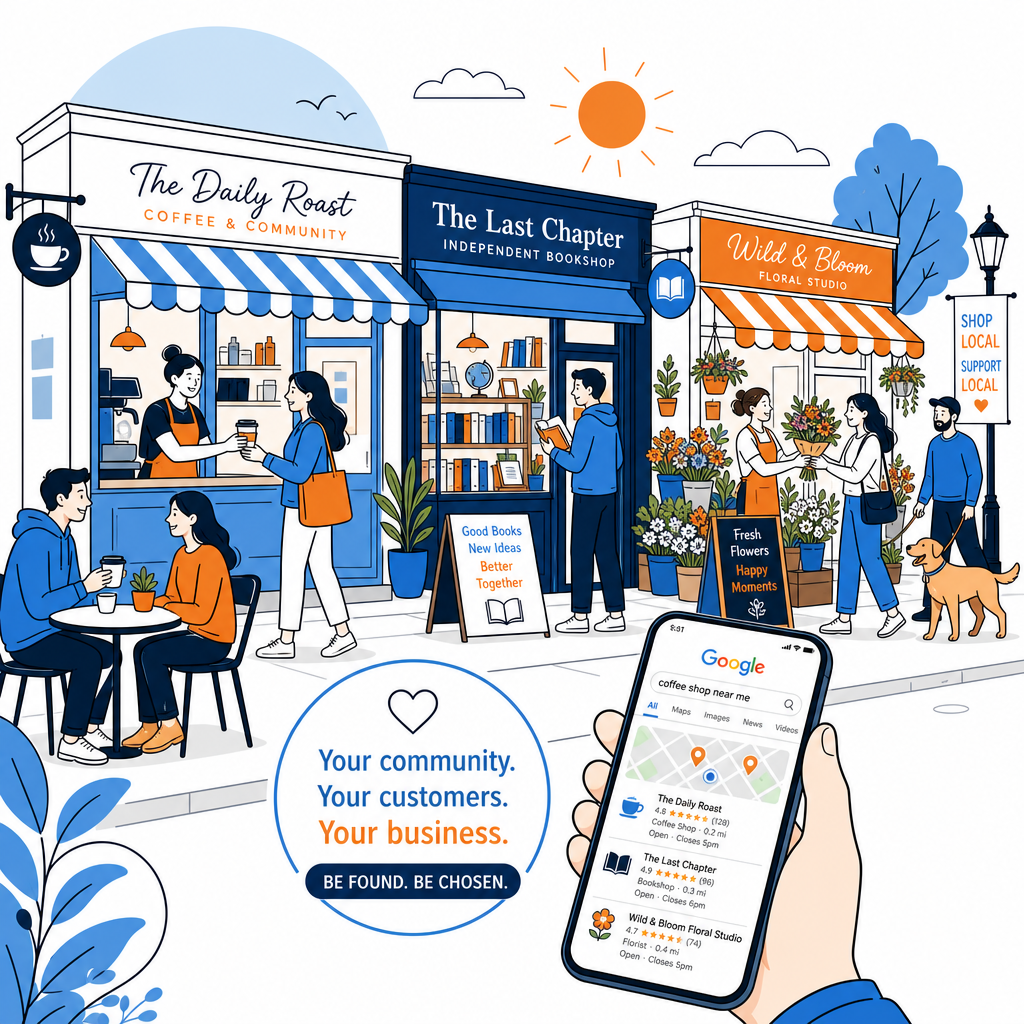
Sexiest SEO in the World Explained for Small Business Owners sounds like a bold title for a subject that often gets covered in rather dry language. The idea is simple, though. Local SEO helps your shop, salon, café, studio or service business appear when people nearby search for what you sell. Someone types “barber near me”, “independent bookshop in York” or “best breakfast in Bristol”, and your business has a chance to appear at exactly the moment they are ready to visit.
For a small High Street business, this matters because people still search locally before they walk through the door. They check opening hours, photos, reviews, directions and prices. A strong local presence gives them useful information while your business is fresh in their mind. It can also make a quiet Tuesday feel a little less quiet.
What local SEO means for a High Street business
Local SEO is the work that helps search engines understand where your business operates, what you offer and which customers you serve. It covers your Google Business Profile, website, online directories, reviews, local content and the signals that connect your business with a particular town or neighbourhood.
The goal is visibility in local search results. These may appear in the map pack near the top of Google, in ordinary search listings, in image results and through voice searches on a phone. A customer might discover you while standing two streets away. They may also find you at home while planning their Saturday errands.
A useful local search journey
Search: “gift shop near me”
Decision: The customer compares distance, reviews, photographs and opening hours.
Action: They request directions, call the shop or visit your website.
Visit: Your shop becomes part of their day.
Why Google Business Profile deserves attention
Your Google Business Profile is often the first page a local customer sees. It can show your address, telephone number, website, opening hours, services, photographs, reviews, updates and directions. For many small businesses, this listing receives more attention than the homepage.
Start by claiming and verifying the profile. Choose the closest primary category, then add secondary categories where they fit. A florist might choose Florist as the main category and add Gift Shop as another option. A café should describe its food and atmosphere clearly, with categories that match what customers expect.
- Use your real trading name, address and phone number.
- Add opening hours, holiday hours and special service hours.
- Upload clear photographs of the shopfront, interior, products and team.
- List your key services or products with plain descriptions and prices where suitable.
- Add a website link that leads to a useful, relevant page.
- Reply to reviews in a calm, personal way.
- Publish occasional updates about events, seasonal products or changes to opening times.
Photographs deserve regular attention. A picture of a brightly lit shopfront can help someone recognise your business when they are walking along the High Street. Product images give people a reason to click. Phone photos are fine when they are clear, recent and taken in good light. Many owners put this job off for months, then wonder why the listing feels neglected.
Reviews bring local trust to life
Reviews carry weight because they show how a business feels to real customers. A person choosing a restaurant, hairdresser or repair shop wants to know whether the service was friendly, reliable and worth the money. A handful of thoughtful reviews can give your listing a more human shape.
Ask customers at a natural moment. A short message after an appointment works well. A small card near the till can remind people where to leave feedback. Make the request easy by linking directly to your review page. Customers tend to respond when the process takes less than a minute.
Reply to every review, including the awkward ones. Thank people for positive comments and mention something specific when you can. If a customer raises a problem, keep the public response brief and invite them to continue the conversation privately. Future customers notice the tone of your reply, even when they are reading a review from several months ago.
Your website still matters
A Google listing can attract the click, while your website helps someone decide what to do next. It should load well on a phone, show your location clearly and make contact simple. A customer should not have to hunt through three menus to find your address or work out whether you are open.
Create a page for each important service when the information deserves its own space. A bakery might have pages for wedding cakes, celebration cakes and daily bread. A small building firm could describe kitchen renovations, bathroom fitting and extensions. Each page should explain the service in normal language, show where you work and include a clear way to enquire.
A quick website check
- Your town or service area appears naturally on the page.
- Your address and phone number are easy to find.
- The main service is explained within the first few lines.
- There is a visible call, booking or enquiry button.
- The page works comfortably on a mobile screen.
- Images have useful file names and sensible alternative text.
Include local details that show you belong to the area. Mention nearby streets, markets, landmarks or parking information when they help visitors. A café near the station can explain the walking route. A hair salon can mention the nearest car park. These details support customers and give search engines more context.
Local content people might read
Local content does not need to sound like a council newsletter. Write about questions customers ask in the shop. A garden centre could publish a monthly planting guide for local weather. A bookshop might recommend novels by regional authors or create a reading list for a nearby school holiday. A cycle repair business could explain common routes and where riders can get help.
This kind of content can attract searches that sit around your main service. It also gives you material to share on social media and in your Google updates. Keep the writing useful. One well-made article each month has more value than a rushed post every few days.
Local links help as well. Community groups, event organisers, schools, charities and local publications may link to your website when you support an activity or contribute helpful information. A short feature about an independent shop can send visitors to your site for years. Relationships tend to produce the best opportunities here.
Consistency makes the whole picture clearer
Search engines compare information about your business across different websites. Your name, address and phone number should appear consistently in directories, local listings, social profiles and industry websites. A small typo can create confusion, especially if an old address remains online.
Check major listings such as Yell, Bing Places, Apple Business Connect, local chamber directories and relevant trade associations. Choose quality over volume. A long list of thin directories rarely helps a busy owner. Accurate details on a few trusted platforms provide a better foundation.
| Area | Small action | How often |
|---|---|---|
| Google profile | Check hours, photos and services | Monthly |
| Reviews | Reply and invite suitable customers | Weekly |
| Website | Refresh key service information | Every few months |
| Local content | Answer one customer question | Monthly |
How to measure progress
Local SEO takes time, so track signs that connect with real business activity. Google Business Profile reports can show searches, calls, website visits and requests for directions. Google Analytics can show which pages people view and where enquiries come from. Your till, booking system and staff may provide useful clues too.
Keep a simple monthly note of your visibility and enquiries. Record how many calls came from the listing, which services received attention and whether customers mention finding you through Google. Search rankings move around, while customer conversations often give the clearest picture.
Avoid judging everything by one search from one phone. Google personalises results according to location, history and device. Search from different parts of your service area, review your profile insights and watch the trend over several months. It is a steadier way to make decisions.
Sexiest SEO in the World Explained for Small Business Owners
The phrase Sexiest SEO in the World Explained for Small Business Owners has a playful edge, yet the work behind it is practical. Local SEO puts your business in front of people who already have a reason to search. Keep your Google profile accurate, collect useful reviews, make your website welcoming and share local knowledge that sounds like you. Over time, those small jobs help your High Street business become easier to find, easier to trust and easier to visit.