
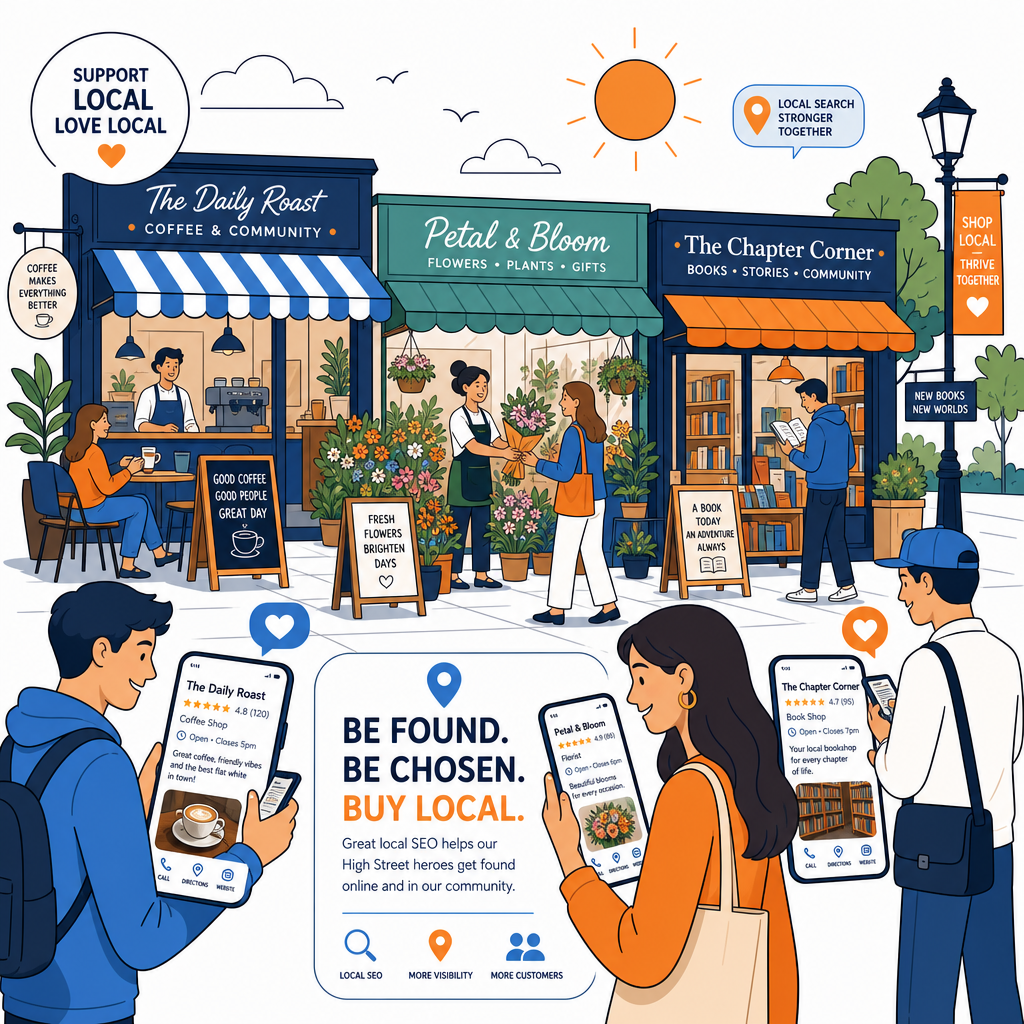
The sexiest SEO in the world sounds like a bold title for a local shop, salon, café or independent service business. In practice, it means becoming the business people see, trust and choose when they search nearby. A High Street customer might type “florist near me”, “bookshop in York” or “best coffee near the station”. Your business has a short moment to appear in that decision.
Local SEO helps you earn that moment. It places your business in front of people who already have a reason to visit, call or buy. The work involves Google Business Profile, useful website content, local links, customer reviews and a few details that are easy to overlook. Each part matters. Some tasks take minutes. Others build over months.
What makes the sexiest SEO in the world?
For a small High Street business, attractive SEO has very little to do with technical jargon. It comes down to being easy to find and easy to understand. Google needs clear information about what you offer, where you are based and when people can visit. Customers need the same information, usually while they are walking around town with a phone in one hand.
Think about the questions a customer asks before visiting. Is the shop open this afternoon? Does the café offer dairy-free options? Can the barber take walk-ins? Is the repair service close to the town centre? Your online presence should answer those questions without making people hunt through five pages.
- A complete Google Business Profile with accurate opening hours, categories, photos and contact details.
- A website that clearly names your town, neighbourhood or trading area.
- Recent reviews that describe real customer experiences.
- Useful pages for your main services and the places you serve.
- Consistent business details across directories, social profiles and local websites.
The quick local SEO test
Search your business name from your phone. Check the opening hours, phone number, map pin, photos and website link. Ask yourself one simple question: could a new customer visit you today using only the information on the screen?
Start with Google Business Profile
Google Business Profile is often the first place a local customer encounters your business. It can appear in Maps, local search results and the local pack, which is the group of nearby businesses shown beneath the map. A well-kept profile gives Google useful signals and gives customers a reason to tap through.
Write a description in plain English. Mention your core service, town and the kind of customer you help. A small bakery might describe its sourdough loaves, celebration cakes and location near the market square. The wording should sound like the business itself. Google can read keywords, while people respond to something that feels useful.
Add photographs throughout the year. Exterior images help visitors recognise the building. Interior photographs show the atmosphere. Product and team photos make the listing feel current. A quick phone photo taken in good daylight often does more for a small business than a polished image from several years ago.
Keep opening hours updated around bank holidays, seasonal closures and staff training days. A customer who arrives at a locked door remembers that experience. Google also gives businesses space to add services, products, booking links, questions and posts, so use the features that suit your operation.
Make your website useful for local searches
Your website gives local SEO more room to breathe. The homepage should state what you do and where you do it. Put the business name, address, phone number and opening hours somewhere easy to spot. A contact page with an embedded map helps, especially for visitors unfamiliar with the area.
Create a separate page for each important service. A hairdresser could have pages for cuts, colouring and wedding hair. A bicycle shop might cover servicing, repairs and bike fitting. Each page should explain the service, who it suits, what happens next and how to make an enquiry.
Local wording should feel natural. Mentioning the town or nearby area can help Google connect the page with local searches. Repeating the same phrase in every sentence makes the page uncomfortable to read and can make the business sound oddly mechanical. Customers usually notice that before search engines do.
Add practical details that save someone a phone call. Include parking information, public transport links, accessibility details, delivery areas and estimated appointment times. These details often influence a visit. They also give your website useful information that larger competitors may have left out.
| Website area | Useful local detail | Customer benefit |
|---|---|---|
| Homepage | Town, main service and contact details | Quick understanding |
| Service page | What the service includes and who it suits | More confident enquiries |
| Contact page | Map, parking, phone and opening hours | An easier visit |
Reviews give local SEO a human voice
Reviews sit at the point where visibility meets trust. People read them before booking a treatment, trying a new restaurant or choosing a local tradesperson. Google also uses review signals as part of its local ranking systems, including the number of reviews, their quality and how recent they are.
Ask customers for a review soon after a positive experience. A simple message works well: “Thank you for visiting us today. If you have a minute, we would appreciate a Google review.” You can include a direct link, a small card at the till or a QR code on the receipt.
Make the request part of your normal customer care. Staff can mention it after a successful appointment. An independent shop owner might add the link to an email receipt. A café could place it beside the collection point. The method depends on the business, and consistency carries more value than a large one-off campaign.
Reply to reviews in a warm, specific way. Mention the service when it fits, thank the customer for visiting and invite them back. A thoughtful response to criticism can show future customers how you handle a problem. Keep private customer details out of public replies.
Build local links and local recognition
Links from other websites help search engines understand that your business belongs in a particular place. For a High Street company, the strongest opportunities often sit close to home. A town centre partnership, local newspaper, chamber of commerce, community group or event organiser may have a website that lists participating businesses.
Support a local event and ask for a linked sponsor profile. Share useful knowledge with a neighbourhood publication. Offer a short comment to a local journalist. Join a business association with a member directory. These activities can bring visitors in their own right, which makes them more worthwhile than link building for its own sake.
- Check whether your town council or business improvement district lists local firms.
- Look for relevant community events where your business can contribute.
- Create a useful local guide that other organisations might reference.
- Keep your name, address and phone number consistent on every listing.
- Review directory listings each few months and remove outdated information.
Use social media as a shop window
Social media has a supporting role in local SEO. An Instagram post may show a new display, a Facebook update may explain a temporary closure and a short video may introduce a member of the team. These channels help people recognise the business when it appears in search.
Share things that are tied to the real place. Mention the market, street, station or local event when it makes sense. Tag nearby organisations with care. A useful post about a busy Saturday market can attract attention from people already planning a visit to the area.
Keep profile details aligned with your website and Google Business Profile. A forgotten old address can create confusion, especially for businesses that have moved within the town. A pinned post with current opening information helps during busy seasons.
Measure what brings people through the door
Local SEO takes patience, though you can still track useful signs each month. Look at calls from your Google Business Profile, direction requests, website clicks and search terms in Google Search Console. Ask new customers how they found you. People often say “I saw you on Google” without remembering the exact search, so staff notes can fill in the gaps.
Choose a small set of measures that relate to sales. A restaurant may watch bookings and calls. A service business may track enquiry forms. A shop could record visits that began with a map search. Rankings provide context, while customer actions show whether the work is helping the business.
Give changes time to settle. Update the profile, add photographs, improve one service page and collect genuine reviews. Then watch what happens over the next few weeks. Local search moves around, and a quiet period can happen even when the underlying work is sound.
Become the sexiest SEO in the world, locally
The sexiest SEO in the world for a small High Street business is clear, current and rooted in the place it serves. It gives Google accurate signals while giving customers useful reasons to visit. Start with your Google Business Profile, improve the pages that describe your services, ask happy customers for honest reviews and build relationships across the local community.
You do not need a huge budget or a complicated marketing department. You need information people can trust, a presence that feels alive and a habit of making small improvements. That is how a local business earns attention, one nearby search at a time.