
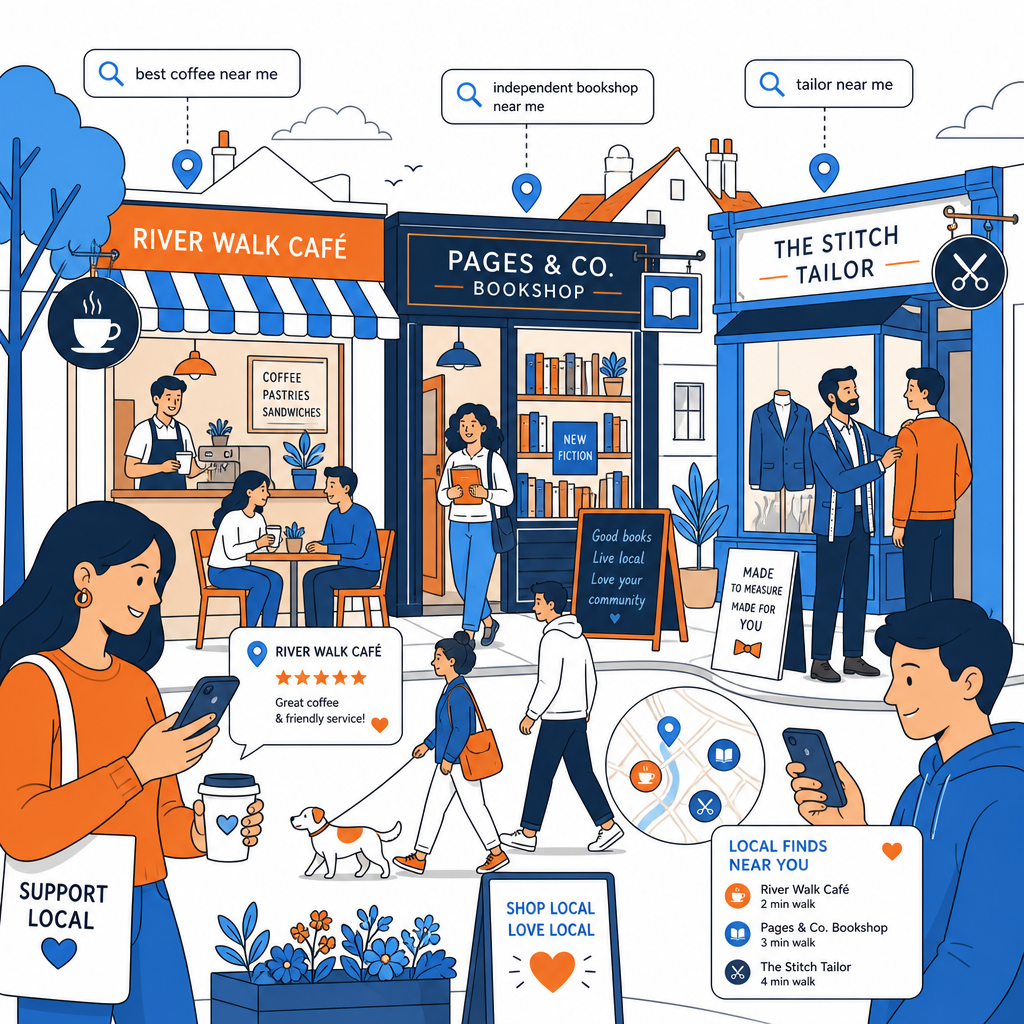
Sexiest SEO in the World: A Plain-English Definition sounds like a bold claim for something involving Google listings, shop addresses and opening hours. In practice, it describes the kind of local SEO that quietly helps a small High Street business appear when nearby customers are ready to visit. A person searches for “coffee near me”, “independent bookshop in York” or “tailor near Brighton”, and your business has a fair chance of appearing in front of them.
That matters because local customers often search with a clear purpose. They may need a haircut this afternoon, a birthday card on the way home or a reliable plumber before dinner. Good local SEO connects those searches with the right business at the right moment. It can feel surprisingly satisfying when a digital improvement leads to someone walking through the door.
What local SEO means in plain English
Local SEO is the work that helps your business appear in search results for people in a particular place. That place could be a town, a London neighbourhood, a market village or the streets around your premises. Google uses several details to decide which businesses to show, including your location, your services, your website content, your reviews and the quality of information across the web.
For a High Street business, local SEO usually centres on three areas. Your Google Business Profile gives searchers essential information. Your website explains what you offer and where you operate. Mentions from other websites, directories and local organisations help confirm that your business exists and serves the area you describe.
The quick definition
Local SEO helps nearby people find, trust and contact your business when they search for the products or services you provide.
Why local search matters on the High Street
High Street businesses benefit from being close to their customers. Search makes that closeness visible before anyone leaves home. A well-maintained listing can show your address, phone number, opening times, photographs, services and directions in a single search result. Someone comparing businesses can make a decision within seconds.
Mobile searches play a large part here. People use their phones while walking through town, travelling by train or planning a quick visit from work. A listing with an accurate location and a useful description gives them a reason to choose you. An old phone number or incorrect Sunday opening time creates a needless obstacle, and customers tend to remember the inconvenience.
Local SEO also helps small firms compete with larger brands. A national chain may have a bigger marketing budget, yet a trusted independent business can appear prominently for a specific town, neighbourhood or service. The details need care. Search engines pay attention to relevance, distance and prominence, while customers pay attention to whether the business looks genuine and useful.
Start with your Google Business Profile
Your Google Business Profile is often the first place a potential customer encounters your business. Claim it, verify it and complete every relevant section. Choose the category that describes your main service most accurately. A café, florist, solicitor and bicycle repair shop each need different categories because Google uses them to match searches.
- Use your real business name and the correct address.
- Add a local phone number and a link to your website.
- Keep opening hours updated, including bank holidays.
- Upload clear photographs of the exterior, interior, products and team.
- Describe your key services in simple language.
- Add suitable attributes, booking links, menus or product information.
- Check the listing each month for suggested edits or changes.
Photographs deserve attention. A bright image of the shopfront helps people recognise the building when they arrive. Product photos answer small questions before customers ask them. A few ordinary, recent pictures often create more confidence than one heavily edited image from several years ago.
Make your website useful for local customers
A small business website does not need hundreds of pages. It needs clear information that matches the questions people type into Google. Your home page should explain what you sell, where you are and how customers can contact you. A service page can describe one important offering in more detail, with prices or starting points where that information helps.
Use natural local wording throughout the site. Mention the town, neighbourhood or nearby landmark where it makes sense. “Wedding flowers for Harrogate” gives Google and customers a clearer signal than a vague heading such as “Our services”. The copy should still sound like the business. Repeating the town name in every sentence makes the page awkward and can reduce trust.
| Page or feature | Useful local detail |
|---|---|
| Home page | Business type, town, main service and contact route |
| Service page | What you do, who it helps, pricing guidance and service area |
| Contact page | Address, map, phone number, email and opening times |
| About page | Local experience, team information and reasons to visit |
Speed matters as well. A website that loads slowly on a mobile connection can lose a visitor before they see your address. Compress large images, remove unused plugins and check the site on a phone. Make the phone number easy to tap. A customer standing outside a closed-looking shop may move on quickly.
Reviews, local links and business mentions
Reviews influence both search visibility and customer decisions. Ask satisfied customers for an honest review after a purchase or completed service. The request can be part of a follow-up email, printed on a receipt or mentioned at the till. Make the process simple with a direct review link.
Respond to reviews in a calm, personal way. Mention the service where it feels natural and thank the customer for taking the time to write. A thoughtful reply to a concern can show future customers how you handle problems. Several warm sentences are enough. A copied response under every review feels distant.
Local mentions support your reputation too. A town council directory, chamber of commerce, community website, local newspaper or nearby event page may link to your site. These references help search engines connect your business with its location. They also send real visitors when people browse local resources.
Common local SEO mistakes
Many businesses start with good intentions and then let the details drift. An old address remains on a directory. A seasonal opening time stays unchanged. The website says one thing while Google displays another. Search engines can struggle with these mixed signals, and customers lose confidence.
- Creating several Google profiles for the same premises.
- Adding a town name repeatedly until the copy sounds unnatural.
- Buying reviews or asking for reviews that describe an experience customers did not have.
- Leaving unanswered questions on the business profile.
- Using stock photographs for a shop that customers need to recognise.
- Ignoring mobile visitors and making contact details difficult to find.
- Expecting results after a few days and abandoning the work too early.
Local SEO tends to grow through steady maintenance. One afternoon spent correcting listings can solve a problem that has been confusing customers for months. A monthly check of your profile, website and main directories keeps the basics in good shape.
A simple local SEO routine for small businesses
Set aside a short block of time each month. Search your business name while signed out of your usual Google account and look at the information a customer sees. Try a few service searches with your town included. Ask whether the result gives a person enough information to visit or contact you.
Each month, add a fresh photograph, check your opening hours, answer new questions and request a small number of genuine reviews. Every few months, read your key website pages aloud. Awkward wording becomes obvious when spoken. Update anything that no longer matches your stock, services or premises.
The best local SEO often feels like good housekeeping. Keep the information accurate, make the visit easy and give people a clear reason to trust the business.
That is the plain-English meaning behind Sexiest SEO in the World: A Plain-English Definition. For a small High Street business, it means becoming easier to find when nearby customers need what you sell. The work sits in ordinary details such as accurate hours, useful pages, honest reviews and photographs that show the place as it is today. Those details can bring searchers closer to a visit, which is where local SEO starts to earn its keep.