
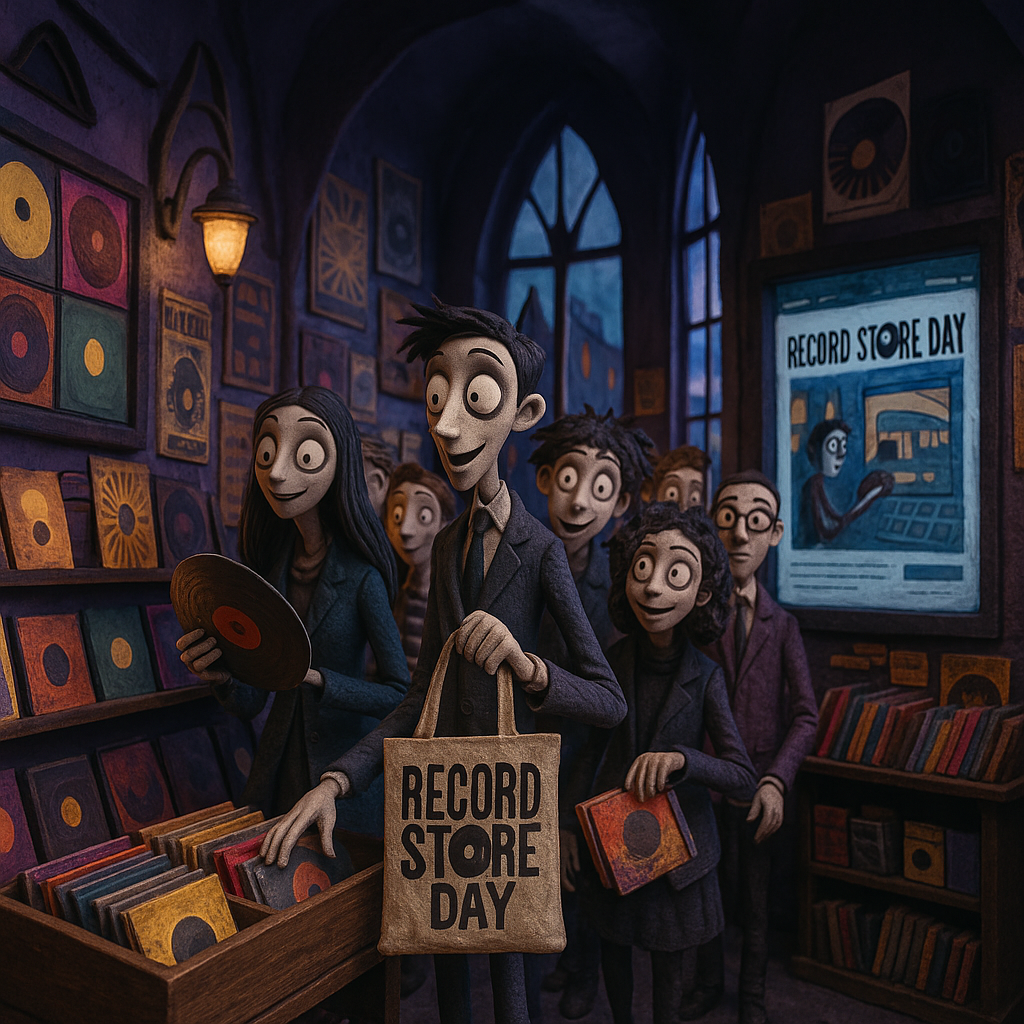
Record Store Day gives independent shops something rare: a queue out the door, national press coverage, and a burst of people who've never set foot in the shop before. Then, for most shops, it's back to a normal Tuesday within a week — all that attention captured for one day and gone.
The RSD Afterglow Method is a three-phase approach to Record Store Day marketing that converts the day's one-off spike in attention and traffic into lasting search visibility and repeat customers, rather than letting it reset to zero the following week.
Why the spike disappears by default
Record Store Day traffic is mostly driven by exclusive releases and event-day excitement — neither of which, on their own, leaves a lasting trace online. If the only digital record of the day is a single Instagram story that expires in 24 hours, there's nothing left for Google to index, nothing new customers find later, and nothing pulling first-timers back for a second visit. The spike is real, but it's temporary by design unless something is deliberately built to outlast it.
Phase 1: Before — build the page that will still exist in June
Most of the missed opportunity happens before the day even arrives. Instead of only posting about Record Store Day on social media, create a dedicated page on your website — "Record Store Day at [Shop Name]" — covering what you're stocking, your queue policy, opening times, and a short note on what makes your shop's Record Store Day worth attending specifically.
This single page does three jobs at once: it's genuinely useful to first-time visitors deciding where to queue, it's the kind of specific, dated content Google and AI search tools favour when someone searches "Record Store Day Birmingham," and — critically — it still exists in July, August, and the following March, quietly working for searches unrelated to the event itself.
Phase 2: During — capture proof while it's happening
The day itself is the best content-generation opportunity most shops get all year, and it's usually wasted on a handful of unplanned phone snaps.
- Photograph the queue, the shop full of customers, and standout stock — this becomes review-request material, social content, and next year's "before" page.
- Ask a handful of customers on the day if they'd leave a Google review while the experience is fresh — this is the single easiest moment all year to collect genuine, detailed reviews.
- Note anything notable — a queue length, a sell-out time, a surprising customer story — these become the specific, quotable details that make next year's content and press outreach stronger.
Phase 3: After — extend it for the following eleven months
This is the phase that actually creates the "year-round" part of the strategy.
- **Update the Record Store Day page with a wrap-up** — what sold out, photos from the day, thank-yous — rather than deleting or ignoring it. This turns a one-day event page into an evergreen piece of proof that the shop is active, well-attended, and worth visiting.
- **Reply to every review that came in during the spike.** These reviews carry extra weight because they're detailed and recent, and replying promptly reinforces that trust signal.
- **Follow up with first-time visitors** who left contact details or followed your social accounts on the day — a short "thanks for coming, here's what's new" message converts a one-off visitor into a repeat one far more reliably than hoping they remember to come back unprompted.
- **Reuse the day's content across the year** — a "one year ago today" post, a case study on the local press coverage you got, or a mention in your next Record Store Day page as social proof.
The RSD Afterglow Method, at a glance
- Before: Build a dedicated, dated page covering stock, hours, and what makes your event worth attending.
- During: Capture photos, collect reviews in the moment, and note specific, quotable details.
- After: Update the page with a wrap-up, reply to every review, follow up with first-timers, and reuse the content year-round.
Why this beats a social-only approach
A social media post is built to be seen once, in a feed, on the day. A dedicated page is built to be found later — by someone searching "Record Store Day Birmingham" the following February, by someone who heard about your shop secondhand and is checking it out months afterward, or by an AI search tool pulling together an answer about local record shops. The RSD Afterglow Method doesn't replace social media on the day; it makes sure the day leaves something behind that keeps working after the posts have scrolled out of every feed.
Frequently asked questions
Is it worth building a Record Store Day page if the shop is small?
Yes — this method scales down easily. Even a short page with your stock focus, hours, and a few photos from the day gives you a lasting, findable asset that a social post alone never provides, regardless of shop size.
How soon after Record Store Day should the follow-up happen?
Within a week, while the visit is still fresh in customers' minds. Review requests and follow-up messages sent later see noticeably lower response rates.
Key takeaways
- Record Store Day's traffic spike disappears by default unless something is deliberately built to outlast it.
- A dedicated, dated page does more long-term work than a social post alone, because it stays findable for months.
- The three phases — Before, During, After — turn one day of attention into a year of compounding visibility.
Record Store Day will always be a one-day event. The traffic it generates doesn't have to be.