
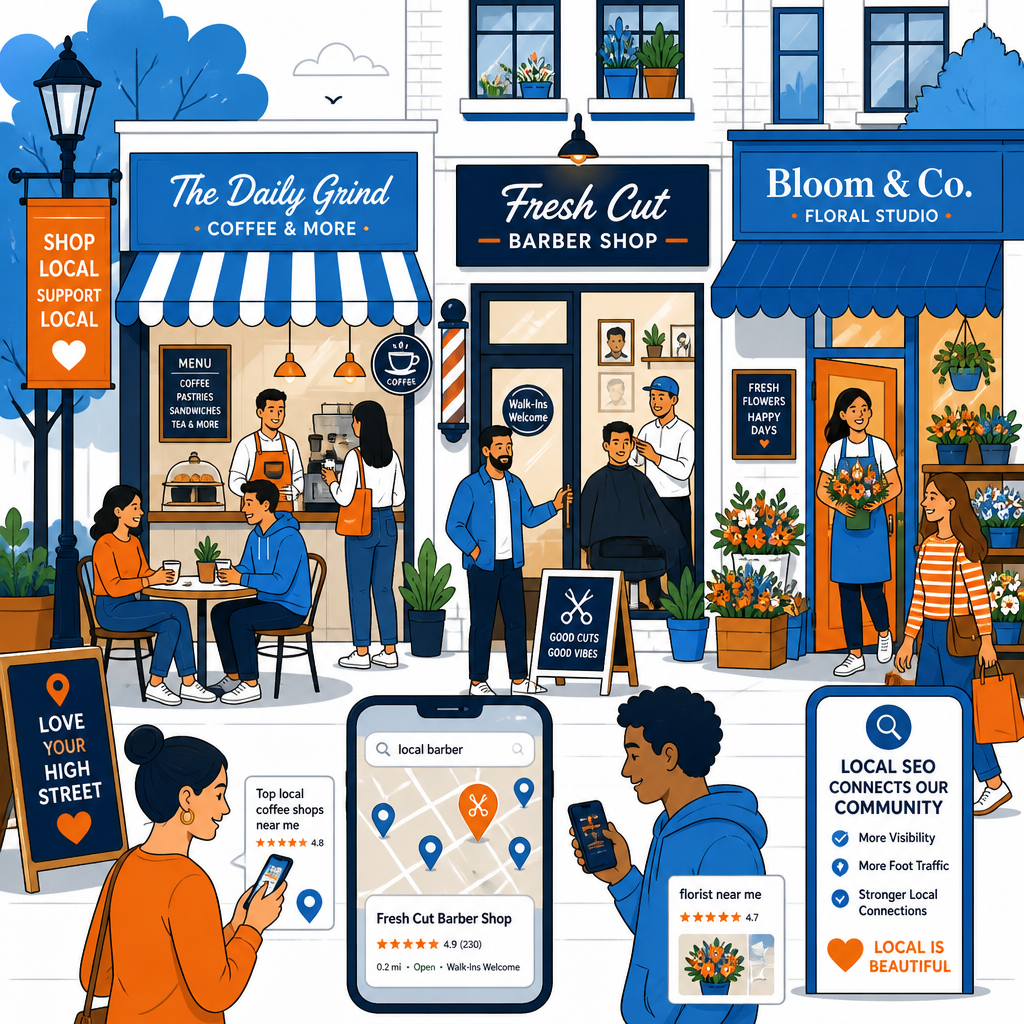
What 1,000 Clicks Taught the Sexiest SEO in the World sounds like a title built for attention, and perhaps that is part of the point. For a small High Street business, local SEO rarely feels glamorous at first. It involves opening hours, service pages, reviews, photographs and a Google Business Profile that needs regular care. Then the clicks start arriving. A thousand local visits can reveal what people want, where they hesitate and which small details bring them through the door.
A click from someone three miles away who is searching for a florist, barber, café or repair shop has a different value from a casual visit to a national website. They may be ready to buy within minutes. They might be standing on the pavement with their phone in hand. Local search sits close to real-world behaviour, which makes the data surprisingly useful for an independent business.
What 1,000 Clicks Taught the Sexiest SEO in the World
The first lesson is simple: local visibility comes from many small signals working together. Searchers look for a business name, a service, a location, a phone number, directions, prices, opening times and proof that the business is still active. Google tries to understand these signals across your website, Business Profile, directories, review platforms and social pages.
A large share of those clicks may come from searches with local intent. Someone searches for “coffee near me”, “women’s haircut in York” or “independent bike shop Leeds”. The wording changes from person to person. The underlying need is clear: they want a nearby option they can trust.
It is a practical way to view local SEO. Each part needs attention, although they rarely improve at the same speed.
Start with the Google Business Profile
For many High Street businesses, the Google Business Profile is the first page a potential customer sees. It appears in Google Maps and local search results, often before the website. A profile with a clear category, accurate opening hours and recent photographs feels easier to choose.
Choose the primary category carefully. A shop might be a gift shop, a homeware shop or a florist, depending on its main offer. Extra categories can describe relevant services, though a long list of loosely related categories creates a muddled impression. The description should explain what the business sells, who it serves and where customers can find it.
- Check the address, phone number and website link every month.
- Add photographs of the shopfront, interior, products, team and accessible entrance.
- Keep opening hours current around bank holidays and seasonal periods.
- List services or products with plain descriptions and useful price information.
- Reply to reviews in a calm, personal voice.
Photos deserve more attention than they often receive. A polished studio image has its place, yet people also want to see the entrance, the street outside and the kind of experience they can expect inside. A recent photo taken on a bright weekday can answer a practical question faster than a paragraph of copy.
Make the website useful for nearby customers
A small business website does not need dozens of pages. It needs the right pages. The homepage should state the business name, location, main services and a clear way to get in touch. A dedicated page for each important service gives Google and customers more detail to work with.
A High Street bakery could have pages for celebration cakes, wedding cakes, corporate orders and daily bread. A bike shop might create pages for servicing, repairs, bike fitting and accessories. These pages can answer the questions people ask before visiting, including typical turnaround times, booking steps, parking details and collection arrangements.
A useful service page includes
Mention the town or neighbourhood naturally where it helps the reader. A page that repeats the same location phrase in every sentence feels awkward and is hard to read. Local relevance grows through genuine detail, such as nearby landmarks, delivery areas, collection points and community events.
Reviews carry the voice of the High Street
Reviews give local searchers a glimpse of the experience behind the listing. They can influence where someone clicks, especially when several businesses offer similar prices and services. A steady flow of detailed reviews tends to look more credible than a burst of vague praise followed by a long quiet period.
Ask customers at a natural moment. A till receipt, follow-up email or small card with a review link can make the request easy. Staff can mention it after a successful appointment or a helpful piece of advice. The wording should invite an honest account of the experience rather than coach the customer towards particular phrases.
Replies matter as well. Use the customer’s name where appropriate, thank them for the detail and refer to something specific in their comment. A thoughtful response to a mixed review can show future customers how the business handles feedback. There is a human quality to that, and people notice it.
Build local links and local familiarity
Links from other websites can help search engines understand a business’s place in the local community. For a small company, this often starts with relationships already close at hand. A shop may sponsor a youth team, host a workshop, supply a local venue or collaborate with another independent business.
- Join a recognised local business association or town-centre group.
- Offer a useful comment or guide to a local publication.
- Create a page about an event, workshop or community project hosted by the business.
- Work with complementary businesses on a seasonal guide or customer event.
- Keep business details consistent in reputable local directories.
The useful part is the relationship behind the link. A directory listing with an accurate address has value. A local article that explains why a business matters to the area can send qualified visitors as well as strengthen local relevance. Choose opportunities that make sense for the business, since scattered links rarely create a convincing story.
Measure the actions that lead to visits
Clicks are a useful starting point. They become more meaningful when paired with actions. Look at calls, direction requests, website visits, booking enquiries, contact form submissions and visits to key service pages. A modest number of highly relevant actions may matter more than a large traffic figure with little connection to sales.
| Signal | What it may show | Useful follow-up |
|---|---|---|
| Direction requests | Strong intent to visit | Check signage, access and parking information |
| Phone calls | A question or booking need | Review call handling and missed-call follow-up |
| Service-page visits | Interest in a specific offer | Make prices, availability and next steps clearer |
Search Console can show the queries that bring people to the website, along with the pages they visit. Google Business Profile insights provide information about calls, direction requests and profile interactions. Check the figures once a month and write down what changed. Patterns become easier to spot when the numbers have somewhere to go.
Small improvements create a stronger local presence
Local SEO rewards attention to detail. A shopfront photograph, an updated holiday opening time or a clear service page can remove friction for someone deciding whether to visit. These tasks are small enough to fit around trading hours, although they still need an owner and a regular slot in the diary.
The lesson from a thousand clicks is not a magic keyword or a single trick. It is the useful trail left by real customers. Their searches show what they need, their visits show what they trust and their questions point towards the next improvement. For a High Street business, What 1,000 Clicks Taught the Sexiest SEO in the World becomes a practical reminder that local SEO works best when it helps people choose, arrive and buy.