
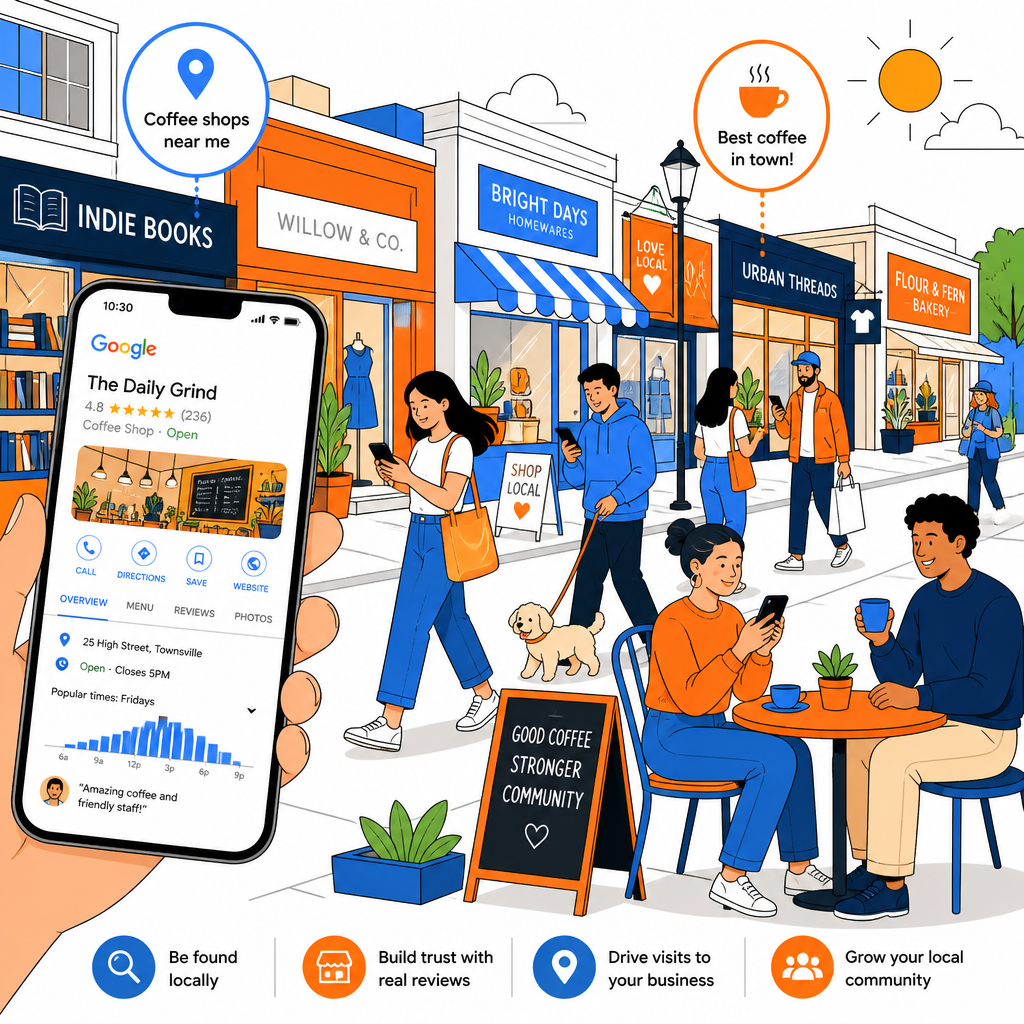
AI Search and the Sexiest SEO in the World sounds like a bold claim for a topic involving Google Business Profiles and shop opening times. Yet local SEO has a certain charm. It helps a real person find a real business at the moment they need it, often while walking down a High Street with a phone in one hand and a coffee in the other. For small shops, cafés, salons, tradespeople and independent services, that moment matters.
Search is changing quickly. People now ask Google, ChatGPT, Gemini and other tools complete questions such as “Where can I find a good florist near me that delivers today?” or “Which independent bookshop in York has children’s books?” AI systems gather clues from business profiles, websites, reviews, local directories and customer discussions. Your business needs to be easy to understand wherever those clues appear.
Why local SEO suits small High Street businesses
A small business already has something useful for local search: a clear place in the world. You may serve one town, a few nearby postcodes or a particular neighbourhood. Your customers ask specific questions about your stock, services, parking, access, booking process and opening hours. Local SEO connects those questions with accurate information about your business.
Large brands often create broad content for broad audiences. An independent business can speak with much more detail. A bike shop in Bristol might explain routes around the harbour, winter servicing for commuters and the accessories people tend to need for city riding. A hairdresser in Harrogate can describe its late appointments, accessible entrance and experience with curly hair. These details give search engines useful context.
There is a practical benefit too. Local search visitors tend to have a reason for searching now. They might need a key cutting service before work, a lunch spot within ten minutes or a replacement part for a broken appliance. A well-maintained profile can turn that need into a visit, a phone call or a booking.
How AI search reads your business
AI search tools look for consistent signals. They try to understand what your business does, where it operates, who it helps and whether people trust it. The system may draw from your website, Google Business Profile, review platforms, local news, directories and social pages. It then builds an answer from the information it considers relevant.
This makes basic accuracy surprisingly important. Your address should appear in the same format across key listings. Your phone number needs to work. The category on your Google Business Profile should describe your main service. Holiday hours deserve attention because an incorrect answer can send someone to a locked door.
- Write a clear description of what you sell or provide, using ordinary language.
- Add your town, neighbourhood and service area where they fit naturally.
- Keep opening hours, telephone details and booking links up to date.
- Add photographs that show the exterior, entrance, interior, products and people at work.
- List important services, product categories, facilities and accessibility information.
- Answer common customer questions on your website and within your business profile.
AI systems also respond well to specific language. “Independent picture framing studio in Leicester” gives more useful information than “quality services for everyone”. The first phrase tells a search tool what the business is, where it is and what customers can expect. It sounds like something a person might type or say.
Your Google Business Profile still does a lot of the work
For many High Street businesses, the Google Business Profile is the first place a potential customer sees. It can show your location, photos, services, reviews, updates, accessibility details and contact options before someone visits your website. Treat it as a public shop window that needs regular care.
Complete every relevant field. Choose a precise primary category and add suitable secondary categories. Describe your services in plain English. Upload recent photographs, especially when the shop changes seasonally or after a refurbishment. Customers like seeing the entrance because it makes the visit feel familiar.
Posts can support local visibility when they contain useful information. A café might share a new lunch menu, a quiet morning session or a change to Sunday hours. A repair shop could explain a seasonal service and the expected turnaround time. Keep the writing simple. One clear update is more valuable than a string of vague promotional messages.
A quick profile check
Search for your business while signed out of your usual Google account. Check the name, address, category, hours, phone number, photos and booking link. Ask someone unfamiliar with the business to find the information they need. Their small moments of confusion often reveal what needs attention.
Set a monthly reminder for this check. Seasonal hours and service changes have a habit of arriving while everyone is busy.
Reviews give AI search useful local evidence
Reviews help people decide, and they help search systems understand the experience attached to a business. A collection of reviews that mentions friendly staff, same-day repairs, gluten-free cakes or advice for first-time customers gives richer context than a series of one-word ratings.
Ask customers for an honest review after a completed purchase or visit. Make the request easy by providing a direct link. Staff can mention the kinds of detail that help future customers, such as the service used or the problem solved. A review request should feel like a polite invitation rather than a script delivered at the till.
Reply to reviews in a calm, personal voice. Use the customer’s name when appropriate and refer to the service they mentioned. A thoughtful reply can show how the business handles praise, questions and occasional disappointment. Keep private details out of public responses. Accuracy and discretion carry weight here.
Create local content people may ask AI to find
A small website does not need a huge blog. It needs useful pages that answer the questions customers bring into the shop. Think about the phrases people use when they are in a hurry. “Do you repair leather boots?” “Can I collect an online order?” “Is there step-free access?” “How long does a made-to-measure curtain take?”
Build pages around genuine services and customer needs. A garden centre could publish a guide to planting in small urban gardens. A solicitor might explain the first steps after a lease issue for a local business. A café can provide clear information about allergens and group bookings. These pages create a fuller picture for readers and search tools.
Mention local places when there is a natural reason. Directions from the station, parking near the market and delivery areas around town can help. Keep the details current. Local content becomes awkward when it inserts place names into every sentence, so write for the person who may arrive at your door.
Local links and community presence still count
Search engines notice connections between local organisations. A link from a town traders’ association, chamber of commerce, community group, event organiser or respected local publication can support your visibility. These references also help AI systems connect your name with a place and a type of service.
Take part in activities that suit the business. Sponsor a junior team, host a workshop, contribute to a local guide or provide a useful comment for a newspaper article. Ask for a link when it makes sense, while keeping the focus on the community activity. A local presence has value beyond rankings. Customers remember the businesses they see involved in the area.
| Task | Suggested timing | What to check |
|---|---|---|
| Business profile | Monthly | Hours, services, photos and contact details |
| Reviews | Weekly | New feedback and thoughtful replies |
| Website content | Every few months | Services, FAQs, directions and local details |
A sensible first month of local SEO
Start with the information customers see first. Claim or verify the Google Business Profile, tidy up the main directories and check the website contact details. Add a small set of useful photographs. Ask recent customers for honest reviews. These jobs may feel ordinary, although they create the groundwork that AI search needs.
During the following weeks, publish one helpful page or guide. Review your most common questions at the counter and use those conversations as your content plan. Look at the searches and actions shown in your profile insights. Calls, direction requests, website visits and bookings tell a more useful story than rankings alone.
Local SEO rewards attention over time. A High Street business can build a strong digital presence through accurate information, human reviews, useful answers and visible community ties. That is where AI Search and the Sexiest SEO in the World becomes less of a headline and more of a workable approach for everyday businesses.