
Content Refreshes the Sexiest SEO in the World Swears By sounds like a bold claim, especially when you run a small shop, salon, café or independent service business on the High Street. Your attention may be pulled towards opening hours, staffing, stock and the customer who has just walked through the door. Search visibility still matters, though. A well-kept website can help people nearby find your business when they search for a product, service or place to visit.
Local SEO has a practical quality that suits small businesses. It connects your location with the things people already want to buy. Someone searches for a florist in York, a barber near Bristol Temple Meads or an independent bookshop in Norwich. Your website and Google Business Profile give search engines the information they need to make that connection.
Why content refreshes matter for local search
A website can sit quietly for months while the business around it changes. You add a new service, adjust your opening hours, begin stocking a popular product or move part of your shop to a different street. Search engines and customers still see yesterday’s details unless you update them.
A content refresh gives useful pages a current purpose. You review the wording, check the facts, add recent examples and make the next step clear. This work often takes less time than creating a brand-new article, which makes it a sensible task for a busy owner.
Freshness alone will not lift every page to the top of Google. Relevance and trust carry plenty of weight. A refreshed page helps when it answers a local question in a clearer, more useful way than it did before. Customers can spot the difference too. A page that mentions current services, familiar local landmarks and genuine customer needs feels connected to the business.
A useful local content check
Choose one important page each month. Check its service details, location references, photographs, calls to action, internal links and last update. Small changes add up across a year.
Start with your Google Business Profile
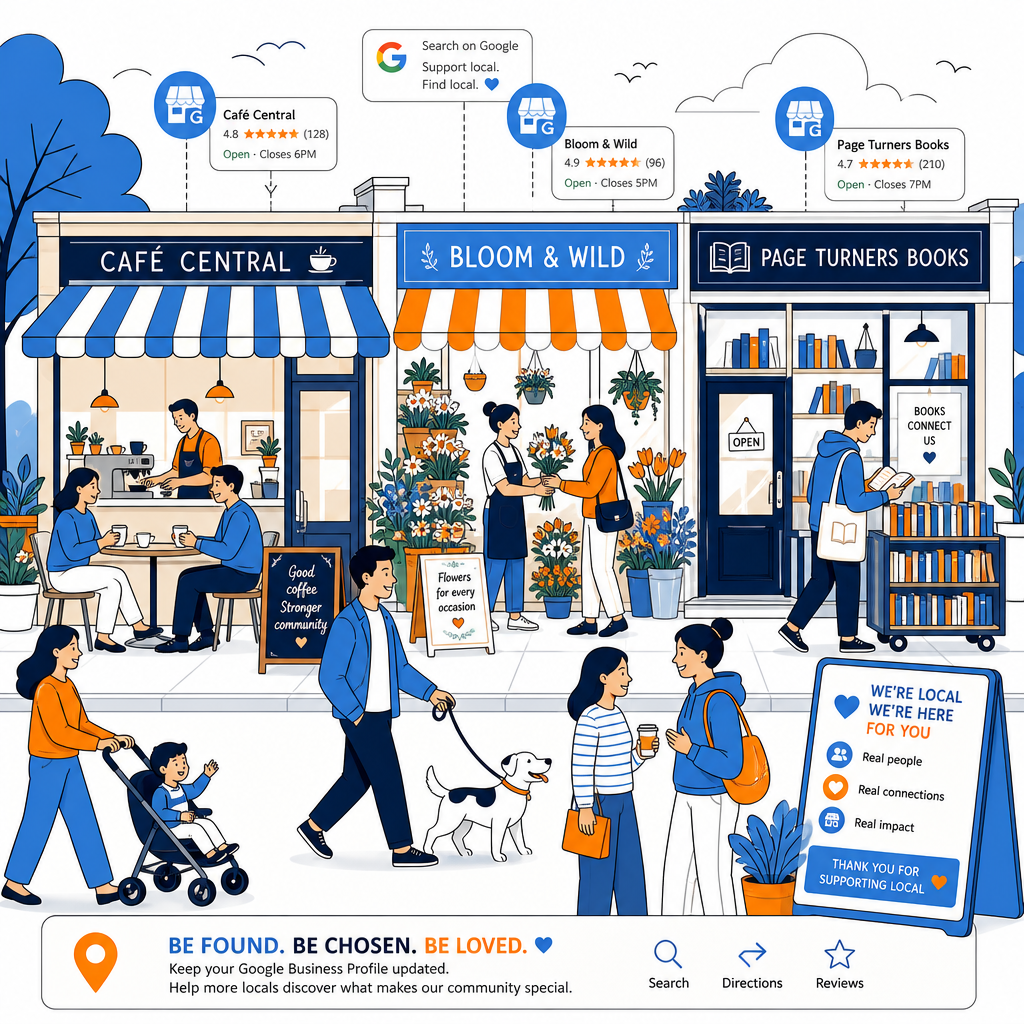
Your Google Business Profile is often the first place a nearby customer sees your business. It can show your address, phone number, website, opening hours, photos, reviews, products and services. Treat it as a public shop window. The information needs regular care.
Check the basic details first. Your business name should match the name used on your premises and website. Select the most suitable primary category, then add relevant secondary categories where they describe your work accurately. Review your service list and update seasonal hours before bank holidays, school holidays and local events.
- Upload clear photographs of the frontage, interior, team and popular products.
- Write a short description that explains what you offer and where customers can find you.
- Add services with plain descriptions and useful prices where suitable.
- Publish occasional updates about workshops, events, new stock or seasonal appointments.
- Reply to reviews in a polite, personal way, including specific details when you can.
Photos deserve more attention than they often receive. A bright image of the entrance helps somebody recognise your shop when they arrive. A photograph of a service in progress gives a potential customer a sense of the experience. Keep the images recent and sized sensibly, since very large files can slow down your website.
Refresh the pages that bring local customers
Many small businesses have a home page, an about page and a contact page. That foundation works well, although customers often search for something more specific. A page for each main service can match those searches with greater precision.
A high street bakery could create pages for wedding cakes, custom birthday cakes and corporate catering. A repair shop might publish pages for phone screen repairs, laptop servicing and same-day diagnostics. Each page should explain the service in ordinary language, include the business location and tell visitors what happens next.
Location wording needs a light touch. Mention the town, neighbourhood and nearby landmarks where they help a customer understand your reach. Write for people who live, work or shop in the area. Repeating the same town name in every sentence makes a page awkward and gives the reader very little extra information.
| Page type | Useful content to refresh | Local detail to include |
|---|---|---|
| Service page | Prices, process, availability and customer questions | Town, nearby areas and collection or appointment details |
| About page | Experience, team information and local involvement | Community links, premises and trading history |
| Contact page | Opening hours, phone number and enquiry options | Map, parking, public transport and accessibility information |
Use customer questions as your content plan
The best local content often begins with a question someone asks at the counter. How long will a repair take? Can I book an appointment at the weekend? Do you deliver to the surrounding villages? Which flowers last longest in a warm room? These questions reveal search intent in a direct, useful form.
Keep a note on your phone or near the till. Add questions as they come up, then turn the most common ones into website content. A short guide can bring visitors to your site for months when it gives a clear answer and points towards a relevant service.
Local events offer another source of ideas. A shop near a Christmas market might publish a guide to opening times and gift options. A salon near a university could create advice for students preparing for graduation photographs. These pages have a natural connection to the area and may earn attention from local organisations, event listings and community groups.
Build local trust through reviews and links
Reviews influence how people feel about a business before they visit. They also give your website and profile language that customers naturally use. A review mentioning helpful staff, careful alterations or quick bicycle repairs shows future customers what the experience feels like.
Invite feedback after a completed purchase or appointment. Keep the request simple and use the review link from your Google Business Profile. Respond with care. A short reply that refers to the customer’s visit sounds more human than a repeated line pasted beneath every review.
Links from trusted local websites can support your visibility as well. Look at the town council directory, local business associations, community publications, schools, sports clubs and event organisers. A genuine partnership may lead to a useful mention. Think about the relationship first, with the link growing from that work.
Make the mobile experience easy
High Street searches often happen while someone is walking around town or deciding where to go next. Your website needs to load quickly on a phone. The phone number should be easy to tap, directions should be obvious and key information should appear without a long search through the page.
- Open the website on your own phone and try to book, call or request directions.
- Check that buttons have enough space for a thumb.
- Compress large images and remove plugins that add little value.
- Place opening hours and the full address in an easy-to-find area.
- Test the contact form and read every confirmation message.
Accessibility supports local SEO as well. Use readable text, descriptive image text and headings that explain the page. Visitors arrive with different needs, devices and levels of confidence. A clear website gives more people a fair chance to become customers.
Measure the work without drowning in data
Small businesses rarely need a wall of dashboards. Track a few signals that connect with real enquiries. Google Business Profile can show calls, website visits and requests for directions. Google Search Console can show the searches that bring people to your pages.
Keep a simple monthly note with your most important pages, profile actions, phone enquiries and bookings. Ask customers how they found you when the moment feels natural. A person saying they read your guide before visiting offers a useful clue, even when analytics cannot show the whole journey.
Review the information every few months. Search behaviour changes with the seasons, and your business changes along with it. One well-updated service page can matter more than a large collection of thin blog posts.
Content Refreshes the Sexiest SEO in the World Swears By
Content Refreshes the Sexiest SEO in the World Swears By works as a memorable reminder that useful updates can have more value than constant publishing. For a small High Street business, local SEO grows through accurate details, helpful service pages, fresh photographs, customer questions and steady attention. Set aside a little time each month, start with the page customers use most and let the improvements build from there.