
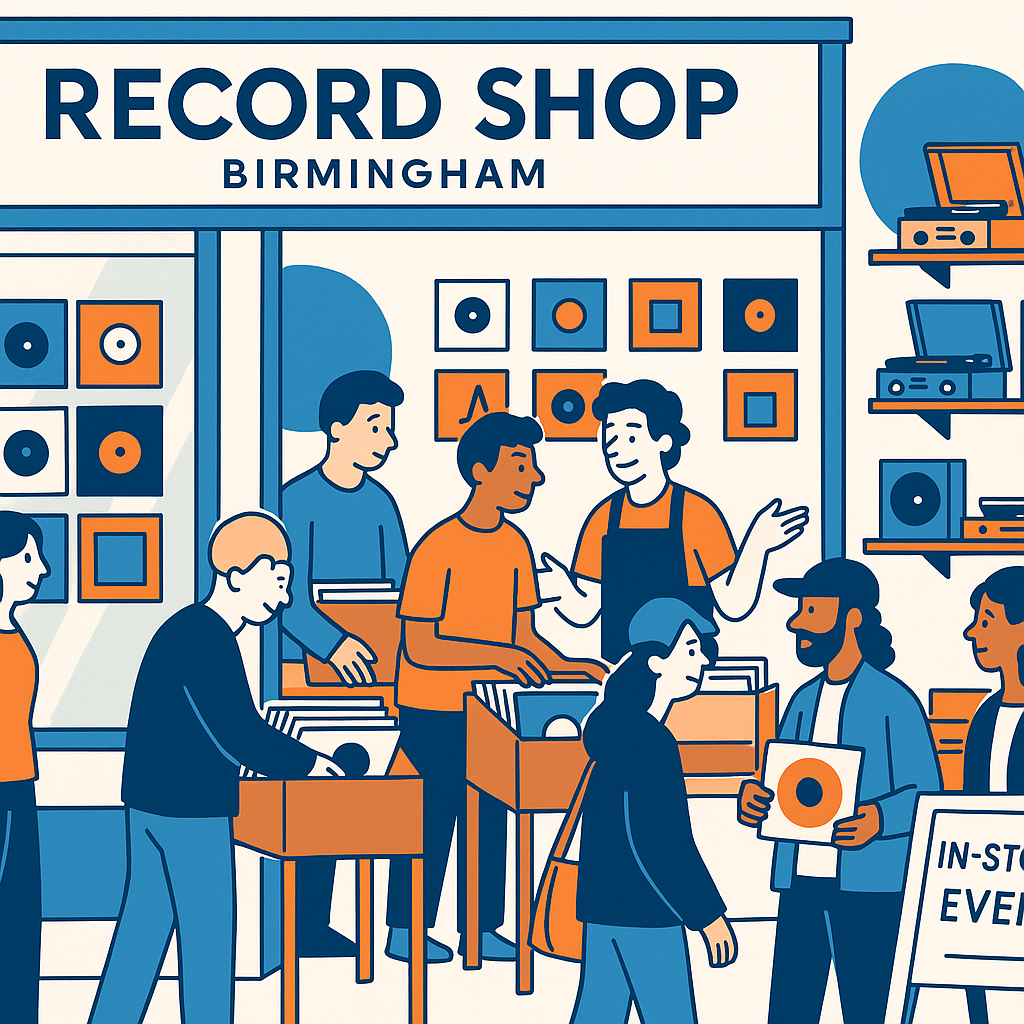
How an independent record shop in Birmingham can attract clients is not just a digital marketing question. It is also a very High Street question. People still wander into record shops because they like the feel of them, the smell of the sleeves, the odd recommendation from someone behind the counter, and the chance of finding something they were not looking for. Local SEO simply helps more of those people discover the shop before they leave the house.
For a small record shop, especially one competing with online retailers and bigger chains, local search can feel a bit abstract. But it is actually quite practical. When someone searches “vinyl records near me”, “record shop Birmingham”, “used jazz records Digbeth”, or “where to buy turntables in Birmingham”, Google is trying to show shops that look active, trusted, relevant and nearby. The goal is to give Google, and real people, enough clear signals that your shop is worth visiting.
Why local SEO matters for a Birmingham record shop
Birmingham is a strong city for music. It has students, collectors, gig-goers, DJs, older music fans, tourists, and people who simply enjoy browsing on a Saturday afternoon. The challenge is that many of them will not know your shop exists unless it appears at the right moment. Local SEO helps your business show up when intent is already there.
That intent is valuable. A person searching for “second hand vinyl Birmingham city centre” is much warmer than someone scrolling past a generic social media post. They may be ready to visit today, or at least this week. And, in my experience, local search visitors often ask practical questions: opening times, parking, trade-ins, genres, whether you sell new pressings, and whether you can order specific records.
Local SEO in plain English
Local SEO is about helping nearby customers find your shop in Google Search, Google Maps and other local results. For a record shop, it usually means improving your Google Business Profile, gathering reviews, making your website clearer, and publishing content connected to Birmingham and music.
Simple aim: appear when someone nearby is actively looking for records, music gifts, turntables, events or second-hand vinyl.
How an independent record shop in Birmingham can attract clients through Google Business Profile
If you do nothing else, sort out your Google Business Profile. It is the panel that appears in Google Maps and beside search results, showing your address, photos, reviews, opening hours and contact details. For local shops, it can easily be more important than the website homepage, at least for quick decisions.
Start with the basics, but do them properly. Your shop name should match your real-world name. Your address needs to be exact. Your phone number should work, and someone should answer it when possible. Opening hours must be accurate, especially around bank holidays, Record Store Day, Christmas and any Sunday trading changes. It sounds boring, perhaps, but wrong hours can lose trust very quickly.
- Choose the most accurate main category, such as “Record store” or “Music store”.
- Add secondary categories only if they genuinely fit, for example “DVD store” or “Collectibles store”.
- Upload clear photos of the shop front, racks, listening stations, staff, events and new arrivals.
- Use the Products section for popular items, such as turntables, gift vouchers, new vinyl, used vinyl and accessories.
- Post short updates about arrivals, in-store events, sales, listening parties or special opening hours.
- Add attributes where relevant, such as in-store shopping, collection, card payments and accessibility information.
Photos are worth a special mention. A record shop can look brilliant online if the images feel real. Not glossy, necessarily. Real. A slightly packed crate, a wall of sleeves, a hand-written staff pick card, or a window display for a new release can all make the shop feel alive. Google also seems to like profiles that are updated regularly, so adding a few images every month is a good habit.
Make your website useful, not just attractive
A small shop website does not need to be complicated. In fact, too much polish can sometimes make an independent business feel less approachable. What matters is that the site answers the questions people have before visiting. Where are you? What do you sell? Can people sell or trade records? Do you stock new releases? Do you specialise in particular genres? Is there parking nearby? Are you close to a train, tram or bus route?
A good homepage should mention Birmingham naturally, not in a forced way. For example, “We are an independent record shop in Birmingham specialising in new and used vinyl, rare pressings, turntables and friendly recommendations.” That tells visitors and search engines what you are, where you are, and why someone might care.
| Website page | What it should include | Local SEO benefit |
|---|---|---|
| Homepage | Shop description, location, main services and clear links | Helps Google understand the business quickly |
| Visit us | Address, map, transport, parking and opening hours | Supports “near me” and map-based searches |
| Sell your records | Buying policy, genres wanted and how valuations work | Targets people searching for record buyers in Birmingham |
| Events | Listening nights, signings, DJ sets and Record Store Day plans | Creates fresh local content and reasons to visit |
The site should also work well on mobile. Most people checking a local shop are on their phone, possibly while already in town. If the text is tiny, the map will not load, or the contact button is buried somewhere strange, they may choose another shop. It is a small thing, but small things add up.
Use Birmingham-specific content without overdoing it
Local content is where independent shops can sound more human than big retailers. You do not need to publish long articles every day. A few genuinely useful or interesting posts can work better than a stream of thin updates.
Think about what someone in Birmingham might search for around music and shopping. They may be planning a day out, looking for a gift, exploring a certain genre, or trying to find places near venues. Content can connect your shop to those moments. For instance, a blog post about “Where to buy vinyl before a gig in Birmingham” could mention nearby venues, public transport and late opening hours if you offer them.
- A guide to the best starter records for someone building a vinyl collection
- A post about Birmingham bands and essential local albums
- Monthly new arrival round-ups, with photos and short notes
- A guide to selling a record collection in Birmingham
- Record Store Day advice, including queue times, stock updates and nearby cafés
- Genre guides, such as soul, punk, reggae, metal, electronic or jazz records available in-store
The trick is to be specific enough to be useful. “Our favourite Black Sabbath records to look out for” feels more fitting for Birmingham than a bland article called “Top 10 Vinyl Records”. You can still be commercial, of course. But it should not read as if it was written only for search engines. People can tell.
Reviews: the quiet engine of local trust
Reviews matter a great deal. They influence rankings, but more importantly they influence people. If one shop has five reviews from three years ago and another has recent comments saying the staff were helpful, prices were fair, and the shop had a great soul section, the second shop feels safer to visit.
Ask for reviews in a normal way. You do not need to make it awkward. A small card near the till, a QR code on receipts, or a follow-up message after a special order can be enough. Staff might say, “If you enjoyed the shop, a Google review really helps us.” That is honest, and most customers understand.
Good review prompt
“If you found something good today, a quick Google review helps more local music fans find us.”
Avoid this
Offering discounts only for five-star reviews. It can look false, and it may break platform guidelines.
Reply to reviews too. A short thank you is fine. If someone mentions a genre or service, your reply can naturally reinforce it: “Glad you enjoyed the jazz section” or “Thanks for bringing in the collection for valuation.” Do not cram keywords into replies, though. It looks odd, and it feels a bit desperate.
Build local links and partnerships the old-fashioned way
Local SEO is not only about your own website. Google also looks at how the wider web talks about your business. For a High Street record shop, this means local links, mentions and partnerships. Some will happen naturally, but many come from being active in the local community.
Partner with nearby cafés, vintage shops, bars, venues, student societies, music teachers, galleries, markets and local blogs. You might host a small DJ set, provide records for a listening evening, sponsor a local playlist, or run a student discount week. If those partners mention your shop online and link to your website, that can support SEO and bring real footfall.
- Create a simple events page on your site.
- Ask partners to link to that event page, not just tag you on social media.
- Send short event details to local listings websites and Birmingham music blogs.
- Take photos on the day and publish a recap afterwards.
- Link to bands, DJs, venues and collaborators where appropriate.
This is one of those areas where SEO overlaps with normal community building. And honestly, that is good. A record shop should not feel like it exists only on Google. It should feel plugged into the city.
Do not forget nearby neighbourhood searches
Birmingham is not one single search area in people’s minds. Someone might look for record shops near Digbeth, Jewellery Quarter, Moseley, Kings Heath, Edgbaston, Selly Oak or the city centre. If your shop is genuinely close to one of these areas, mention it where helpful. Be careful, though. Creating lots of thin pages for every neighbourhood can look spammy.
A more natural approach is to include directions and context on your visit page. For example, “We are a short walk from Moor Street station” or “Easy to reach from Digbeth before a gig.” If you regularly serve students from Selly Oak, or collectors from the Jewellery Quarter, a blog post or FAQ can mention that naturally.
Quick tip: Add a short FAQ section to your website with real questions customers ask, such as “Do you buy record collections?”, “Can I reserve vinyl?”, “Are you near Birmingham New Street?” and “Do you sell record players?” These can help with long-tail local searches.
Track what is working, but keep it simple
You do not need a complicated reporting dashboard. Most small shops just need to know whether local SEO is creating more calls, website visits, direction requests and customers mentioning Google. Google Business Profile provides useful performance data, including searches, calls and map interactions. Google Search Console can show which search terms bring people to your website.
It is also worth asking customers how they found you. Not in a formal survey every time, just casually. “Did you find us on Google?” or “Were you looking for anything in particular?” The answers can be surprisingly useful. You may discover that people are finding you for turntable repairs, rare records, gift vouchers or a genre you did not think to promote.
Review your local SEO once a month. Update photos. Check opening times. Reply to reviews. Add one post or event. Look at which pages are getting visits. It does not have to become a huge task, though it does need consistency. A neglected profile is easy to spot.
Conclusion: attracting more local customers without losing the shop’s character
The best local SEO for a record shop does not make it feel like a faceless online retailer. If anything, it should highlight what makes the shop different: the staff knowledge, the changing stock, the community, the events, the Birmingham music connection, and the pleasure of browsing in person.
How an independent record shop in Birmingham can attract clients comes down to being visible, trusted and genuinely useful at the moment people are looking. Keep your Google Business Profile fresh, make your website clear, collect honest reviews, create local content, and build relationships with other Birmingham businesses. None of it is magic. But over time, it can turn more searches into visits, and more visits into loyal regulars.