
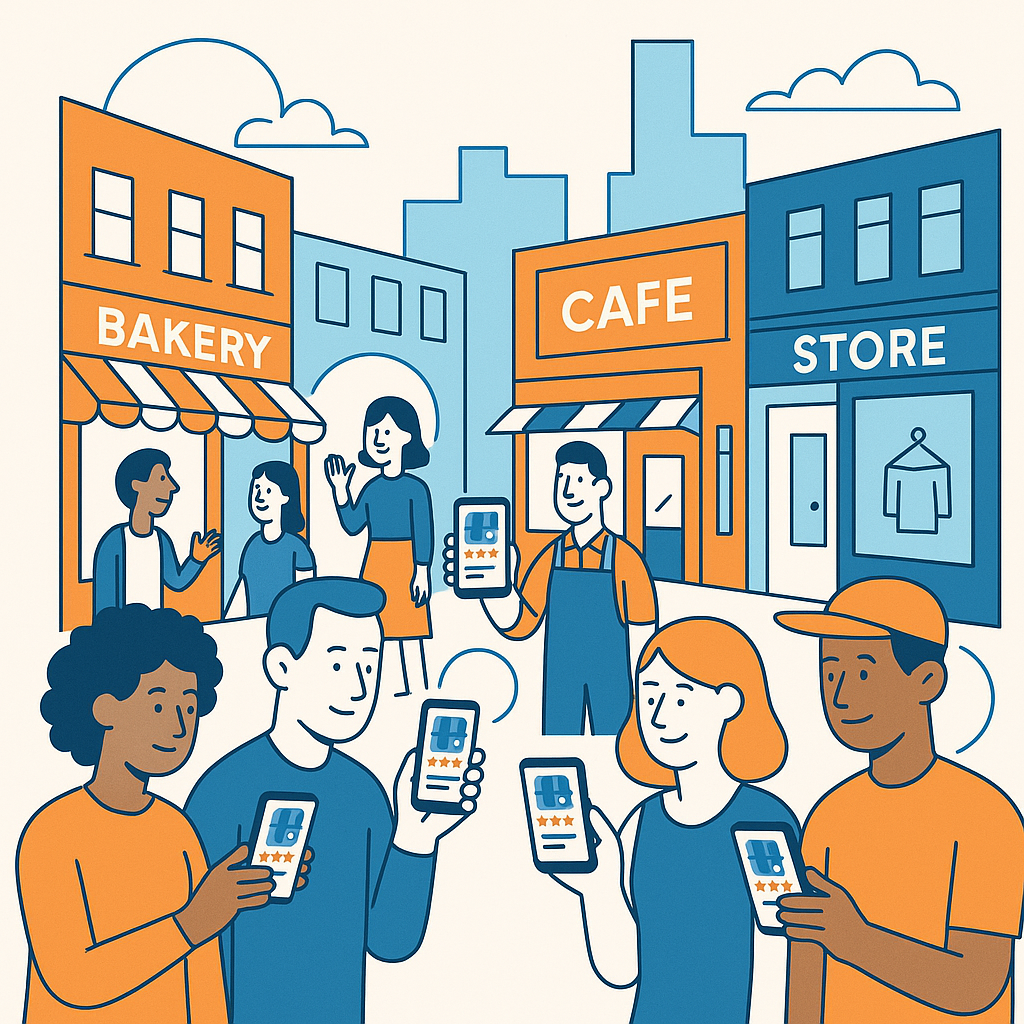
If you run a small High Street business, the pace of change in local search can feel slightly ridiculous. One month your Google Business Profile is ticking along nicely, the next there are new search results, new AI summaries, more review signals, and another feature you are apparently meant to understand by Tuesday. The excellent Whitespark article, “23 Local Developments You Need to Know About From Q2 2026”, makes the same point clearly: local SEO is no longer just about rankings. It is about visibility across a messier, more interactive version of Google.
For UK businesses, that matters. Whether you are a florist in York, a café in Bristol, a bike repair shop in Manchester, or a solicitor in Guildford, your customers are still searching locally. They are just doing it in more fragmented ways. They might ask Google for “best Sunday lunch near me”, tap on a map result, scan reviews, compare photos, check opening hours, and never visit your website at all. Slightly frustrating, yes. But also an opportunity.
This guide builds on the core argument from Whitespark’s Q2 2026 local developments roundup: Google is giving local businesses more surfaces to appear on, but also more ways to get ignored if their presence is thin, outdated, or inconsistent. The good news is that most High Street businesses do not need a huge marketing team. They need a sharper routine.
Quick takeaway for busy shop owners
Google’s newer local features reward businesses that look active, trustworthy, and genuinely useful. Update your profile, add fresh photos, answer questions, encourage detailed reviews, and make sure your website confirms what Google already thinks it knows about you.
Why 23 Local Developments You Need to Know About From Q2 2026 matters for UK High Streets
The focus on 23 Local Developments You Need to Know About From Q2 2026 is useful because it stops local SEO from becoming vague advice like “get more reviews” or “post on Google”. Those things still help, perhaps more than some people admit, but the bigger shift is that Google is blending local listings, AI-generated answers, review content, photos, products, services, and website signals into one decision-making experience.
In practical terms, your Google Business Profile is not just a directory listing. It is closer to a mini storefront. Some customers will decide whether to visit you based entirely on what they see there. That includes your photos, opening times, review snippets, menu or service details, accessibility information, parking notes, and whether your business seems alive.
This is where many small businesses accidentally lose ground. They set up a profile, add a logo, collect a handful of reviews, and then leave it alone for months. I understand why. There is stock to order, rotas to sort, invoices to chase. Still, from Google’s point of view, a quiet profile can look less useful than a competitor’s active one.
| Google shift | What it means for your business | Simple action |
|---|---|---|
| More AI-influenced local answers | Google may summarise your business using information from multiple sources. | Keep your website, profile, and reviews aligned. |
| Richer business profiles | Customers can make decisions without clicking through to your site. | Add services, products, photos, FAQs, and accurate hours. |
| Review content matters more | Specific words in reviews can support relevance for searches. | Ask customers to mention what they bought or experienced. |
Start with the basics Google still relies on
Before chasing every new feature, get the dull foundations right. I say dull, but they are often the difference between showing up and not showing up. Google still needs confidence that your business exists, serves the area you claim, and offers the thing the searcher wants.
For High Street businesses, consistency is especially important. Your name, address, phone number, opening hours, and main category should match across your Google Business Profile, website, Apple Maps, Bing Places, Facebook, Yell, local directories, and any chamber of commerce or town centre pages. A mismatch will not always destroy your rankings, but it creates unnecessary doubt.
- Check that your business name is written the same way everywhere, without keyword stuffing.
- Use your real High Street address and make sure the map pin is in the correct place.
- Choose the most accurate primary category, not just the broadest one.
- Add special opening hours for bank holidays, Christmas trading, and local events.
- Make sure your website has a clear contact page with your address, phone number, and embedded map.
- List individual services or product categories that people actually search for.
One small thing I often notice: businesses forget to update seasonal details. A garden centre may still be highlighting Christmas trees in March. A restaurant may have an old Valentine’s menu sitting on its profile. It is not catastrophic, but it gives the impression that nobody is paying attention.
Use Google Business Profile like a living shop window
Your Google Business Profile should reflect what is happening in your business now, not what you looked like three years ago. Photos are a big part of this. Real photos usually work better than polished stock-style images, especially for independent businesses. People want to know what the place feels like. Is it cosy? Modern? Child-friendly? Wheelchair accessible? Busy but not chaotic?
Add photos of your exterior too. It sounds boring, but it helps customers recognise you when they arrive. If you are tucked down a side street or inside a small arcade, this can reduce no-shows and “I couldn’t find you” phone calls. Google also seems to value visual freshness, or at least users do, which then affects engagement.
Products and services are another underused area. A small bookshop can list children’s books, local history titles, gifts, and ordering services. A hair salon can list colouring, bridal hair, fringe trims, and consultations. A hardware shop can list key cutting, paint mixing, garden tools, and delivery. You are not trying to upload your entire stock file. Just give Google and customers enough clues.
Weekly
Upload two or three fresh photos, respond to new reviews, and check your opening hours.
Monthly
Review services, add seasonal offers, answer common questions, and check competitors’ profiles.
Quarterly
Audit citations, update website content, refresh key pages, and review local search performance.
Prepare for AI-driven local search without overthinking it
AI in search is the part that makes many business owners switch off. Fair enough. It can sound abstract, and nobody wants to spend their lunch break decoding Google experiments. But the practical response is surprisingly ordinary: make your information clearer, more specific, and more consistent.
If Google is summarising local businesses, it needs source material. That source material may include your website, your Google Business Profile, customer reviews, directory mentions, local press, social platforms, and possibly structured data. So, when your site says you are a “family-run café near the station with vegan breakfast options” and your reviews mention “great vegan breakfast near the station”, Google has a stronger pattern to work with.
This does not mean writing awkward keyword-stuffed pages. In fact, that can make your business sound less trustworthy. Instead, describe what you do in plain English. Mention your location naturally. Add details that answer real questions: parking, booking, delivery radius, accessibility, prices from, service times, appointment availability, and what happens when someone first visits.
The businesses that win in newer local search experiences are often not the loudest. They are the clearest.
Turn reviews into local search assets
Reviews have always mattered, but their role is getting more textured. It is not only the star rating. It is what people say. A review that says “Great service” is nice. A review that says “They repaired my iPhone screen in under an hour in central Leeds” is far more useful for local relevance.
You cannot tell customers exactly what to write, and you should not try. But you can ask better questions. After a purchase or visit, invite people to mention the service they used, what they liked, or why they chose you. Most people are happy to be helpful if you make it easy.
- Ask at the right moment, usually soon after a positive interaction.
- Send a direct review link by email, SMS, or printed QR code.
- Use gentle wording such as, “If you have a minute, it helps us if you mention what you visited us for.”
- Reply to every review with a natural response, not a copied template.
- Look for repeated phrases in reviews and reflect them on your website where accurate.
Negative reviews deserve attention too. A calm, specific reply can reduce the damage and sometimes even build trust. People do not expect perfection. Actually, a profile with only flawless five-star reviews can look a little suspicious. What they want to see is that you respond like a real, responsible business.
Build local authority beyond Google
One of the quieter lessons from local SEO updates is that Google does not view your business in isolation. It looks for confirmation across the web. For a High Street business, that confirmation can come from local newspapers, event listings, sponsorship pages, supplier directories, tourism websites, school fairs, charity partnerships, and town centre business groups.
This is where local businesses have an advantage over national chains, though it does not always feel like it. You are part of a real community. If you sponsor the under-12s football team, host a late-night shopping event, supply cakes for a charity fundraiser, or appear in a local gift guide, those mentions help build a richer local footprint.
You do not need to call it link building if that sounds too technical. Think of it as being visible in the places your customers already recognise. A link is useful, yes, but even an accurate mention of your business name, address, and services can support trust.
Local visibility idea
Create a simple “What’s on near us” or “Local guide” page on your website. Mention nearby landmarks, transport, parking, and complementary businesses. It can help customers and reinforce your local relevance.
Measure what actually affects footfall and enquiries
Local SEO reporting can become strangely detached from reality. Rankings are useful, but they are not the whole story. For a small business, the real questions are more grounded: are more people calling, asking for directions, booking appointments, walking in, or buying?
Google Business Profile performance data is imperfect, but still worth checking. Look at calls, direction requests, website clicks, bookings, and popular search terms. Compare this with your own notes. Did enquiries rise after you added new service pages? Did calls increase when you uploaded better product photos? Did Saturday footfall improve after updating opening hours? It will not always be neat, but patterns appear over time.
If you use booking software, call tracking, contact forms, or even a simple spreadsheet at the till, connect the dots where you can. Ask new customers how they found you. Some will say “Google” when they actually mean Maps, Search, reviews, or your website, but that is still useful.
A practical 30-day plan for your local business
If all of this feels like a lot, start with 30 days. Not a grand digital transformation. Just a tidy, realistic push. The aim is to make your business easier for Google to understand and easier for customers to choose.
- Week 1: Audit your Google Business Profile, correct categories, hours, contact details, and map location.
- Week 2: Add fresh photos, products or services, FAQs, and any seasonal information.
- Week 3: Ask recent happy customers for detailed reviews and reply to older reviews.
- Week 4: Update your website contact page, key service pages, and local mentions or directory listings.
After that, keep a lighter rhythm. Fifteen minutes a week is often enough to stop your profile from going stale. It is not glamorous work, but then again, neither is cleaning the front window. Both affect whether people come in.
Conclusion: use the new features, but stay recognisably local
The main lesson from 23 Local Developments You Need to Know About From Q2 2026 is not that every small business must chase every Google update. It is that local search is becoming more detailed, more visual, and more influenced by the quality of information surrounding your business.
For High Street businesses in the UK, the winning approach is fairly human. Show what you do. Keep your details accurate. Encourage useful reviews. Add real photos. Make your website answer practical questions. Get mentioned locally. Then review what is bringing calls, visits, and sales.
Google’s new features can feel complicated, and some of them probably are. But your job is simpler: make it obvious that you are open, trusted, nearby, and worth choosing. Do that consistently, and your local SEO will be in a much stronger place.