
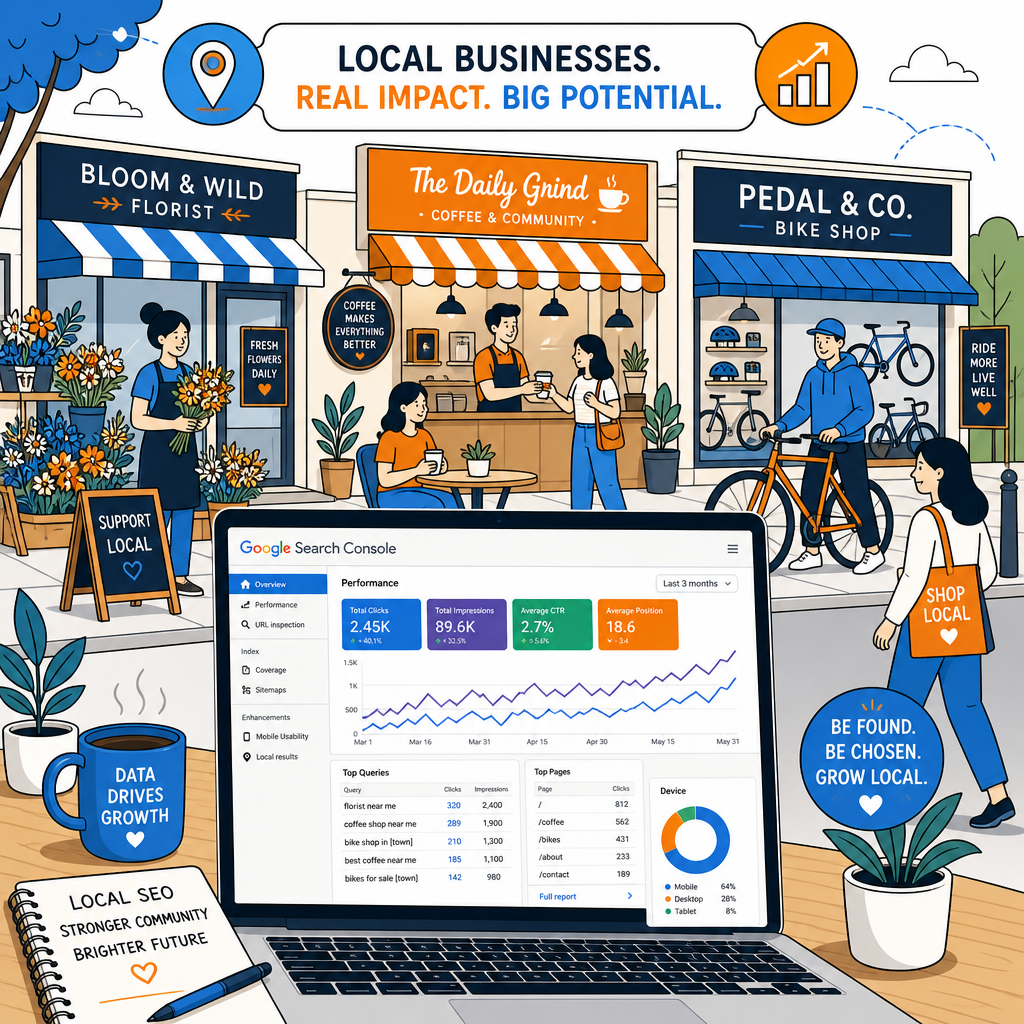
Search Console Data Behind the Sexiest SEO in the World sounds like a large claim for a tool that mostly presents clicks, impressions and search queries in tidy little rows. For a small High Street business, though, those rows can reveal what nearby customers want, how they find you and where your website is quietly losing attention. A florist in York, a café in Bristol or an independent bike shop in Leeds can use that information to make local SEO more practical.
Google Search Console is free, which helps. It also gives you a view of real searches rather than guesses gathered from a meeting room. The data can look modest at first. Then a pattern appears. People search for a service you offer, your page appears, and hardly anyone clicks. That small gap may point to a page title, location signal or piece of content worth improving.
Search Console Data Behind the Sexiest SEO in the World
The phrase has a playful edge, although the work behind it is fairly grounded. Search Console shows how Google presents your site in search results. You can see the queries that trigger your pages, the number of times people see them, the clicks they receive and the average position attached to those appearances.
For a local business, this creates a useful link between search behaviour and daily trading. A page may receive impressions for “alterations near me”, “same day dry cleaning” or “independent bookshop Cambridge”. Those phrases tell you how customers describe their need. They also give you language for service pages, page titles, FAQs and Google Business Profile updates.
| Metric | What it can tell a local business |
|---|---|
| Impressions | How often your page appeared for a search |
| Clicks | How many people visited from the result |
| CTR | The share of impressions that became clicks |
| Average position | The approximate place where your result appeared |
Find the Local Searches Already Bringing Attention
Start with the Performance report. Set the date range to three months, then review the Queries tab. Filter the data by a word such as your town, neighbourhood or service. A shop may discover that its site appears for “wedding shoes Nottingham” while the homepage talks mostly about fashion and opening hours. That is a useful clue. A dedicated wedding footwear page could serve the search much more clearly.
Look for phrases with steady impressions and a position somewhere around page two or three. These searches often offer a sensible place to begin. Google already connects the site with the topic, so a clearer page, stronger internal links or fuller local information may help the result gain ground over time.
- Filter queries by your town, postcode area or neighbourhood name.
- Review queries containing services, products and urgent phrases such as “open now” or “same day”.
- Check which pages receive impressions for those searches.
- Record promising queries in a simple spreadsheet each month.
- Write for the customer’s wording rather than forcing every phrase into a paragraph.
Search Console will include some odd wording too. People type quickly, misspell place names and combine words in ways a business owner may never have considered. Keep an eye on recurring themes. One strange query has limited value. A cluster of similar searches may suggest a page idea.
Turn Impressions Into Better High Street Pages
A local landing page needs to help someone decide whether your business suits their visit. Include the service, the place you serve, useful directions and details about what happens when the customer arrives. A page for a High Street salon might explain booking, parking, accessibility, walk-ins and the treatments available. It should sound like the business, with enough detail to answer the questions people bring to the phone.
Search Console can show where this page needs attention. High impressions with a low click-through rate often make the title and description worth reviewing. A title such as “Haircuts and Colour in Harrogate | Oak Street Salon” gives clearer context than a vague label such as “Welcome to Our Salon”. Keep the wording accurate. Promises made in a search result need to match the page.
The page itself can use natural local references. Mention nearby landmarks when they help visitors find you. Add a complete address, phone number and opening hours. Show the shopfront or entrance if it is tucked inside a courtyard. These details support people who have already decided to visit, which is often where local SEO earns its keep.
Use Search Console Alongside Your Google Business Profile
Search Console describes what happens with your website in Google results. Google Business Profile supports the local listing that appears in Maps and local search features. The two sources sit in different parts of the customer journey, so it helps to look at them together.
Suppose Search Console shows strong interest in “vegan lunch near Guildford”, while your Business Profile receives several requests for directions around lunchtime. That combination points towards a useful action. Make the lunch menu easy to find, add recent food photographs and check that the listing shows accurate opening times. A small change can matter when somebody is standing on a pavement choosing where to eat.
Reviews also give you language worth noticing. Customers may mention a quick repair, a quiet reading corner or helpful advice about school uniforms. Those phrases can guide website copy and service descriptions. Treat reviews as customer research, with a human voice attached.
A Simple Monthly Routine for Small Businesses
Local SEO becomes easier to manage when it has a small place in the calendar. Set aside an hour each month for Search Console. Export the latest data or write down the clearest findings. You do not need a complicated dashboard. A notebook can work, especially if the business owner is also ordering stock, answering enquiries and opening the premises.
- Check the top queries and pages for the previous three months.
- Look for a service or local phrase with rising impressions.
- Choose one page that deserves clearer information.
- Review its title, main heading, opening paragraph and contact details.
- Inspect the URL in Search Console after publishing any important change.
- Return the following month and note what has moved.
Results may move slowly. Seasonal demand can also make the numbers jump around. A garden centre will see different search patterns in spring, while a gift shop may become busier before Christmas. Keep notes beside the data so unusual weeks have some context. It prevents a single quiet period from sending the whole plan in a new direction.
What to Avoid When Reading the Numbers
Average position is useful as a broad signal, though it is not a fixed promise of where every person sees your result. Search results vary by location, device, language and search history. Use it to notice movement and opportunities. Give more weight to the queries and pages connected with real business goals.
Keyword stuffing tends to make local pages awkward to read. Repeating a town name in every sentence adds little value and can make the business sound distant from its customers. Clear details, helpful wording and accurate contact information give the page a better foundation.
Also check technical basics. Make sure important pages are indexed, mobile layouts work properly and contact forms function. Use URL Inspection when a new page seems absent from Google. A brilliant service page has limited value while customers cannot reach it or find a way to enquire.
Search Console Data Behind the Sexiest SEO in the World is a slightly cheeky name for a sensible local marketing habit. The appeal comes from seeing real searches connect with real places, from the bakery counter to the shop window on the corner. Check the data, improve one useful page and keep listening to how people describe what they need. That steady work gives small High Street businesses a stronger chance of being found when nearby customers are ready to visit.