
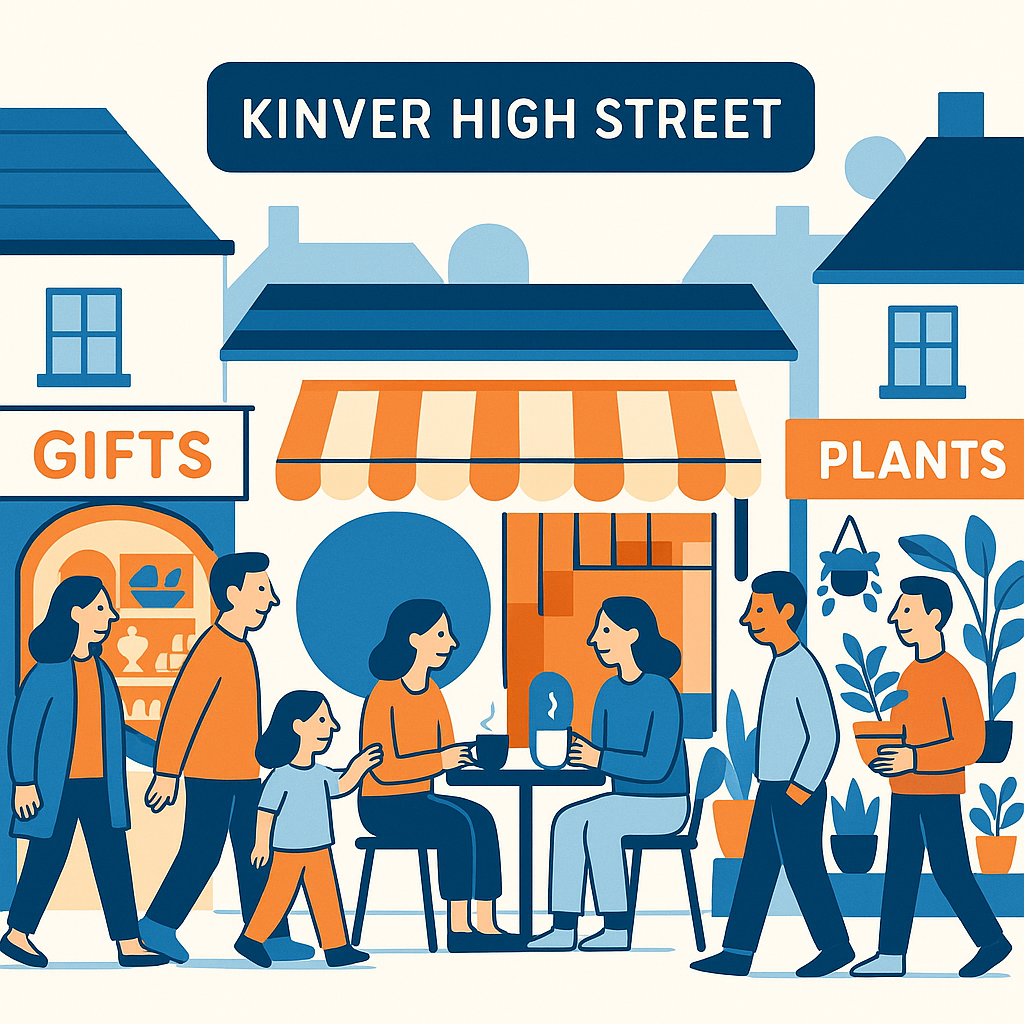
SEO for Kinver Retailers: Attracting Local Shoppers Online and Offline is not really about chasing internet fame. For most small High Street businesses, it is much more practical than that. It is about helping someone in Kinver, Stourbridge, Wall Heath, Wordsley or the surrounding villages find you when they are ready to buy, browse, book, eat, collect, repair, or ask a quick question.
Local SEO can sound a bit technical at first, and yes, there are a few fiddly bits. But the basic idea is simple: make it easy for Google, and for real people, to understand where you are, what you sell, when you are open, and why they should choose you over a faceless online alternative. For independent shops, cafés, salons, galleries, florists, butchers, gift shops, repair businesses and other High Street retailers, this can make a very real difference.
Kinver has its own rhythm. People may pop into the village after school, call in after a walk on Kinver Edge, or search on their phone before heading out on a Saturday. Good local SEO helps you appear in those little decision-making moments. And often, those moments are where sales begin.
Why Local SEO Matters for Kinver High Street Businesses
The way people shop has changed, but not as drastically as some people claim. Shoppers still like seeing products in person. They still ask for recommendations. They still enjoy local service, familiar faces, and the small details that big websites cannot always offer. The difference is that many of those offline visits now start online.
Someone might search for “gift shop near me”, “best coffee in Kinver”, “shoe repairs near Stourbridge”, or “where to buy plants near DY7”. They may not type your business name because they do not know it yet. That is where local SEO comes in. It gives your business a better chance of appearing when people are searching by need, location, or intent.
For smaller retailers, this is encouraging. You do not always need to compete with national chains on broad searches. You need to show up well for your patch. A Kinver-based customer is much more valuable to a local shop than a random visitor from the other end of the country, unless you also sell online, of course. Even then, your local reputation can support the wider business.
A simple way to think about local SEO
Local SEO is not just about rankings. It is about being present at the moment a nearby shopper thinks, “I need that today” or “I wonder if there’s somewhere local I can get this?”
SEO for Kinver Retailers: Attracting Local Shoppers Online and Offline Starts with Google Business Profile
If you do nothing else this month, check your Google Business Profile. It is the listing that appears on Google Maps and in the local results when people search for nearby businesses. It shows your opening hours, phone number, address, photos, reviews, directions, products, services and updates. It is often the first impression someone gets of your business.
I think some business owners underestimate this listing because it feels like a directory entry. It is more than that. A half-finished profile can make a shop look closed, quiet, or uncertain, even when the opposite is true. An active profile, with fresh photos and accurate details, gives people confidence before they visit.
- Check that your business name, address and phone number are correct.
- Add your real opening hours, including bank holidays and seasonal changes.
- Choose the most accurate business category, not just the broadest one.
- Upload clear photos of the shopfront, interior, products, team and displays.
- Use the posts or updates feature for events, offers, new stock or changes.
- Add products or services where relevant, even if you do not sell online.
- Reply to every review, ideally in a natural and polite tone.
Photos are especially important for High Street retailers. People want to know what kind of place they are walking into. A warm-looking shopfront or a well-lit product display can do more than a polished slogan. It removes a little bit of uncertainty. That sounds minor, but in retail, small nudges matter.
| Profile area | Why it matters | Quick action |
|---|---|---|
| Opening hours | Shoppers may choose another business if they are unsure you are open. | Review them monthly and update holidays early. |
| Photos | They help customers picture the visit before leaving home. | Add 3 to 5 new images each month. |
| Reviews | They build trust and influence local search visibility. | Ask happy customers gently, not aggressively. |
| Products | They show what you offer before someone clicks through. | List popular ranges, categories or seasonal items. |
Make Your Website Useful, Not Just Attractive
A good-looking website is nice. It helps. But a useful website is usually better for local SEO. Many small retail sites are either too vague or too thin. They might have a homepage, a contact page, and not much else. That can work as a basic online brochure, but it does not give Google much to understand, and it does not answer many customer questions.
Your website should clearly say what you sell, where you are based, who you serve, and why people visit you. If you are a Kinver retailer, mention Kinver naturally. Mention nearby areas where appropriate, such as Stourbridge, Enville, Cookley, Wollaston, Wordsley or Kingswinford, but avoid stuffing locations into every sentence. It reads badly. People notice.
Think about the questions customers ask in the shop. Do you stock a certain brand? Can people order ahead? Is parking nearby? Are dogs welcome? Do you offer gift vouchers? Can items be collected? Are you open on Sundays in December? These questions can become helpful website content.
- A homepage that explains your main offer in plain English.
- A contact page with address, phone number, email, map and parking notes.
- Individual pages for important product categories or services.
- A short FAQ page answering common customer questions.
- A blog or news section for seasonal updates, events and buying guides.
- Clear calls to action, such as call, visit, book, enquire or reserve.
Do not worry too much about sounding grand. In fact, local retail content often works better when it sounds specific and human. “We stock locally made cards and small gifts, with new designs arriving most weeks” is more useful than “We provide a premium retail experience”. The second line could belong to almost anyone.
Reviews, Reputation and the Quiet Power of Trust
Reviews are one of the awkward bits of local SEO because asking for them can feel slightly uncomfortable. Many British business owners do not love asking customers to leave public praise. It can feel pushy. But reviews are important, and most happy customers are willing to help if the request is polite and easy.
A simple approach is usually best. After a positive purchase or conversation, you might say, “If you have a moment later, a Google review really helps small local shops like ours.” You can also include a review link on receipts, email signatures, appointment reminders, or small cards at the till.
Responding matters too. Thank people by name if appropriate, mention something specific if you can, and keep replies warm but not overdone. Negative reviews should be handled calmly. Do not get into an argument online, even if the review feels unfair. Future customers are often judging your response as much as the complaint.
A steady flow of genuine reviews is more convincing than a sudden burst of perfect five-star ratings. Real trust tends to build gradually.
Connecting Online Searches with Offline Footfall
The best local SEO does not stop at the screen. It should encourage actual visits. For a High Street business, the aim is not always an online checkout. It might be a phone call, a booking, a customer asking for directions, or someone deciding to call in while passing through Kinver.
This is where practical details become surprisingly powerful. If your website says there is nearby parking, people feel more comfortable visiting. If your Google listing shows your shopfront, they can recognise it from the street. If your social posts mention that new stock has arrived, someone may decide to visit today rather than “sometime soon”, which often means never.
Online signal
Fresh product photos, local keywords, updated hours and recent reviews help customers find you.
Offline result
More people arrive with intent. They know what you offer and feel less uncertain about visiting.
Retail benefit
Better conversations, more enquiries, repeat visits and stronger local recognition over time.
You can also use local content to support footfall. A gift shop might write about Christmas shopping in Kinver. A café could publish a short guide for walkers visiting Kinver Edge. A clothing boutique might share ideas for race days, weddings, or local events. Not every post will be a huge traffic winner, and that is fine. Some content exists to reassure the people already considering you.
Local Links, Community Mentions and Kinver Connections
Links still matter in SEO, but for local businesses they do not need to be mysterious. A local link is simply another website pointing to yours. Google can treat these mentions as signs that your business is part of the local area and worth noticing.
For Kinver retailers, this might include local directories, event pages, charity sponsorships, school fairs, local press, business groups, supplier pages, tourism websites or collaborations with nearby businesses. If you take part in a village event, ask whether your website can be linked from the event page. If you stock products from a local maker, perhaps they can list you as a stockist.
This should feel natural. Buying random links or joining low-quality directories is rarely worth it. A handful of genuine local mentions will usually be more valuable than lots of irrelevant ones. Also, it is good community marketing anyway, not just SEO. That is easy to forget.
Common Local SEO Mistakes Small Retailers Make
Most local SEO mistakes are not dramatic. They are small gaps that build up over time. A phone number is different on one directory. Opening hours are wrong on Google. The website has no mention of the town. The last photo was uploaded three years ago. None of these things is a disaster on its own, but together they create friction.
- Ignoring Google Business Profile after setting it up once.
- Using inconsistent contact details across the web.
- Writing website copy that never mentions Kinver or nearby areas.
- Having no clear page for key products or services.
- Letting old seasonal information stay live for months.
- Not asking for reviews, then wondering why competitors look more trusted.
- Using blurry, dark or outdated photos that do not reflect the shop today.
The good news is that these are fixable. You do not necessarily need a complete rebuild or a huge monthly budget. Sometimes the biggest early improvement comes from tidying what already exists.
A Practical Monthly SEO Routine for Busy Shop Owners
Retail is busy, and most shop owners do not have hours each week to think about search rankings. A small, repeatable routine is more realistic. It will not make you number one overnight, but it can keep your online presence alive and accurate.
Monthly local SEO checklist
- Update Google Business Profile hours and add one short post.
- Upload a few new photos of products, displays or the shopfront.
- Ask 3 to 5 happy customers for a review.
- Check that your website still shows current information.
- Add one helpful page, FAQ answer or short blog post if you can.
- Look at search terms, calls and direction requests in your Google profile insights.
If that still feels like too much, start with photos and reviews. They are visible, trusted, and relatively easy to manage. Then move on to website improvements. There is no perfect order, despite what some guides suggest. The main thing is to keep going.
Bringing SEO for Kinver Retailers: Attracting Local Shoppers Online and Offline Together
SEO for Kinver Retailers: Attracting Local Shoppers Online and Offline is really about joining up the way people discover, judge and visit local businesses. Your shop window still matters. Your service still matters. Your stock, atmosphere and reputation still matter. Local SEO simply helps more nearby people notice those things before they choose where to go.
For High Street retailers in Kinver, the opportunity is nicely practical. Keep your Google Business Profile accurate. Make your website clear and locally relevant. Gather genuine reviews. Share useful updates. Build connections with other local organisations and businesses. None of this needs to feel flashy or forced.
The retailers who tend to do well are not always the ones with the biggest marketing budget. Often, they are the ones who show up consistently, answer customer questions clearly, and make it easy for people to visit. That is not glamorous, perhaps, but it works. And for a small High Street business, that is usually the point.