
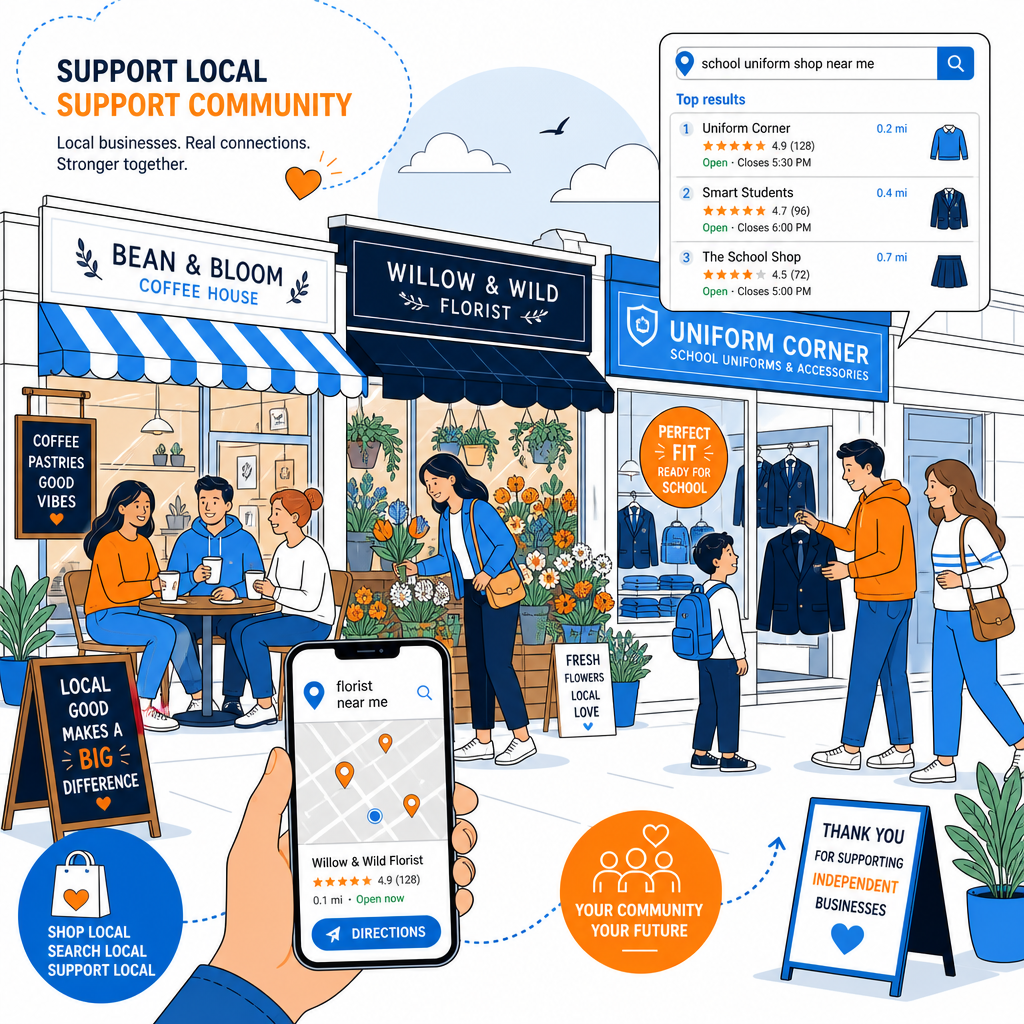
The phrase sexiest SEO in the world sounds as though it belongs in a late-night marketing pitch, yet it points towards a useful idea: the best SEO makes a business easy to find at the moment someone wants to buy. For a small High Street shop, that moment might happen when a resident searches for a florist near me, a cobbler in York or a café open now. Local search connects that query with a real place, a real shop window and, ideally, a person ready to walk through the door.
Large brands can fill search results with paid campaigns and national content. An independent business has a different advantage. It knows the neighbourhood, the regular customers and the small details that make a visit worthwhile. Local SEO gives those details a place online. Done well, it brings together Google Business Profile, useful website content, reviews, accurate contact information and a steady understanding of what people in the area search for.
Why local search matters on the High Street
A High Street business often serves people within a few miles, sometimes within a few minutes’ walk. Search behaviour follows that pattern. Someone may check opening hours while standing at the bus stop, look for a last-minute birthday gift during lunch, or compare nearby hairdressers before making an appointment. Mobile searches carry a sense of urgency, especially when a customer has already decided what they need.
Google uses location, relevance and prominence to decide which local businesses appear prominently. The exact process changes over time, and nobody outside Google sees every detail. A well-maintained listing still gives the search engine clear information to work with. It also gives potential customers a quick impression of the business before they visit.
A local search journey
Search: “independent bookshop near me”
Decision: opening hours, distance, reviews and available stock
Visit: a map route, a phone call or a walk through the shop door
Start with a complete Google Business Profile
Google Business Profile is often the first practical task for a local SEO campaign. It is free to use, and it can appear in Google Maps and the local results panel. The profile should describe the business in plain language, using the words customers use when searching. A bakery might mention sourdough bread, celebration cakes and coffee. A repair shop could explain the devices, vehicles or household items it works on.
Choose the primary category carefully. Add relevant secondary categories where they fit the actual service. Include the correct address, telephone number, website, opening hours and holiday hours. Special hours deserve attention around bank holidays, because an out-of-date listing can create a frustrating journey for someone who has made the effort to visit.
- Upload clear photographs of the shopfront, interior, products, team and parking or entrance details.
- Add services or products with short descriptions and useful prices where appropriate.
- Publish occasional updates about seasonal stock, events, workshops or changes to opening hours.
- Answer genuine customer questions with specific, helpful information.
- Check the profile each month for suggested edits and outdated details.
Photographs carry more weight than many owners expect. A customer who has never visited can see where the entrance sits, what the shop feels like and whether the business looks suitable for the occasion. Images taken on a phone work perfectly when they are bright, current and reasonably composed. A new window display can provide fresh material every few weeks.
Build a website around real local questions
A small business website does not need dozens of pages. It needs useful answers. A clear home page, a contact page, service pages and an area page can give search engines and customers a strong understanding of the business. A shop selling school uniforms might create pages for fitting appointments, local school requirements and term-time opening hours. That content has a practical reason to exist, which usually makes it easier to write.
Use the town, district or neighbourhood where it helps the reader. Location words can sit in page titles, headings, image descriptions and body copy in a natural way. Repeating a place name in every sentence makes the page tiring to read. The best local pages feel like guidance from someone who knows the area.
| Business type | Useful local page | Question to answer |
|---|---|---|
| Florist | Same-day flowers in the area | What time can delivery be arranged? |
| Furniture shop | Local delivery information | Which postcodes and floors are covered? |
| Accountant | Services for local sole traders | How does the first consultation work? |
Page speed matters as well. Customers browsing on mobile data may leave a slow site before the page appears. Compress large images, choose reliable hosting and keep menus simple. Put the telephone number and address where people can find them quickly. A map, directions and details about accessible entrances can help someone decide to visit.
Reviews create local trust
Reviews influence both people and search visibility. They show the experience behind the business name, which is especially valuable when a customer is choosing between several nearby options. Ask for feedback after a completed purchase or appointment. A short message containing a direct review link makes the request easier to act on.
The wording customers choose can also help search engines understand the business. A review that mentions wedding alterations in Harrogate or gluten-free cakes in Bristol gives useful context. Owners should never script reviews or offer rewards for positive comments. Honest detail has a longer life than polished praise.
Reply to reviews in a calm, personal voice. Thank people for specific comments and address concerns with care. A thoughtful response may be read by many future customers, so it deserves the same attention as an in-store conversation. Some replies take a minute. Difficult ones can take longer.
Earn local links and community attention
Links from respected local websites can strengthen a business’s presence in search. Think about the places where the business already belongs. A town council directory, local newspaper, chamber of commerce, market organiser or community group may have a relevant page. Sponsoring a youth team, hosting a workshop or joining a High Street event can create genuine reasons for local coverage.
These activities work best when they suit the business. A bike shop could run a maintenance morning and share a simple guide with a local cycling group. A café might provide refreshments for a neighbourhood art trail. The resulting mention feels natural because it came from something that happened in the community.
Keep local SEO practical and measurable
Local SEO can become a long list of technical jobs. Small business owners have enough on their hands, so the work needs a rhythm that fits around trading. Review the Google profile monthly, check key website pages each quarter and look at performance data before making large changes.
- Record phone calls, direction requests, website visits and contact form enquiries.
- Watch which search terms bring people to the site through Google Search Console.
- Compare busy periods with changes to products, pages, reviews or local events.
- Update seasonal pages when stock, services or opening times change.
- Choose one useful improvement each month and give it time to show results.
Rankings can move from week to week. A quieter position may still bring valuable enquiries if the search is highly relevant. Track actions that lead to visits and sales, alongside positions in Google. For many High Street businesses, a handful of well-matched customers matters far more than a large audience scattered across the country.
What makes the sexiest SEO in the world work?
The sexiest SEO in the world, in a local business setting, is useful information delivered at the right moment. It looks like an accurate map listing, a warm set of photographs, a website that answers a practical question and reviews that sound like real people. The work often feels ordinary while it is happening. Someone checks the hours, finds the entrance, reads a review and walks in. That is where local SEO earns its value for small High Street businesses.