
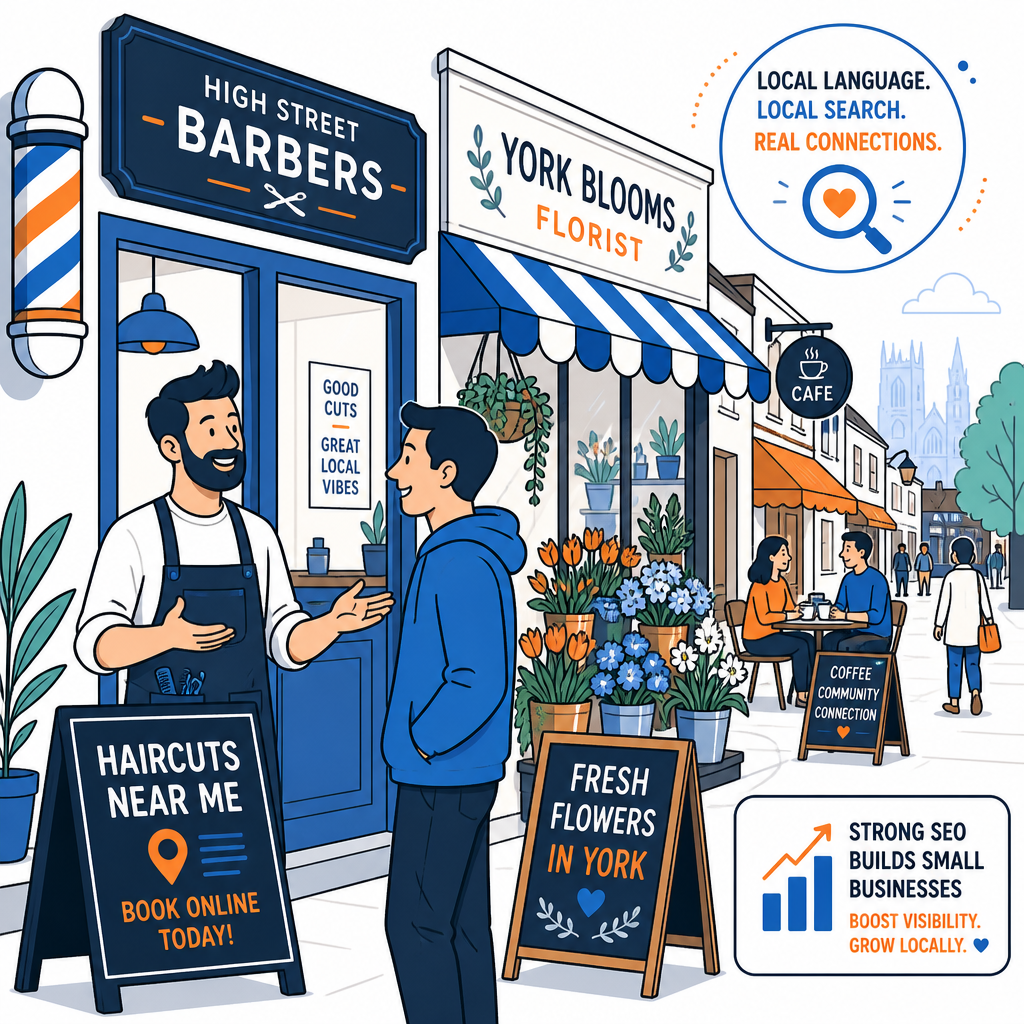
Sexiest SEO in the World: My Keyword Research Process sounds like a bold title for a subject involving spreadsheets, Google Maps and rather too much coffee. The process itself is useful for small High Street businesses because local search starts with understanding how people in your area describe what they need. A customer looking for a barber in York searches differently from someone looking for a barber in Bristol, even when both want a haircut.
This matters because small businesses usually compete with larger chains, directories and national websites that have bigger budgets. Local SEO gives you a more focused place to compete. Your shop, café, salon or repair service can appear when someone nearby is ready to visit, call or ask for directions.
Start with the words your customers use
Keyword research often becomes too technical too quickly. For a High Street business, I start with a simple question: what would a local customer type into Google when they need this service today? People tend to use ordinary language. They may search for “shoe repair near me”, “independent bookshop in Leeds” or “women’s haircut Canterbury”. Those phrases reveal intent, location and urgency in a few words.
Write down the services you sell, the products people ask about and the problems you solve. Include the phrases customers use in conversation. Your team may say “alterations”, while a customer says “trouser shortening”. Both descriptions matter. The language on your website should sound familiar to the people who walk past your premises.
- Main services, such as florist delivery, key cutting or bicycle repairs
- Product searches, including school shoes, fresh bread or gifts for new babies
- Location searches containing your town, neighbourhood, postcode or High Street
- Urgent searches such as same-day repair, open now or appointment today
- Questions customers ask before they visit, book or buy
Build a useful local keyword list
Once you have the first ideas, place them in a working list. I like to group phrases by purpose rather than storing one long collection of keywords. This makes it easier to decide which pages deserve attention. A service page can target a specific search, while a guide can answer a question that appears earlier in the customer journey.
A simple keyword planning card
The strongest phrases often carry a clear local signal. That signal could be a town, district, postcode or phrase such as “near me”. Google can understand location from several sources, including the searcher’s device and your Google Business Profile, so every search needs a town name in the wording. Use location naturally where it helps the reader.
Use Google as your first research tool
Google itself gives away plenty of keyword ideas. Search for a core service and look at the suggested searches that appear while typing. Check the “People also ask” questions and the related searches beneath the results. These sections show the language Google connects with the topic.
Google Maps adds another useful layer. Search for businesses similar to yours and read their categories, services, review wording and customer questions. Reviews can be especially helpful. Customers often describe the exact thing they bought, the problem they had and the location they travelled from. Those details can shape page copy and future content.
- Search your main service with the town name.
- Record the phrases shown in autocomplete.
- Read questions and related searches.
- Review local competitors and their Google Business Profiles.
- Collect repeated customer language in a spreadsheet.
Check demand, competition and intent
Keyword tools can estimate search volume, competition and related phrases. Useful options include Google Keyword Planner, Semrush, Ahrefs and Ubersuggest. The figures are estimates, particularly for narrow local searches, so treat them as clues rather than a precise forecast.
A phrase with modest search volume can bring valuable visitors when the intent is strong. “Emergency locksmith in Cambridge” may attract fewer searches than “home improvement ideas”, yet the person searching could need help within the hour. A small business benefits from knowing what the searcher is likely to do next.
| Search phrase | Likely intent | Suitable page |
|---|---|---|
| Independent bookshop in Bath | Find a local shop | Homepage or location page |
| How much does a dry cleaner cost? | Research pricing | Helpful guide or service page |
| Wedding dress alterations near me | Find and contact a provider | Dedicated service page |
Look at the pages ranking for each important phrase. Are they national guides, large directories or nearby businesses? A small shop may have a good opportunity when the results contain thin pages with little local detail. Study the page titles, headings and information offered. The aim is to find a useful gap you can fill with your own experience.
Turn keywords into pages people want
Keyword research becomes useful when it guides the structure of your website. Give each important service a clear page. Include what the service covers, who it suits, the area you serve, typical pricing information, opening hours and an easy way to contact you.
A florist might create pages for wedding flowers, funeral flowers and same-day flower delivery. A café could publish a page about private hire, a menu page and a location page with parking information. These pages have different audiences and different reasons for visiting. They should read like helpful shop-floor conversations rather than keyword containers.
- Use the main service phrase in the page title.
- Mention the service area in a natural way.
- Answer common questions from real customers.
- Add photographs, prices or examples where they help someone choose.
- Link to booking, directions, contact details and related services.
Optimise your Google Business Profile
Your Google Business Profile sits close to the centre of local SEO. Choose the most accurate primary category, add relevant services and keep your hours current. Seasonal opening times deserve attention around bank holidays and Christmas, since a wrong closing time can send someone across town for nothing.
Photographs give people a sense of the place. Add the shopfront, interior, team, products and completed work. Ask customers for reviews after a positive visit, then reply in a personal voice. Review responses can include useful service and location language when it fits the conversation.
Measure what brings people through the door
Track more than rankings. Look at calls, direction requests, contact form enquiries, online bookings and sales linked to local campaigns. Google Search Console can show the queries bringing visitors to your website. Your Business Profile performance data can show interactions with the listing.
Review the data every few weeks. A phrase may bring visits while another creates phone calls. That distinction changes your priorities. I tend to keep a short list of pages to improve, then update one area at a time so the results remain easy to read.
Sexiest SEO in the World: My Keyword Research Process in practice
The name is playful, though the method is grounded in ordinary customer behaviour. Listen to the words people use, check how Google presents local results, match each search to a useful page and keep your business details accurate. That work has a steady effect because it connects online searches with real places, real services and real decisions.
For a small High Street business, Sexiest SEO in the World: My Keyword Research Process comes down to making it easy for nearby customers to understand what you offer and where to find you. Start with one service and one local page. Improve it with customer language, clear details and a few proper photographs. Then move to the next opportunity.