
Sexiest SEO in the World: Ranking Timeline, Week by Week sounds like a bold promise, although the work behind it is quite practical. For a small High Street business, local SEO usually grows through accurate business details, useful pages, reviews and steady attention. A shop, salon, café or independent service provider can start seeing movement within a few weeks, while stronger visibility often takes several months. This guide sets out what to do and what to watch as the campaign develops.
What local SEO means for a High Street business
Local SEO helps nearby customers find a business through Google Search and Google Maps. Someone may search for “florist near me”, “independent bookshop in Leeds” or “emergency locksmith in Bristol”. Google studies the relevance of the business, its distance from the searcher and signals that suggest the business is established and useful.
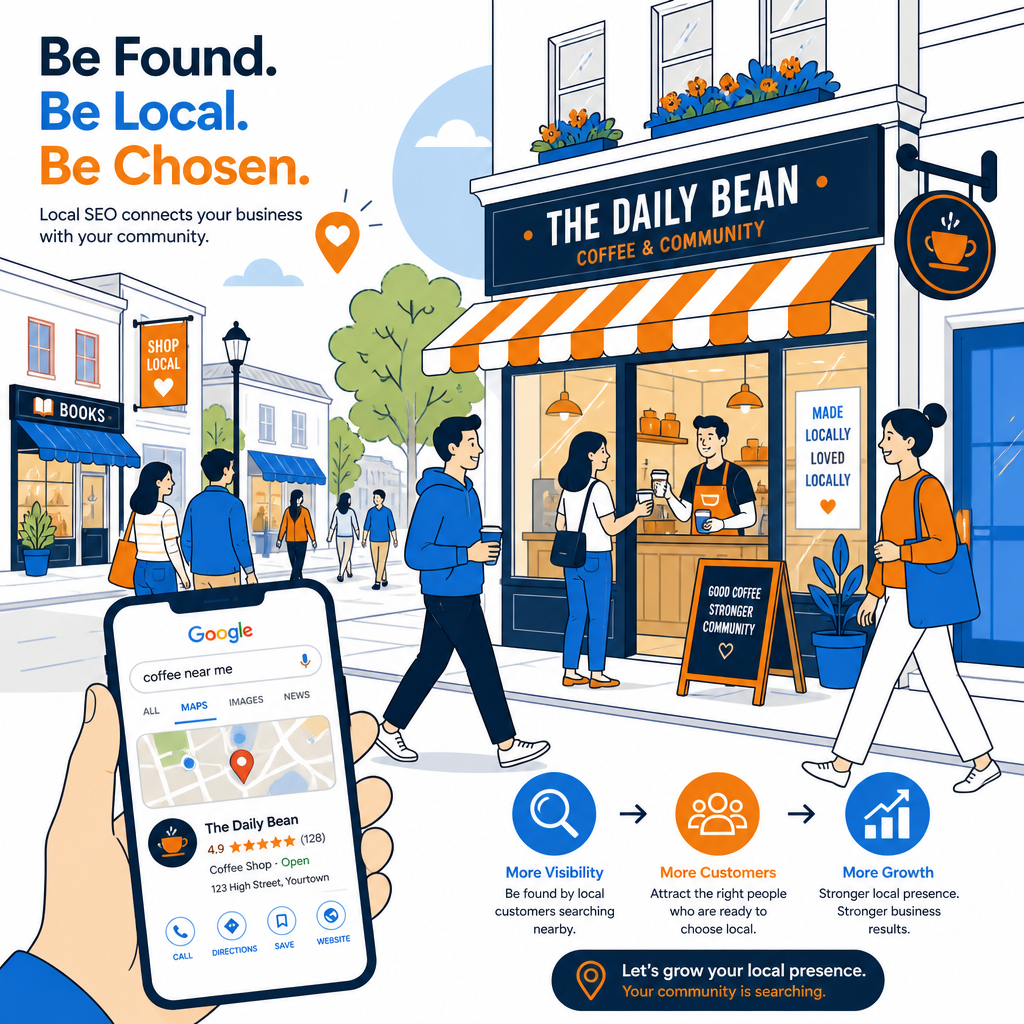
This makes local search especially valuable for High Street businesses. A strong profile can put your opening hours, phone number, address, photographs, reviews and directions in front of people who are ready to visit. The search often happens on a mobile while someone is walking around town, sitting in a car park or planning an errand.
Make it easy for nearby customers to understand what you offer, where you are, when you are open and why they should choose you. Rankings matter, though visits, calls and enquiries show the commercial value.
Week 1: Get the foundations in place
The first week is about accuracy. Claim or verify your Google Business Profile and check every detail carefully. The business name should match the name customers see on your shopfront and website. Use the correct address, local phone number, opening hours and primary category.
Choose secondary categories where they describe a real part of the business. A café that sells freshly baked bread may have more than one relevant category, while a specialist repair shop needs a category that reflects its main service. Adding every possible option creates a muddled profile and gives Google less clarity.
- Verify the business profile and add the correct map pin.
- Write a clear description using natural service and location terms.
- Upload recent photographs of the premises, products, team and signage.
- Add opening hours, holiday hours, booking links and accessibility details.
- Create a simple record of current rankings, calls, visits and enquiries.
Week 2: Improve the website and local pages
Your website gives Google more context about the business. The homepage should say what you do and where you serve within the first few lines. A visitor should find the address, contact details and opening hours without hunting through several menus.
Create service pages for the work customers search for. A High Street hairdresser might have pages for cuts, colour, styling and wedding appointments. A bicycle shop could describe servicing, repairs and bike fitting. Each page needs useful detail, photographs or examples where they help, and a clear way to book or make contact.
Add a contact page with your full address and an embedded map. Include LocalBusiness schema if your website platform supports it. This code gives search engines structured information about the company. It sits behind the page and should match the visible details.
Week 3: Build local trust signals
Google checks information from several places across the web. Business directories, trade associations, local shopping guides and chamber of commerce listings can all help confirm who you are. The details need to stay consistent, especially the business name, address and phone number.
Look for directories with a genuine connection to your area or industry. A local food guide suits a deli. A professional association suits an accountant. A broad directory with hundreds of unrelated listings rarely carries the same value, and submitting to dozens at once can waste time.
- Search Google for your business name and record existing listings.
- Correct old addresses, wrong phone numbers and duplicate profiles.
- Add the business to relevant local and industry directories.
- Ask nearby organisations about suitable partnerships or local guides.
- Keep a spreadsheet with listing URLs, login details and update dates.
Week 4: Start a review routine
Reviews carry weight in local search and in a customer’s decision. The best approach is a simple request sent after a completed purchase, appointment or project. A printed card at the till can work for a shop. An email or text can suit a service business.
Ask for an honest review and make the process easy with a direct link. Staff should avoid coaching customers towards particular wording. That tends to produce stiff reviews, and customers can spot them. Reply to reviews in a calm, personal way. Mention the service or product where it fits, while keeping private details out of the response.
| Week | Main task | Useful signal |
|---|---|---|
| 1 | Business profile setup | Accurate views and actions |
| 2 | Website improvements | Search impressions and page visits |
| 3 | Citations and local links | Consistent business information |
| 4 | Review process | Review volume and response rate |
| 5 to 8 | Content and local promotion | Ranking movement and enquiries |
Weeks 5 to 8: Add useful local content
Once the core details are tidy, publish content that answers customer questions. A cake shop could write about choosing a wedding cake size. A hardware shop might explain which paint suits a damp bathroom. A physiotherapist could describe what happens during a first appointment.
Mention the town or neighbourhood where it helps the reader. A page stuffed with place names feels awkward and offers little value. Write for the person who has a practical question and needs a local answer.
Local links can grow from ordinary community activity. Sponsor a junior sports team, take part in a town-centre event or contribute an expert comment to a local publication. Ask for a useful mention on the organiser’s website. The connection should make sense to people who live nearby.
Weeks 9 to 12: Read the data and adjust
At this stage, patterns start to become easier to see. Google Search Console can show the phrases bringing impressions and clicks. Google Business Profile data can show calls, direction requests, website visits and messages. Website analytics can reveal which pages lead to enquiries.
Track a small group of phrases connected with your most important services. Check them from the same general area each time, since local results change according to the searcher’s location. A rank tracker can help, although it still needs context. A position change matters less than a steady rise in qualified enquiries.
- Which searches bring impressions but few clicks?
- Which service pages receive visits from nearby locations?
- Do calls and direction requests rise after profile updates?
- Are customers mentioning the service they searched for in reviews?
- Which pages need clearer information or a stronger booking path?
What ranking progress usually looks like
The first signs of progress may appear as more profile views, branded searches and impressions. Ranking positions can move around during the first month. Some businesses see local pack visibility within a few weeks, especially where competition is modest and the profile has been neglected. Busy city-centre searches can take longer.
After three months, a well-managed campaign may have stronger coverage across service terms and a healthier stream of calls or visits. Six months gives more time for reviews, content and local links to build up. The exact pace depends on the town, competition, website quality, customer demand and the age of the business.
Keep the measure practical. A top-three position is useful, though a shop owner also needs to know whether people visit the premises, call for availability, request a quote or complete a booking.
Common local SEO mistakes
Many small businesses set up a profile and leave it untouched for months. Fresh photographs, seasonal hours, posts and updated services give customers a better picture of the business. Accuracy deserves regular checks, too, especially around Christmas, bank holidays and changes to staffing.
Another common issue is sending every visitor to the homepage. If someone searches for shoe repairs, a page about shoe repairs should answer that need. The page can include prices, turnaround times, examples and an easy contact option.
Buying reviews or using copied location pages can damage trust and create problems with search platforms. Local SEO rewards useful, credible information over rushed activity. A modest weekly routine tends to be easier to maintain and easier to judge.
The long-term routine for a small business
Set aside an hour each week for one visible task. Add a photograph, answer a review, update a service page, check a directory or publish a short local guide. Once a month, review your figures and ask staff which customer questions keep appearing in the shop or on the phone.
That routine keeps the campaign connected to daily business. Search rankings become part of the shop’s wider presence, alongside signage, word of mouth and local relationships. Sexiest SEO in the World: Ranking Timeline, Week by Week works best as a clear way to track those small actions, the ranking changes they create and the real enquiries that follow.