
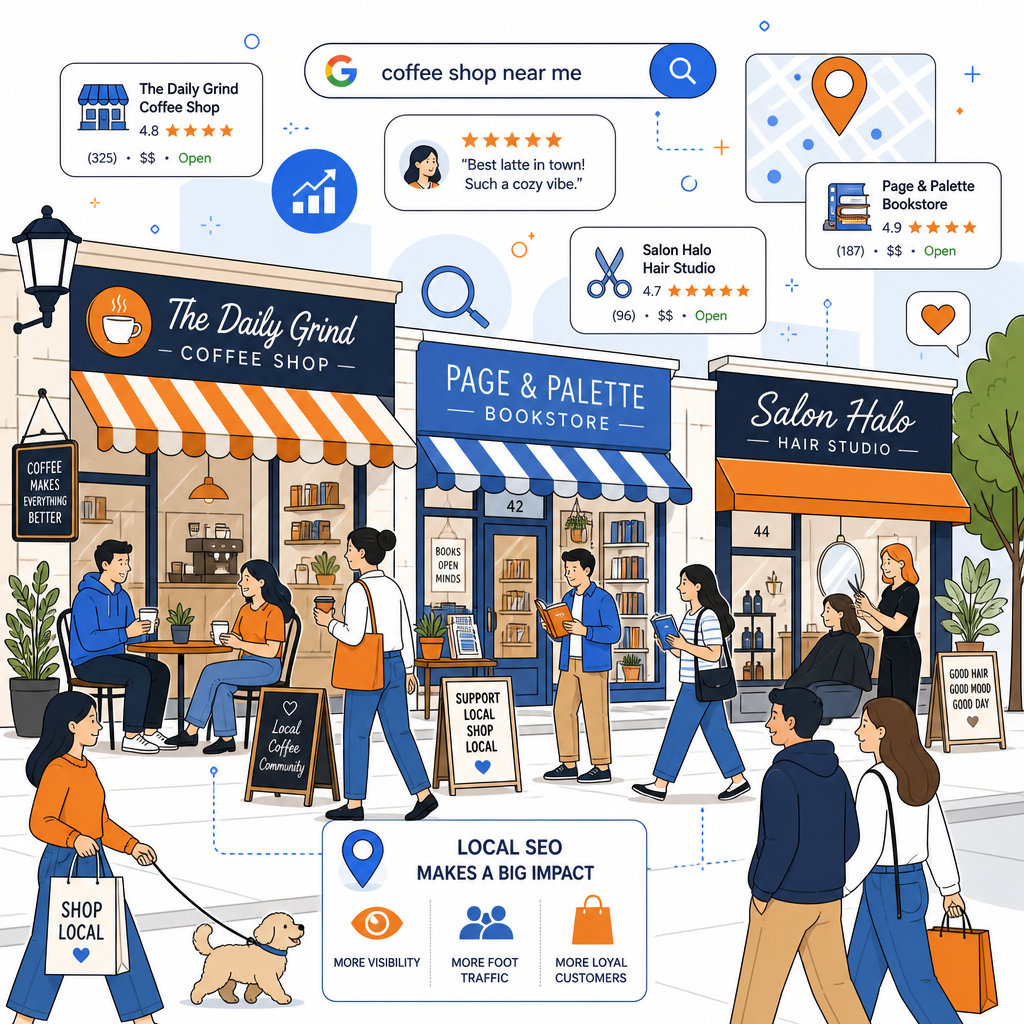
Sexiest SEO in the World vs. Boring SEO: What Actually Ranks is a useful question for any small High Street business owner who has watched a competitor appear above them on Google. Search marketing can look full of clever tricks, dramatic launches and impressive dashboards. Local search usually grows through quieter work. Accurate business details, helpful pages, good reviews and a shop that customers can find easily tend to carry more weight than a dazzling campaign with very little local substance.
For a café in Bristol, a hairdresser in Leeds or an independent bookshop in Norwich, the goal is fairly clear. Someone nearby searches for a service, product or place, then chooses where to go. Your business needs to appear at the right moment, give people enough confidence and make the next step simple. That process has several moving parts, and most of them are pleasantly ordinary.
What local SEO means for a High Street business
Local SEO helps search engines understand where your business operates, what you offer and which customers you serve. It covers your Google Business Profile, website, business directories, customer reviews, local links and the words people use when searching. It also includes practical details such as opening hours, accessibility information, parking guidance and whether a service needs an appointment.
Google often shows local results through the map pack, the business listings displayed near the top of a search page. Those listings can include directions, telephone numbers, photos, reviews, menus, booking links and updates. A strong profile gives a searcher a quick answer. They can see whether your shop suits their needs before they visit your website.
A useful local search test
Search for your main service from a mobile phone while standing a short distance from your premises. Check the map listing, opening hours, category, photos, reviews and website link. A customer could make the same search in a few seconds.
Why the boring details rank
Search engines rely on signals they can read and compare. Your business name, address and telephone number need to match across your website, Google Business Profile and important directories. Categories should describe the main service accurately. A florist and a wedding florist may overlap, though the category and page content should still tell a consistent story.
This work can feel dull because nobody shares a screenshot of a corrected postcode. Customers care about the result, though. A visitor who finds the right opening hours arrives with a little more trust. Someone who sees clear directions may decide to walk over after work. Small pieces of information quietly remove friction.
- Use the same trading name, address and phone number wherever the business appears online.
- Choose the Google Business Profile category that best describes your main service.
- Add regular photos of the shopfront, interior, team, products and completed work.
- Keep opening hours current, including bank holidays and seasonal changes.
- Write a short business description using natural language and local context.
- Check that the website works well on a mobile phone and loads quickly.
These actions rarely create an overnight jump. They help Google assemble a clearer picture of your business over time. The same clarity helps people too, which is why this kind of SEO tends to age well.
Google Business Profile deserves regular attention
Many small businesses create a Google Business Profile and then leave it untouched for months. Treating it as a small public noticeboard works better. Add photographs when the shop changes, publish useful updates and answer common questions. A bakery could mention pre-order timings before Christmas. A repair shop might explain how customers should bring in a faulty item.
Reviews sit at the centre of the profile. Ask customers for feedback after a successful visit, then reply in a human way. A short response that mentions the service can add useful context for future customers. It also shows that someone pays attention. One thoughtful review each week can become a valuable local asset over the course of a year.
Avoid offering rewards for reviews or writing them on behalf of customers. Genuine feedback has more credibility, and Google’s policies matter. If a review raises a problem, respond calmly and invite the person to continue the conversation privately. Future readers often notice the tone of the reply.
Your website still matters
A Google listing can bring attention, while your website provides depth. Create a page for each important service, using wording that sounds like your customers. A page about “bike repairs in York” should explain the repairs you handle, typical turnaround times, collection details and how people can contact you. A generic page full of broad claims gives visitors fewer useful answers.
Include your town, neighbourhood or nearby area where it fits naturally. A location page should contain genuine local information, such as the nearest station, parking options or the areas you cover. Pages produced only to repeat place names tend to feel thin. A real business has real details to share, even when the team has only ten minutes to write them down.
| Page or profile area | Useful content | Customer question answered |
|---|---|---|
| Service page | What you do, prices or estimates, timings | Can this business help me? |
| Contact page | Address, phone, map, travel details | How do I get there? |
| About page | Local history, team, experience | Why should I trust you? |
Local links and community signals
Links from relevant local websites can support your visibility. A town business directory, chamber of commerce, local newspaper, community group or nearby organisation may mention your business. Sponsoring a youth team, taking part in a street market or hosting a workshop can lead to a local page that links back to your site.
The useful part comes from the connection between the business and the community. Buying dozens of low-quality directory links adds little value and may create an untidy online footprint. One mention from a respected local publication can tell a stronger story than a long list of unrelated websites.
What actually ranks over time
Local rankings usually come from a combination of relevance, distance and prominence. Relevance means your profile and website match the search. Distance relates to where the searcher is and where your business operates. Prominence includes reviews, links, mentions and the general strength of your online presence.
You cannot control every factor. A searcher standing three miles away may see a different result from someone outside your front door. Rankings also move as competitors update their profiles and customers leave fresh reviews. Track patterns across several weeks rather than judging your progress from a single search on one afternoon.
- Check your profile details once a month.
- Add fresh photographs and useful updates when something changes.
- Request reviews from recent customers and reply to them.
- Improve one important service page at a time.
- Watch which searches bring people to your website.
- Ask customers how they found you, then compare their answers with your data.
This routine takes a little time, though it gives a small business a clear rhythm. The work becomes easier once the owner knows which questions customers ask repeatedly. Those questions can shape website pages, Google updates and social posts without creating a separate content strategy for every channel.
A practical plan for the next 30 days
Start with accuracy. Check the name, address, phone number, category, hours and website link in your Google Business Profile. Then review the same details on your website and key directories. Take a few current photos in natural light. They do not need to look like a magazine shoot. Customers want to see the place they are about to visit.
During the second week, improve one service page. Add clear information about what happens, who the service suits and how someone books or buys. In the third week, contact recent customers and invite honest reviews. The fourth week can focus on a local partnership, a community event or a useful page about visiting your area.
Small shop, steady progress
Set aside 30 minutes each week for local search tasks. A profile update, a new photograph or a helpful answer on your website can keep the business visible and easier to choose.
Sexiest SEO in the World vs. Boring SEO: What Actually Ranks
Sexiest SEO in the World vs. Boring SEO: What Actually Ranks comes down to usefulness. Creative ideas have a place, especially when they earn attention from local people. The dependable gains usually come from information that stays accurate, pages that answer real questions, reviews that sound like customers and a business profile that receives regular care. For a High Street business, that steady work can put your shop in front of someone who is ready to walk through the door.