
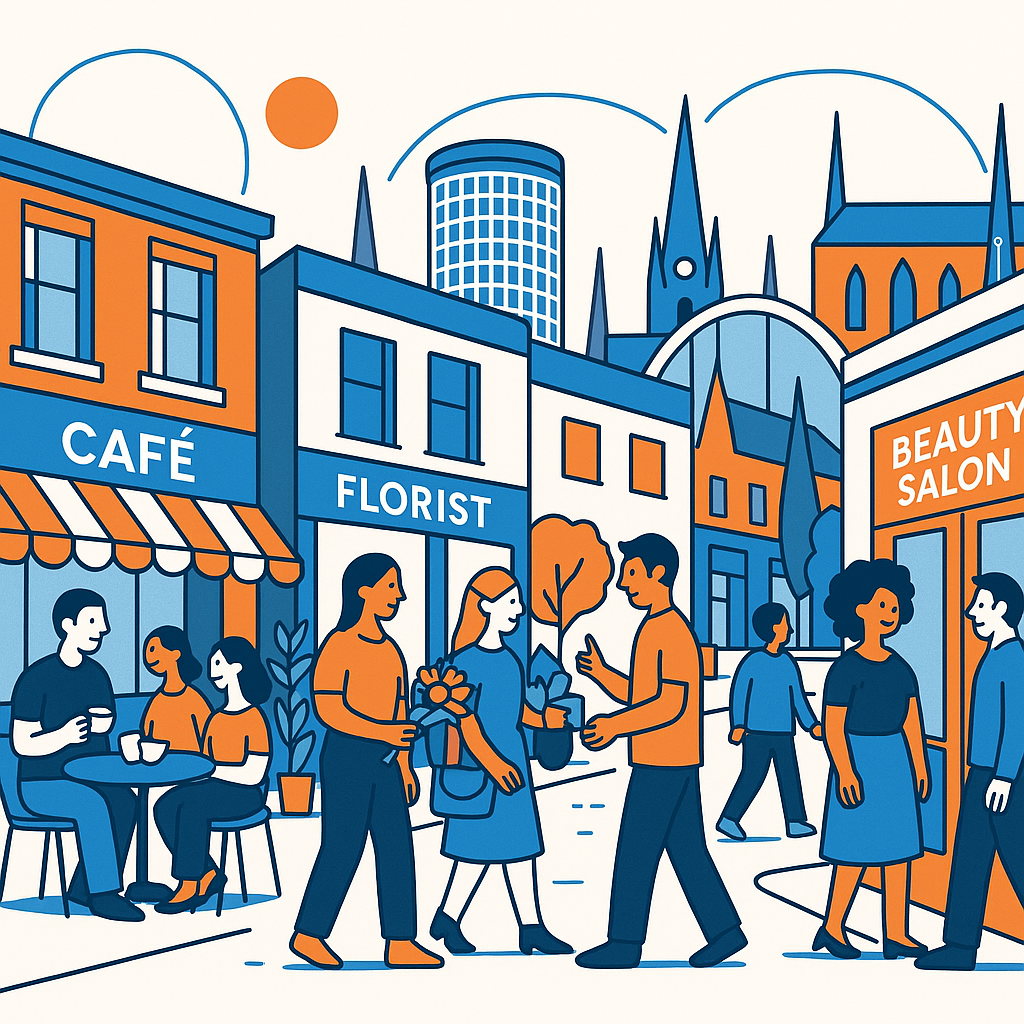
If you run a small High Street business, learning How to Target Multiple Birmingham Neighbourhoods with One Website can feel a bit awkward at first. You might be based in Moseley, but want enquiries from Kings Heath, Harborne, Edgbaston, Selly Oak, Digbeth, Jewellery Quarter, or Sutton Coldfield. That is perfectly reasonable. People cross neighbourhood lines all the time in Birmingham, especially for good food, beauty treatments, repairs, legal help, fitness classes, and specialist shops. The trick is making your website relevant to those areas without pretending you have branches everywhere.
Local SEO is not just about stuffing place names onto a page and hoping Google works it out. It is more like building a small trail of evidence. Your website needs to show where you are, who you serve, what you offer, and why someone in a nearby neighbourhood would genuinely choose you. It sounds simple, but many businesses either do too little or go too far. I have seen websites with one vague “serving Birmingham” line, and others with 40 identical area pages that feel like they were copied and pasted in a hurry. Neither approach is ideal.
Why Birmingham neighbourhood SEO needs a careful approach
Birmingham is not a neat, tidy local search market. It is made up of distinct areas with their own character, transport links, shopping habits, and search behaviour. Someone in Bournville may search differently from someone in Aston or Bearwood. A customer in Jewellery Quarter might want something walkable from the office, while a family in Solihull, technically outside Birmingham but often part of the wider local buying journey, may be happy to drive if parking is easy.
This is why “Birmingham” on its own can be too broad. It is useful, of course, but it can also be competitive and slightly vague. Neighbourhood-focused SEO helps your business appear for searches that feel more immediate, such as “shoe repairs Harborne”, “accountant near Digbeth”, or “facial treatments Kings Heath”. These searches often come from people who are closer to making a decision. Not always, but often enough that they are worth targeting properly.
Local SEO mindset
Do not think, “How can I rank for every Birmingham area?” Think instead, “Which neighbourhoods do my customers realistically come from, and how can I prove we are relevant to them?” That small shift usually leads to better pages.
How to Target Multiple Birmingham Neighbourhoods with One Website
The safest way to target several Birmingham neighbourhoods from one website is to create a strong main local page, then support it with genuinely useful neighbourhood pages where there is enough reason to do so. That last part matters. You do not need a page for every district in the West Midlands. You need pages for areas where you already have customers, can serve people easily, or have a clear reason to be found.
Start with your core Birmingham landing page. This should explain your services, your location, your opening hours, your contact details, and your general service area. It should feel like the main hub. From there, you can link to pages for individual neighbourhoods, but only if each page says something specific. A Kings Heath page should not be the same as a Harborne page with the place name swapped. Google is fairly good at spotting thin duplication, and people notice it too.
- Choose neighbourhoods where you already get enquiries or footfall.
- Mention practical details, such as nearby roads, parking, bus routes, or train stations, where relevant.
- Include examples of customers, jobs, case studies, or common requests from that area.
- Link naturally between your main Birmingham page and neighbourhood pages.
- Keep each page focused on one area and one clear user need.
For example, a florist in Moseley might create pages for “wedding flowers in Kings Heath”, “funeral flowers near Edgbaston”, and “same-day flower delivery in Balsall Heath” if those are real services they provide. A café probably should not make 20 area pages unless it has a delivery service or a strong reason people travel from those places. It depends on the business, which is a slightly annoying answer, but it is true.
| Page type | Best for | Example |
|---|---|---|
| Main Birmingham service page | Your broad local visibility | “Independent optician in Birmingham” |
| Neighbourhood page | Areas with real customer demand | “Eye tests near Harborne” |
| Blog post | Useful local advice or seasonal searches | “Where to park near our Jewellery Quarter studio” |
Build neighbourhood pages that do not feel fake
A good neighbourhood page has to pass a simple test: would a real customer find it useful? If the answer is no, it probably only exists for search engines, and that tends to make the writing stiff. You can still optimise it, naturally, but the page should contain details that help someone decide whether to contact you, visit you, or trust you.
Mention your connection to the area honestly. If you are not physically based in Edgbaston, do not write as if you are. Say something like, “We regularly work with customers from Edgbaston and are around 15 minutes away by car, depending on traffic.” That is much more believable than claiming to be “the leading Edgbaston specialist” without any evidence. People in Birmingham know their local geography, and they can smell exaggeration quite quickly.
Useful content might include nearby landmarks, common customer questions, relevant services for that area, or local proof. Reviews are especially helpful if they mention neighbourhoods naturally. If a customer says, “I came over from Stirchley after a recommendation,” that is gold. You do not need to force it; just collect and display real feedback when you can.
Weak area page
“We provide the best services in Harborne. Contact us today for high quality services in Harborne.”
Stronger area page
“Many of our Harborne customers visit us by car via the A4040, and we often help with same-week appointments for repairs, fittings, and follow-up visits.”
Use your Google Business Profile the right way
Your website and Google Business Profile should support each other. For a High Street business, your profile is often what people see first, especially on mobile. Make sure your name, address, phone number, opening hours, categories, photos, and services are accurate. It sounds basic, and it is, but basic things go wrong more often than they should. Christmas hours left unchanged in February, old phone numbers, blurry shopfront photos, that kind of thing.
If you have one physical location, do not create fake Google Business Profiles for other Birmingham neighbourhoods. It is risky, and it can create trust problems. Instead, use your website to explain your wider service area. Your Google Business Profile can point people to your main website, while your site gives them the deeper local detail.
Photos help more than some business owners expect. Add pictures of the outside of your premises, the inside, your team, your products, and any local features that help people recognise where you are. For trades and service businesses, photos from completed jobs can be useful too, as long as you have permission and do not reveal private details.
Create local content beyond service pages
Neighbourhood pages are useful, but they should not carry the whole SEO strategy. Blog posts, FAQs, guides, and local updates can help your website feel active and genuinely connected to Birmingham. This is where small businesses often have an advantage over bigger chains. You know the local quirks. You know when parking is difficult, which events bring people into town, or what customers ask during certain seasons.
A barber in Digbeth could write about getting a haircut before a night out in the city centre. A tailor near Colmore Row could explain alteration times for office workers. A children’s shoe shop in Sutton Coldfield might publish a back-to-school fitting guide for local parents. These are not huge national topics, but they are useful. They also give Google more context about what you do and where you matter.
- Answer questions customers actually ask in the shop or over the phone.
- Write short guides around local travel, parking, delivery, or appointment planning.
- Mention Birmingham events only when they are relevant to your business.
- Update older pages when services, prices, or opening times change.
- Add internal links from blog posts to your main service and neighbourhood pages.
Local content works best when it sounds like it came from someone who actually knows the area, not from a template with a postcode added at the end.
Get links and mentions from Birmingham sources
Links still matter, but for local SEO, not all links need to be dramatic. A mention from a Birmingham charity, school, supplier, local blog, business association, shopping area website, or event page can help reinforce your local relevance. Even citations in reputable directories can be useful, provided your details are consistent.
Think about the real relationships your business already has. Do you sponsor a local junior football team? Supply products to a nearby restaurant? Host workshops? Take part in a street market or seasonal event? These are natural opportunities for local mentions. It is not about begging for links from random websites. It is more about making sure genuine offline relationships are reflected online.
Consistency is important here. Your business name, address, and phone number should appear the same across directories and local profiles. Tiny differences are not always disastrous, but if your old address is still listed in three places and your new number appears in two others, it can muddy the signal. More importantly, it can confuse customers.
Avoid doorway pages and over-optimisation
There is a temptation to create dozens of pages like “plumber in Moseley”, “plumber in Kings Heath”, “plumber in Harborne”, and so on, each with almost identical wording. This is where local SEO can become messy. Google may treat those as doorway pages if they exist purely to capture searches and funnel everyone to the same business without offering distinct value.
That does not mean you cannot create area pages. You can. But each one needs a reason to exist. Maybe you offer different appointment availability in certain areas. Maybe you have case studies from that neighbourhood. Maybe delivery times vary. Maybe the page answers specific local questions. If there is no difference at all, consider combining areas into a broader page, such as “South Birmingham delivery areas” or “Services across Harborne, Edgbaston and Selly Oak”.
Quick warning
If you would be embarrassed to send a neighbourhood page to a real customer, it probably needs rewriting. Good local SEO should improve the website, not clutter it.
Track what is working, then adjust
Once your pages are live, give them time. Local SEO rarely changes overnight. Use Google Search Console to see which queries bring impressions and clicks. Look at your analytics to check whether people from neighbourhood pages are contacting you, clicking your phone number, booking appointments, or visiting key pages. Rankings are nice, but enquiries matter more.
You may find that one area performs better than expected, while another does very little. That is normal. Birmingham search behaviour can be uneven. If your Selly Oak page is getting traffic but no enquiries, perhaps the offer is not right, or the page does not answer the main question. If your Harborne page gets enquiries, add more proof, reviews, and internal links. SEO is partly strategy and partly small, boring improvements over time. I actually think the boring bit is where many local businesses win.
Conclusion: How to Target Multiple Birmingham Neighbourhoods with One Website
The best answer to How to Target Multiple Birmingham Neighbourhoods with One Website is to be specific, honest, and useful. Build a strong Birmingham hub page, create neighbourhood pages only where they make sense, and fill them with real details that help local customers choose you. Support those pages with reviews, Google Business Profile updates, local content, and Birmingham-based links or mentions.
For a small High Street business, this approach is usually more sustainable than chasing every postcode. You do not need to look bigger than you are. In fact, your local knowledge, your reputation, and your real connection to Birmingham are often the things that make you more appealing. Put those signals on your website clearly, and you give both search engines and customers a better reason to trust you.