
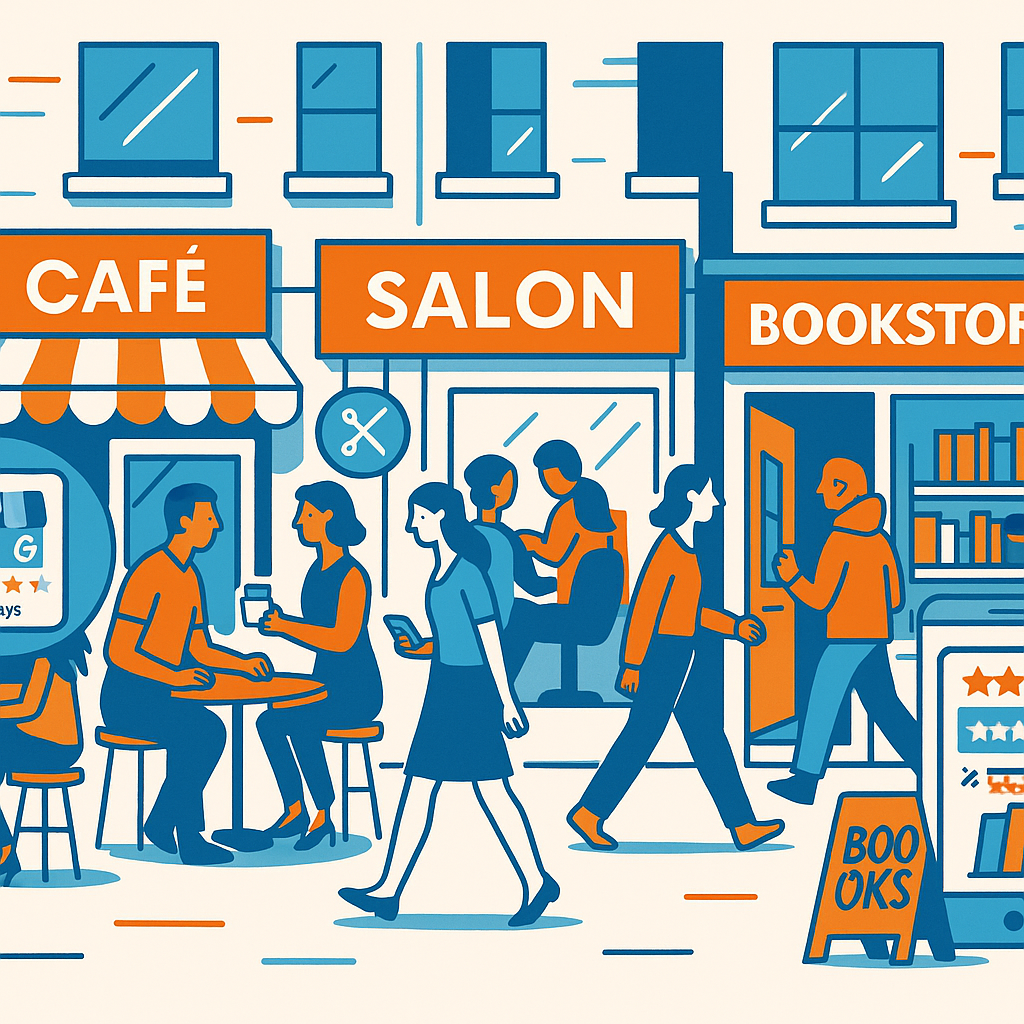
If you run a café, salon, estate agency, repair shop, clinic or independent retailer on the High Street, the phrase 7 Local Search Ranking Factors That May Challenge Your Current Thinking may sound a bit grand. But it points to something very practical: the things that help you appear in local Google results are not always the things business owners assume matter most. In 2026, local SEO is less about ticking one magic box and more about building a believable, useful presence across Google, your website, local mentions, and real customer behaviour.
A useful argument made by Whitespark in its discussion of local ranking factors is that some commonly held SEO beliefs need a second look. I think that is especially true for small UK High Street businesses, where competition is often close, literally across the road, and where the difference between ranking third and ranking eighth can mean several phone calls a week. Not thousands. Just enough to matter.
Quick thought: Local SEO is not only about being the “best” business. It is about being the clearest, most trusted, most relevant option at the moment someone nearby is ready to act.
Why 2026 local SEO feels different for High Street businesses
A few years ago, many small businesses treated local SEO as a setup task. Claim the Google Business Profile, add opening hours, upload a logo, and move on. That still happens. I have seen profiles with Christmas hours still showing in February, photos from 2019, and descriptions that could apply to almost any shop in the country.
The trouble is that Google’s local results have become more responsive to context. Searchers are more specific too. Someone is not just searching “hairdresser near me”; they might search “curly hair specialist open Sunday near me” or “independent bookshop with children’s section Brighton”. Google has to decide not only who is nearby, but who looks genuinely suitable.
For High Street businesses, this is both awkward and encouraging. Awkward because you cannot rely on location alone. Encouraging because you do not need the biggest marketing budget in town to be visible. You need consistency, trust signals, clear services, and evidence that real people choose you.
7 Local Search Ranking Factors That May Challenge Your Current Thinking
Let’s look at the 7 Local Search Ranking Factors That May Challenge Your Current Thinking from a practical UK High Street angle. Some of these are familiar, but perhaps not in the way they are usually discussed.
- Proximity still matters, but it does not save a weak presence
- Your Google Business Profile is not a brochure; it is a live local asset
- Reviews influence more than star ratings
- Website content needs local usefulness, not just keywords
- Links and mentions are strongest when they feel genuinely local
- Behavioural signals may quietly reinforce trust
- Consistency across the web is boring, but still surprisingly powerful
| Factor | Old assumption | Better 2026 view |
|---|---|---|
| Proximity | Nearest business wins | Nearby helps, but relevance and trust can still shift the result |
| Reviews | Just get five stars | Volume, freshness, wording, responses and sentiment all matter |
| Website | A few service pages are enough | Useful local detail helps Google and customers understand fit |
| Local links | Any link is good | Relevant local mentions can carry more real-world credibility |
1. Proximity matters, but not quite how people think
Yes, if someone searches for a locksmith while standing outside a station, Google will care about distance. It would be odd if it did not. But proximity is not a guaranteed win. A business half a mile further away with stronger reviews, better category alignment and clearer service information can still appear above a closer competitor.
This is where many High Street businesses get caught out. They assume their town centre location is enough. It might help for “near me” searches, but less so for searches with intent built in, such as “vegan lunch near Leeds station” or “wedding alterations in Guildford”. These searches ask for more than distance. They ask for proof of relevance.
2. Your Google Business Profile needs regular attention
Your Google Business Profile is often the first impression a customer gets. In some cases, it is the only impression before they call, request directions, or decide to visit someone else. The basics still count: primary category, secondary categories, services, opening hours, phone number, website link and photos.
But the small details can be the difference. Add your holiday hours before bank holidays. Upload recent photos of the shopfront, inside the premises, your team, your products, and anything that reduces uncertainty. If parking is awkward, say so somewhere useful. If you are wheelchair accessible, make that clear. People search with concerns in their heads, not just keywords.
Profile check
Would a first-time customer know exactly what you do, when you are open, and why they should choose you?
Photo check
Do your latest photos look current, human and recognisably local, or do they feel abandoned?
Service check
Have you listed the services customers actually search for, using plain language?
3. Reviews are not just a popularity contest
A five-star average is nice. Obviously. But a perfect rating from seven reviews may be less persuasive than a 4.7 rating from 180 detailed reviews. Customers know this instinctively, and Google appears to care about more than the headline score.
Review content can reinforce what your business is known for. If customers naturally mention “quick MOT”, “friendly optician”, “great gluten-free options” or “same-day phone repair”, those phrases help paint a picture. It is not about scripting reviews, which is a bad idea and often obvious. It is about asking at the right moment and making it easy for people to describe what they valued.
Responding matters too. A calm, specific reply to a negative review can sometimes help more than another generic “thanks for your feedback” response. People read how you handle problems. I certainly do when booking somewhere unfamiliar.
4. Local website content should answer real questions
A small business website does not need to become a magazine. In fact, many should not try. But it should explain your services clearly and connect them to the local area where it makes sense.
For example, a dental practice in York might have separate pages for emergency appointments, teeth whitening, and family dentistry, with practical details about appointment times, nearby parking, and what new patients should expect. A bike repair shop in Bristol might explain turnaround times, common commuter repairs, and whether customers need to book ahead.
This kind of content helps local SEO because it reduces ambiguity. Google can better understand what you offer, and customers feel less need to ring up with basic questions. Although, to be fair, some will ring anyway.
5. Local links and mentions beat generic noise
For a High Street business, a link from a local newspaper, chamber of commerce, charity partner, supplier, event page, market organiser or neighbourhood guide can be more meaningful than a random directory listing. These signals place your business in a real local context.
This is where offline activity and SEO overlap. Sponsor the school raffle, host a tasting evening, join a town centre initiative, support a local sports team, collaborate with another independent business. None of this should be done only for links, because that gets a bit soulless. But when these activities are mentioned online, they support your local authority.
- Ask local partners to list you accurately on their websites
- Make sure event listings include your business name, address and website
- Contribute useful quotes to local press when relevant
- Create a simple local resource page that others may genuinely reference
- Avoid mass low-quality directories that exist only to sell listings
6. Behavioural signals may support what Google already suspects
This one is slightly harder to pin down, and SEO people can argue about it for hours. Still, it seems reasonable that Google pays attention to how people interact with local results in aggregate. Do they click your listing? Request directions? Call? Spend time on your website? Search your brand name again later?
You cannot optimise this in a mechanical way, and trying to fake it is a waste of time. But you can make your listing more compelling. Better photos, clearer services, strong reviews, accurate hours and useful website pages all increase the chance that a real person chooses you. Behaviour follows usefulness, most of the time.
Simple example: Two florists appear in a local search. One has three dark photos, no product details and old opening hours. The other shows fresh bouquets, same-day delivery cut-off times, parking notes and recent reviews mentioning wedding flowers.
Even if the first florist is slightly closer, which one feels easier to trust?
7. Consistency is dull, but it still matters
Name, address and phone number consistency has been discussed for years, and it can sound old-fashioned now. But for small businesses, it still causes problems. Perhaps you changed premises. Perhaps your old landline appears on a forgotten directory. Perhaps your business name is written three different ways online.
Google is good at resolving some inconsistencies, but why make it work harder? More importantly, why confuse customers? Check your Google Business Profile, website footer, contact page, Facebook page, Apple Maps, Bing Places, key directories and local association listings. It is not glamorous work. It is also the kind of housekeeping that prevents small leaks in visibility.
What should a small High Street business do first?
If all of this feels like a lot, start with the assets that customers see most often. Usually, that means your Google Business Profile and your main service pages. Then move into reviews and local mentions. You do not need to fix everything in a week.
- Audit your Google Business Profile for accuracy, categories, services, photos and hours
- Search your own business name and check whether the information shown is consistent
- Ask recent happy customers for honest reviews, without pushing for specific wording
- Improve your main website pages so they answer local customer questions
- Look for three genuine local link or mention opportunities this quarter
- Review your photos every month and add something current
- Track calls, direction requests and enquiry quality, not just rankings
One slightly unpopular point: rankings are not always the best measure. A business can rank well for a phrase that brings no useful enquiries. Another may rank for fewer searches but get better calls from people ready to buy. For a local shop, clinic or service provider, the goal is not visibility for its own sake. It is more of the right people finding you at the right time.
Conclusion: rethink the signals, not the whole business
The lesson behind 7 Local Search Ranking Factors That May Challenge Your Current Thinking is not that everything you know about local SEO is wrong. It is more that the emphasis has shifted. Proximity, reviews, your Google Business Profile, website relevance, local links, user behaviour and consistency all work together. None of them exists in isolation, even if we sometimes talk about them that way.
For UK High Street businesses, that is actually good news. You already have things larger online-only competitors struggle to fake: a real location, local relationships, regular customers, community involvement and daily proof that your business exists in the world. Local SEO in 2026 is about making those signals visible, accurate and convincing online.
Start with the obvious fixes, keep your information fresh, ask for reviews in a human way, and make your website genuinely helpful. It sounds simple, perhaps too simple. But in local search, simple things done consistently often beat clever things done once.