
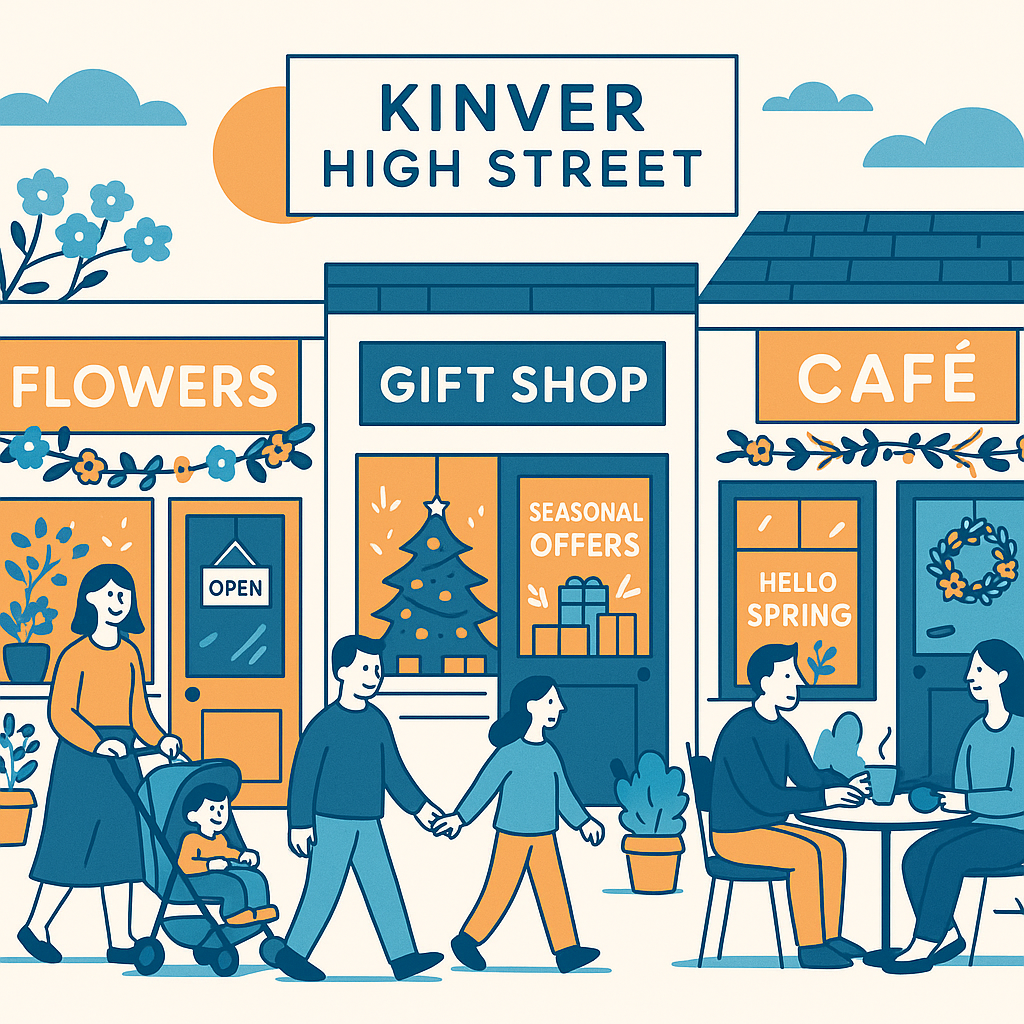
Seasonal SEO Tips for Kinver Businesses: Preparing for Peak Seasons is not just a marketing phrase, really. For small High Street businesses in Kinver, timing can make the difference between a steady trickle of customers and a very busy few weeks where everything suddenly feels worth the effort. Whether you run a café, gift shop, salon, pub, florist, trades business or local service, people search differently depending on the time of year. They look for Christmas opening hours, summer walks near Kinver Edge, Mother’s Day gifts, bank holiday lunches, emergency repairs during cold snaps, and last-minute bookings when the weather turns.
The slightly awkward truth is that many businesses only start thinking about seasonal marketing when the season has already arrived. By then, Google may not have had time to notice your new page, customers may already have chosen someone else, and your competitors may have picked up the early searches. Local SEO works best when it is planned a little ahead. Not months and months necessarily, though sometimes that helps, but early enough that your website, Google Business Profile and local signals are all pointing in the right direction before demand peaks.
Seasonal SEO Tips for Kinver Businesses: Preparing for Peak Seasons
Kinver has a particular kind of seasonal rhythm. It is not the same as a big city centre, and that is part of the opportunity. You have local residents, nearby villages, visitors heading to Kinver Edge, walkers, families, cyclists, and people coming in from Stourbridge, Wordsley, Enville, Wollaston and sometimes further afield. Search behaviour follows these patterns. A person searching “coffee near Kinver Edge” in August is not always the same person searching “Christmas gifts Kinver” in December, even if both could end up on the High Street.
The first step is to map your busiest periods. This sounds obvious, but it is often skipped because owners already feel they know their trade. And they usually do. Still, writing it down helps. A florist might focus on Valentine’s Day, Mother’s Day, weddings and Christmas wreaths. A pub may want to plan for Easter, bank holidays, Christmas parties and sunny weekends. A beauty salon might target prom season, summer holidays and party bookings. A tradesperson may see more demand around winter, storms or home improvement season in spring.
If your busy season starts in December, your SEO work should probably begin in September or October. If it starts at Easter, think about it in January. Google is quick in some ways, but local trust and useful content still need a little breathing space.
Update Your Google Business Profile Before Customers Need It
Your Google Business Profile is often the first thing people see, sometimes before they ever reach your website. For local searches, it can be more visible than your homepage. That makes it especially important during seasonal peaks, when customers want fast answers: are you open, do you have availability, can they call, can they book, and are you close enough to visit today?
A lot of small businesses set up their profile once and then forget about it. Understandable, because there are only so many hours in the day. But seasonal updates are genuinely useful. Change your opening hours for bank holidays. Add festive hours well before Christmas. Upload current photos, not just the lovely ones from three years ago. Use Google Posts to mention seasonal menus, offers, events, late-night shopping, gift vouchers, new stock, or temporary services.
- Check that your name, address and phone number are consistent with your website and local directories.
- Add special opening hours for Christmas, Easter, bank holidays and local event days.
- Upload seasonal photos, such as window displays, outdoor seating, gift ranges or winter services.
- Use the Products or Services sections to highlight seasonal items people are likely to search for.
- Answer common questions in the Q&A area before customers need to ask them.
Reviews matter here too. Not in a fake, forced way. Just ask happy customers at the right moment, especially after a successful seasonal purchase or service. A review mentioning “Christmas flowers”, “Sunday lunch”, “wedding hair”, “emergency boiler repair” or “dog-friendly café near Kinver Edge” can support the kind of searches you actually want to appear for. It is not magic, but it helps build relevance.
Create Seasonal Pages That Feel Local, Not Generic
One common mistake is creating thin seasonal pages that could belong to any business in any town. “Christmas offers now available” is fine as a sign in a window, but as an SEO page it is not doing much. For Kinver businesses, it is better to make the page genuinely useful and locally grounded. Mention the area you serve, nearby places customers come from, collection options, parking considerations if relevant, and what makes your seasonal offer practical.
For example, a gift shop might create a page for “Christmas gifts in Kinver” and include sections for teachers’ gifts, stocking fillers, local makers, gift wrapping and last order dates. A café could write about “winter lunches in Kinver” or “where to stop after a walk on Kinver Edge”. A salon might build a page around “party hair and beauty appointments in Kinver” with booking advice for November and December.
The key is to publish early and keep the page alive. You do not always need to delete it after the season ends. In many cases, you can update it each year. A page that slowly builds history, internal links and perhaps a few backlinks from local sites may perform better next year than a brand-new page rushed out two weeks before the rush.
| Season | Search intent | Content idea |
|---|---|---|
| Spring | Days out, garden jobs, weddings, Easter plans | Easter opening hours, spring services, local walk-and-lunch guides |
| Summer | Visitors, outdoor dining, events, school holidays | Summer menus, visitor guides, family-friendly offers |
| Autumn | Home prep, darker evenings, Halloween, early Christmas planning | Autumn checklists, booking reminders, seasonal stock previews |
| Winter | Christmas shopping, parties, urgent repairs, opening times | Gift guides, party booking pages, emergency service pages, festive hours |
Use Local Keywords Without Overdoing It
Local SEO can become clumsy when every sentence tries to mention the town name. Nobody wants to read “our Kinver café in Kinver near Kinver High Street” over and over. Google is smarter than that, and customers are definitely smarter than that. Use natural place references where they make sense: Kinver High Street, Kinver Edge, the Staffordshire and Worcestershire Canal, nearby villages, or towns where customers often travel from.
Think in terms of the phrases real people use. Some will search “near me”. Some will search the town. Others will search by activity, such as “lunch after Kinver Edge walk” or “Christmas wreath workshop near Stourbridge”. Seasonal SEO works best when you capture these slightly longer, more specific searches. They may not have huge search volumes, but they are often closer to action.
- Start with your main service or product, such as “wedding flowers”, “Sunday lunch” or “boiler servicing”.
- Add the seasonal angle, such as “Christmas”, “summer”, “Mother’s Day” or “bank holiday”.
- Add the local angle naturally, using “Kinver”, “near Kinver Edge” or nearby areas if relevant.
- Turn the phrase into a helpful page title, FAQ, blog post or Google Business update.
This is also where blog posts can work nicely, even for small businesses that do not think of themselves as publishers. A short guide to “Planning a Christmas shopping afternoon in Kinver” could mention your shop, but also nearby cafés, parking, opening times and other local details. It feels more helpful, and frankly more human, than a hard sales page.
Plan Content Around Local Events and Visitor Behaviour
Kinver benefits from visitors as well as residents. That can be easy to forget if you are in the shop every day, seeing familiar faces. People coming for a walk, a canal visit, a pub lunch or a weekend browse often search before they arrive. They may not know the area well. They want reassurance. Is there somewhere to eat? Are dogs welcome? Can they book? Is it suitable for children? Is there somewhere to buy a gift while they are there?
Your seasonal content can answer those questions. If you are a pub or café, publish clear pages for bank holiday bookings, Christmas meals, outdoor seating, dog-friendly visits and Sunday lunches. If you are a retailer, create gift guides for local visitors who may be looking for something unique rather than ordering from a large online shop. If you offer services, explain your availability and deadlines. People appreciate plain information more than polished marketing copy, I think.
A useful local page does not need to be clever. It needs to answer the questions customers are already asking, before they get impatient and choose someone else.
You can also connect with other local organisations where appropriate. A mention from a local events page, community website, supplier, charity, school fundraiser or neighbouring business can support your local visibility. Do not chase links in a spammy way. Just look for honest opportunities. If you are involved in a Christmas market, a late-night shopping evening or a charity raffle, make sure there is a web mention with your business name and link if possible.
Make Your Website Ready for Mobile Searches
A large share of seasonal local searches happen on phones. Someone is in the car park, on the sofa, outside in the cold, or halfway through planning a family visit. If your website loads slowly, hides your phone number, or makes menus impossible to read, you are losing customers at exactly the wrong moment.
Keep your seasonal pages simple. Put the most important information near the top: what you offer, where you are, when you are open, how to book or buy, and any deadlines. Add click-to-call buttons if you can. Make forms short. Check that embedded maps work properly. And please test the page on your own phone, not just on a desktop screen where everything looks more forgiving.
Phone number, address, seasonal opening hours and booking link.
Compress large photos and avoid clutter, especially on mobile.
Remove old dates, expired offers and last year’s Christmas messages.
Track What Worked, Even If It Is Only Basic
You do not need a complicated dashboard to learn from seasonal SEO. Basic tracking is better than guessing. Look at which pages received traffic, which Google Business updates got views, which search terms appeared in Google Search Console, and which phone calls or bookings seemed to come from seasonal pages. Ask customers how they found you now and again. It is not scientific, but it gives clues.
After the season ends, make notes while it is still fresh. What sold out? What questions did people ask repeatedly? Which opening times caused confusion? Did visitors come from nearby towns? Did one blog post do unexpectedly well? These notes are incredibly useful when the same season comes round again, because it always comes round faster than expected.
Conclusion: Start Early, Stay Local, Keep It Useful
Seasonal SEO Tips for Kinver Businesses: Preparing for Peak Seasons comes down to a few steady habits rather than one grand trick. Plan before demand arrives. Update your Google Business Profile. Create useful local pages. Mention seasonal services clearly. Gather real reviews. Make your website easy to use on a phone. Then, after the rush, look back and improve it for next time.
For small High Street businesses, this kind of work can feel like one more thing on an already full list. Fair enough. But it does not have to be huge. Even a well-timed page, accurate opening hours and a few fresh photos can help customers choose you when they are ready to spend locally. And in a place like Kinver, where community, visitors and seasonal habits all overlap, that little bit of preparation can go a surprisingly long way.