
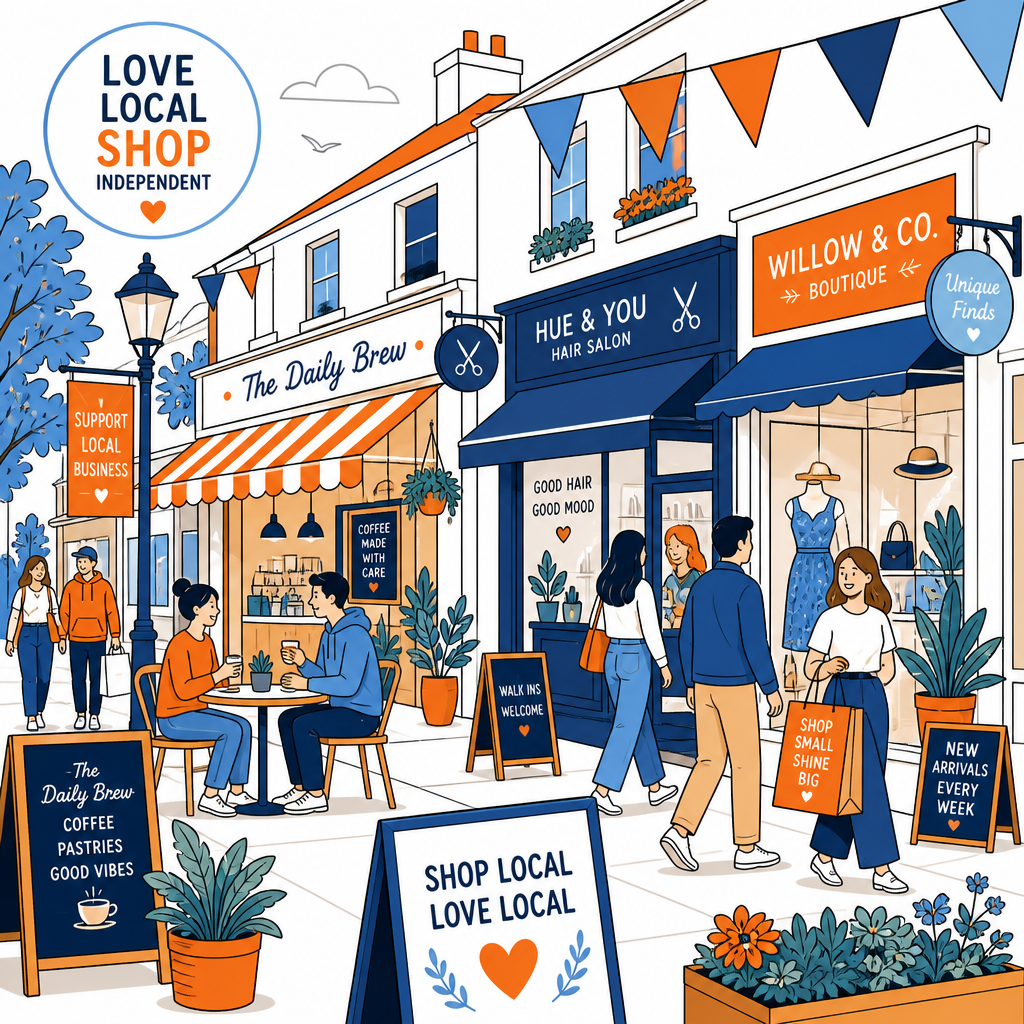
For a small High Street business, the sexiest SEO in the world may be the kind that brings someone through the door this afternoon. Local SEO helps a café appear when a nearby customer searches for coffee, gives a salon a place in front of people looking for an appointment, and puts an independent shop on the map when the searcher is already close. It feels practical because it is tied to real places, real journeys and, often, real spending.
Large brands can pour money into broad campaigns. A local business has a different advantage. You know the area, the customers and the small details that make your shop worth visiting. Local search gives those details somewhere to work. A well-kept Google Business Profile, useful website content and a handful of strong local links can change how often people find you.
Why local SEO suits High Street businesses
Search results often carry strong local intent. Someone typing “bakery near me” usually wants bread soon. A person searching for “women’s haircut in York” may be comparing opening hours, prices and reviews before booking. Google tries to connect that person with nearby businesses that seem relevant, available and trustworthy.
That makes local SEO a useful fit for independent businesses. Your location becomes part of the story, rather than a detail buried on a contact page. The surrounding streets, landmarks and neighbourhoods can help people understand where you are. A good local presence also gives customers a reason to choose you before they have walked past the window.
Make your Google Business Profile earn its place
Your Google Business Profile is often the first thing a potential customer sees. It can show your address, telephone number, opening hours, photos, services, reviews and directions before anyone reaches your website. For a small business, this listing deserves the same care as the front window.
Fill in every relevant section with accurate information. Choose the category that best describes what you do, then add useful secondary categories where they fit. Include your opening hours, holiday changes, booking link and accessible contact details. A person should be able to decide what to do next without hunting around.
- Use a clear business name that matches your shopfront and website.
- Add recent photos of the exterior, interior, products, team and work in progress.
- Write a concise description that explains what you offer and where you are.
- List your main services with natural descriptions and relevant prices where suitable.
- Add regular updates about seasonal products, events, appointments or changes to opening hours.
- Reply to reviews in a calm, personal way, including the occasional difficult one.
Photos deserve attention. A bright image of your entrance can help somebody recognise the shop when they arrive. Product photos answer small questions before they are asked. Even a quick phone photo can be useful when it shows the business as it looks today, with sensible lighting and a clean frame.
Build a website around local intent
A small business website does not need dozens of pages. It needs the right pages, written for people who may be close by and ready to contact you. Your home page should state what you do, where you are based and how someone can visit or book.
Create individual service pages when each service has its own audience. A florist might have pages for wedding flowers, funeral flowers and same-day delivery. A bike shop could cover repairs, servicing and electric bike advice. Each page gives search engines clearer information and gives customers a page they can share.
Mention the area naturally. Include the town and nearby locations when they help a visitor understand your service area. A paragraph about delivering across Headingley, Chapel Allerton and Roundhay will feel more useful than a page packed with repeated place names. Write as the business owner would speak to a customer at the counter.
| Page or feature | What it should answer | Useful detail |
|---|---|---|
| Home page | What do you offer and where are you? | Business type, town, main service and contact option |
| Service page | Can you solve my particular need? | Process, prices, availability, examples and booking details |
| Contact page | How do I visit or get in touch? | Address, map, parking, transport, phone and opening hours |
Use reviews as part of your local reputation
Reviews influence how people feel about a business before they arrive. They also give search engines extra clues about your services and customer experience. Ask satisfied customers for an honest review at a natural point, perhaps after a successful appointment or a purchase they have enjoyed.
Make the request easy. Add a review link to a follow-up email, receipt or small card at the till. Personal wording tends to work better than a formal campaign. You could say, “If you have a moment, a short Google review would help our shop.” That is enough.
Reply to reviews with care. Thank people for specific comments and respond to concerns without sharing private details. A thoughtful response can reassure future customers who are reading along. Reviews form a public conversation, so your tone matters almost as much as the star rating.
Earn local links and mentions
Links from local organisations can strengthen your visibility. Think about the places already connected to your business: the town council, a nearby business association, a local newspaper, a charity, a school or an event organiser. A mention on a relevant local website can bring visitors as well as search value.
Small businesses often have more link opportunities than they realise. Sponsor a community event, host a workshop, contribute expert advice to a local article or create a useful guide to the area. Keep the activity genuine. A link earned through something people would care about has a longer life than a directory entry added in a hurry.
Check local directories for accuracy too. Your name, address and phone number should appear consistently across important listings. Old addresses and disconnected numbers create confusion for customers, with a little digital mess left behind.
Create content with a local point of view
Local content works best when it comes from experience. A garden centre could publish a seasonal planting guide for gardens in its area. A pub might share a walking route that ends nearby. A solicitor could explain a common local property question in plain language. These topics give people a reason to visit the website before they are ready to buy.
Keep the writing useful and specific. Include prices where they are stable, travel details where they help and examples from your own work. A short article written for one town can attract more relevant attention than a broad piece aimed at an entire country.
Measure the visits that matter
Local SEO grows through regular attention. Once a month, look at calls, direction requests, website visits, contact form submissions and bookings. Google Business Profile insights can show how people found your listing. Website analytics can reveal which pages encourage enquiries.
Rankings offer useful clues, although customer actions tell a fuller story. A page sitting near the top for a broad phrase may bring little business. A service page that produces three good enquiries each month has a different kind of value. Track both, then use what you learn to improve the pages people use.
The sexiest SEO in the world is close to home
For small High Street businesses, the sexiest SEO in the world is practical, visible and tied to the places customers already know. It lives in accurate listings, helpful service pages, current photographs, honest reviews and local relationships. The work builds gradually, then one day someone walks in and says they found you on Google. That moment carries a certain charm.
Start with your Google Business Profile, check the details on your website and ask one happy customer for a review. Then keep going in small, steady steps. Local SEO rewards businesses that show up properly, online and on the street.