
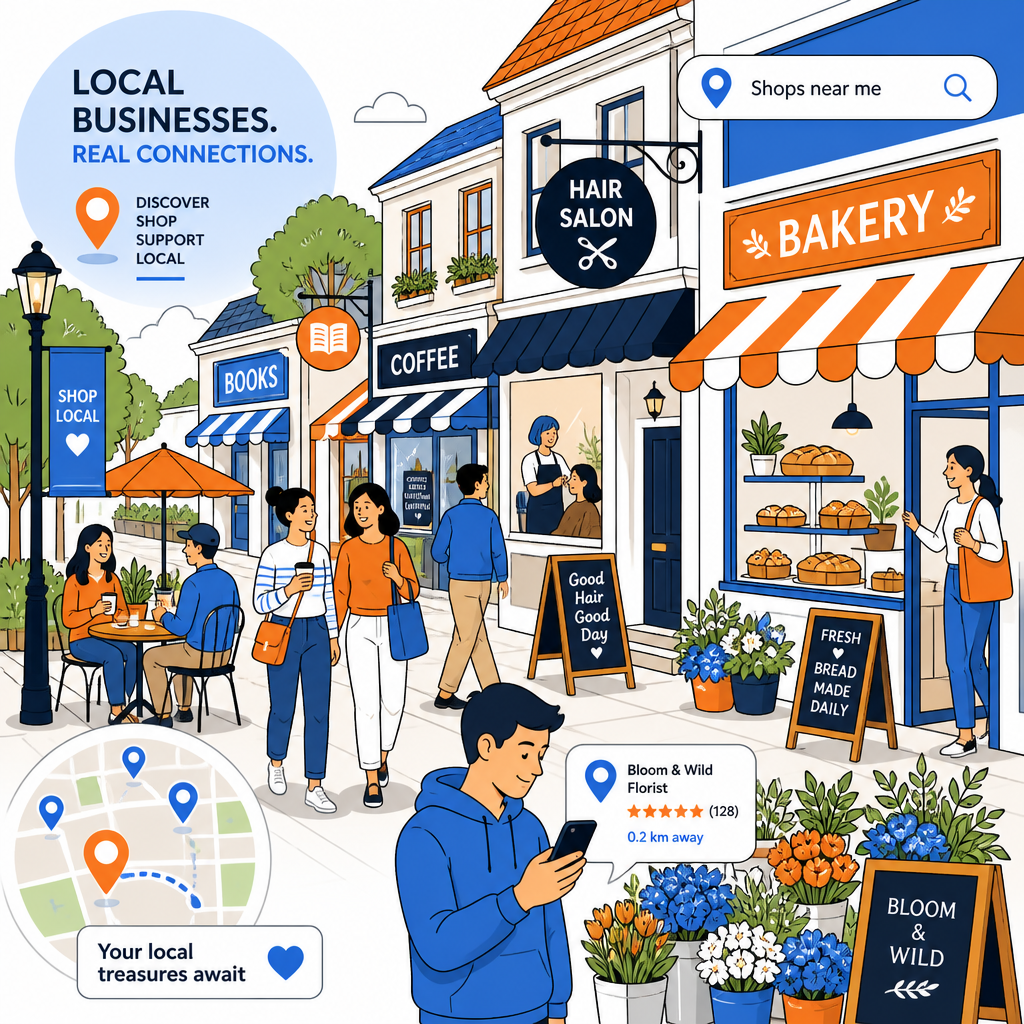
Why the Sexiest SEO in the World Ignores Domain Authority is a slightly playful way to describe local SEO for small High Street businesses. It focuses on the moment someone nearby searches for a café, hairdresser, florist, solicitor or repair shop and decides where to go. That moment carries more weight than a grand score attached to a website. A shop with a modest site can appear in front of the right person at exactly the right time.
Domain Authority has its place in wider SEO discussions. It can help compare websites within a particular market, especially when someone is planning a serious link-building campaign. Local search behaves in a more immediate way, though. Google looks at relevance, distance, prominence, business information and the signals that show a real local presence. A famous website elsewhere in the country may have a huge authority score and still be useless to someone standing on your High Street.
Why the Sexiest SEO in the World Ignores Domain Authority
Local SEO feels powerful because it joins intent with place. A search such as “coffee near me” carries a clear practical need. The person may be walking past your premises, looking at their phone, and hoping to find somewhere with a spare table. They are not researching the history of coffee. They need a business that feels close, open and suitable.
This changes the job. A small business does not need to beat every large website on the internet. It needs to become easy to understand for people in the surrounding area. Your opening hours, street address, service details, photos and reviews all help Google match your business with a nearby searcher. These details also help the person make a quick decision, which is where the value sits.
Search for your main service from a nearby location. Can a new customer see what you offer, where you are, when you open, how to contact you and why people trust you within a few seconds?
Google Business Profile is your digital shop window
For many High Street businesses, Google Business Profile deserves attention before any complicated SEO work. It appears in Google Search and Maps, often before a visitor reaches your website. The profile can show your address, phone number, opening times, products, services, images, booking links and customer reviews.
Complete every relevant field. Choose the category that best describes the business, then add supporting categories where they make sense. A bakery might include wedding cakes, custom cakes and breakfast options in its service information. A beauty salon may list treatments individually. Keep the wording plain and close to the phrases customers use.
- Check your opening hours before bank holidays and seasonal changes.
- Use recent photographs of the premises, staff, products and finished work.
- Add a short business description that explains who you serve and where.
- Include booking, ordering or contact links that work on mobile phones.
- Publish occasional updates when you have useful news, events or offers.
Photos deserve a mention because they make a profile feel inhabited. A clean image of the shop front helps someone recognise it from the pavement. Pictures of products give a customer something concrete to choose. They also give Google more context about what happens at the location.
Reviews carry local trust
Reviews are among the clearest local signals available to a small business. They show that customers have visited, bought something and formed an opinion. People read them quickly, often while comparing two or three nearby options. A steady flow of specific, honest reviews can make a quieter business look active and dependable.
Ask for a review at a natural point in the customer journey. A receipt, follow-up email or small card at the till can include a direct link. Staff can mention it after a successful appointment. Keep the request simple and give people room to write in their own words. Reviews that mention a service, area or memorable detail tend to be more useful than vague praise.
Reply to reviews in a human way. Thank the customer, refer to the experience they described and address problems calmly. A short response can reassure future readers, even when the original review is less than flattering. Avoid copying the same sentence beneath every review. It starts to look like a task completed for an algorithm.
| Local signal | What it helps with | Useful action |
|---|---|---|
| Business details | Understanding your location and offer | Keep name, address and phone number consistent |
| Reviews | Trust and service relevance | Invite genuine feedback and respond thoughtfully |
| Local pages | Matching searches with intent | Write clear service and area information |
Build pages that answer local questions
Your website still matters. The role is practical. Each important service should have a page that explains what you do, who it suits, how much preparation is needed and how someone can contact you. Mention the town, neighbourhood or nearby area where it helps the reader. Write for a person who has just found you, rather than for a keyword counter.
A plumber might create pages for boiler repairs, burst pipes and bathroom installations in the areas they cover. A wedding florist could explain consultations, delivery locations and seasonal flowers. A High Street restaurant may add pages for private dining, takeaway and group bookings. These pages give search engines useful context while helping customers ask better questions.
Keep local references natural. A page stuffed with every nearby village usually feels strange and does little for trust. Explain where you work, how customers reach you and what happens after they make contact. A map, parking note or public transport detail may be more useful than another paragraph of repeated phrases.
Local links and community visibility
Links from local organisations can strengthen the sense that your business belongs in the area. Consider the town council, chamber of commerce, local newspaper, business association, market organiser or charity you support. Sponsoring a community event may lead to a mention on its website. Taking part in a local guide can bring visitors as well as a link.
This is where domain authority can distract business owners. Chasing a link from a huge national publication sounds impressive, although it may bring little local business. A well-placed mention on a respected town website can send the right people to you. It has context, proximity and a reason to exist.
Technical details still affect the experience
A local strategy needs a website that works when someone is standing outside your premises with one hand free. Pages should load quickly on a mobile connection. Telephone numbers should be easy to tap. Directions, prices and booking steps should appear without a scavenger hunt.
- Use one consistent business name, address and phone number across key listings.
- Create a clear contact page with embedded map information where appropriate.
- Add descriptive page titles and headings for each main service.
- Check forms, booking links and menus from a mobile phone.
- Remove old pages that show closed services, expired offers or incorrect hours.
Structured data can also help search engines read information such as your business type, address and opening hours. It needs to match what visitors can see on the page. A developer can handle the technical setup, while the business owner supplies the accurate details. That small distinction saves a surprising amount of confusion.
What should a small business measure?
Track actions that relate to customers. Google Business Profile can show calls, direction requests, website visits and messages. Website analytics can reveal visits from nearby searches and the pages people view before contacting you. Ask new customers how they found you as well. It is a basic question, though the answers often fill gaps in the data.
Watch the pattern over time. One busy Saturday may come from weather, a local event or a mention in a community group. Several months of calls, direction requests and enquiries give you something steadier to work with. Domain Authority may appear in an SEO report, yet it rarely tells a shop owner whether someone found the right location and walked through the door.
Why the Sexiest SEO in the World Ignores Domain Authority comes down to useful visibility. Local SEO gives a small High Street business a chance to appear when nearby people need its service. Accurate information, fresh photographs, honest reviews, relevant pages and genuine community connections do the heavy lifting. The work is close to the ground, which is exactly why it works.